You’re showing up to the gym. You’re putting in the sets, the reps, the early mornings and the sore afternoons. You’re more consistent than you’ve ever been. And yet the muscle isn’t coming the way you expected. The definition isn’t there. The strength is improving, but the physique isn’t changing the way the effort seems to deserve.
If this sounds familiar, there’s a very good chance the gap isn’t in your training. It’s in your kitchen.
Here’s the thing that most fitness content glosses over the workout is the signal. It tells your body to build muscle. But the actual building, the repair, the growth, the adaptation happen afterward and it requires raw materials. Specifically, it requires protein. Without enough of it, your body simply cannot construct new muscle tissue, regardless of how hard you train.
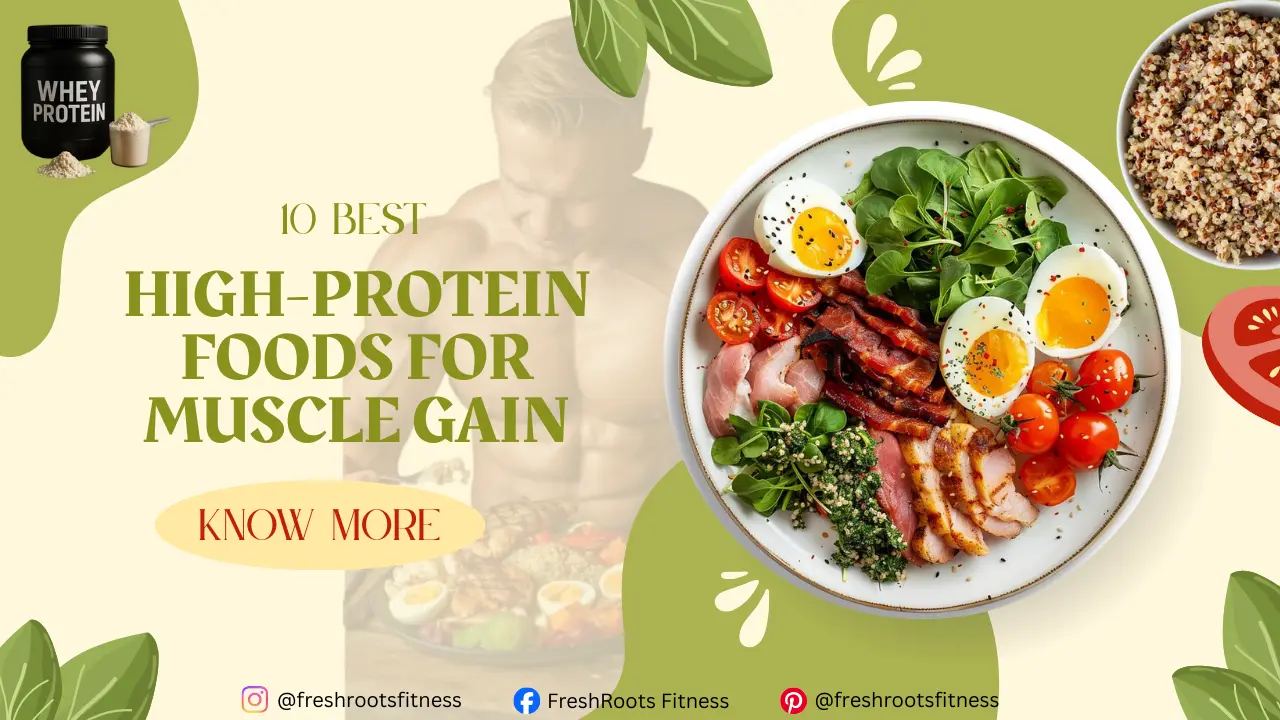
The best high-protein foods for muscle gain aren’t exotic, expensive or difficult to prepare. Most of them are already familiar. What’s less familiar is exactly what they do inside your body, why some sources are more effective than others and how to use them strategically across your day for maximum muscle-building benefit.
This guide covers ten of the most effective protein sources, what they contain, why they work and how to actually incorporate them in a way that supports real, visible progress.
Why Protein Matters So Much for Muscle Gain
Before we get into the foods, it’s worth understanding the mechanism because once you understand what protein actually does, you’ll naturally start prioritizing it differently.
When you train with weights or resistance, you create microscopic damage in muscle fibres. This isn’t harmful, it’s the stimulus for growth. Your body responds by repairing those fibres and if the nutritional environment supports it, it builds them back slightly larger and stronger than before. That repair process runs on amino acids, which come from the protein you eat.
Without sufficient protein intake, repair is incomplete. Muscle mass can actually decrease, even with consistent training, as the body breaks down existing muscle tissue to source the amino acids it needs elsewhere. This is why protein timing, quantity and quality all matter.
Most research suggests that people actively trying to build muscle need approximately 1.6-2.2 grams of protein per kilogram of body weight per day. Spreading this across three to five meals rather than consuming it all at once maximizes muscle protein synthesis throughout the day.
What most people overlook is that protein quality matters as much as quantity. “Complete” proteins, those containing all nine essential amino acids, are more effective for muscle building than incomplete sources. This is one of the most important distinctions when choosing from the best high-protein foods for muscle gain.
10 Best High-Protein Foods for Muscle Gain
1. Chicken Breast
Protein content: ~31g per 100g
Chicken breast’s reputation in fitness culture is thoroughly deserved. It provides one of the highest protein-to-calorie ratios of any whole food, lean, low in fat and dense with high-quality complete protein that delivers all essential amino acids.
Beyond raw protein content, chicken breast is rich in leucine, the amino acid most directly responsible for triggering muscle protein synthesis. Research consistently shows that leucine content, not just total protein, is the key signal that tells muscle cells to start the growth and repair process.
The practical appeal is real, too. Chicken breast grills in 15 minutes, keeps well in the fridge for meal prep and takes on whatever flavour you cook it with. For anyone serious about muscle gain, it’s one of the most reliable daily protein anchors available.
Smart usage: Prepare a batch at the start of the week and keep it refrigerated. Slice into salads, wrap in roti, add to rice bowls or eat alongside roasted vegetables for quick, high-protein meals on busy days.
2. Eggs
Protein content: ~6g per egg
Eggs are among the most studied foods in sports nutrition and consistently among the most impressive. They are a complete protein source containing all nine essential amino acids in a profile that very closely mirrors the amino acid composition of human muscle tissue. This is why eggs score extraordinarily high on biological value (BV), a measure of how efficiently the body can use the protein in a food.
Beyond protein, eggs provide healthy fats, vitamin B12, vitamin D and choline, a nutrient critical for muscle function and neurological health that most people don’t get nearly enough of.
The surprising fact is that the yolk contains the majority of the nutritional value. Decades of egg-white-only thinking in fitness circles were based on outdated fat-phobia. The yolk’s fat content is predominantly unsaturated and it carries most of the vitamins, minerals and choline that make eggs such a complete muscle-building food. Eat the whole egg.
Smart usage: Three whole eggs at breakfast delivers roughly 18-20g of complete protein alongside a full nutritional profile to start the day. Boiled eggs as a snack, omelettes with vegetables for a post-workout meal.
3. Greek Yogurt
Protein content: ~10g per 100g
Greek yogurt contains almost double the protein of regular yogurt, a result of the straining process that removes excess liquid and concentrates the protein content. What makes it particularly valuable for muscle gain is that it provides a combination of fast-digesting whey protein and slower-digesting casein protein in a single food.
This dual-protein profile means it delivers both an immediate amino acid spike and a sustained release useful both post-workout and as a snack between meals when you need protein absorption to span several hours.
The probiotic content is a bonus that often gets overlooked. A healthy gut microbiome improves nutrient absorption across the board, meaning the protein, vitamins and minerals from everything else you eat are more efficiently extracted and used. Gut health and muscle-building are more connected than most fitness discussions acknowledge.
Smart usage: Plain, unsweetened full-fat Greek yogurt post-workout with a handful of berries and some granola. Or as a base for overnight oats built around protein goals.
4. Lentils
Protein content: ~9g per 100g (cooked)
For vegetarians, vegans or anyone looking to reduce meat intake without compromising muscle-building nutrition, lentils are one of the most valuable foods available. Dal, in its endless Indian variations, is genuinely one of the world’s best muscle-supporting staples.
Lentils provide protein alongside complex carbohydrates, which is a critical combination for muscle gain. Carbohydrates replenish muscle glycogen (the fuel used during training) and stimulate insulin release, which is actually anabolic, it helps shuttle amino acids into muscle cells alongside glucose. A high-protein food that also provides quality carbohydrates is doing double duty for muscle recovery.
Lentils also deliver iron and folate, both of which support oxygen delivery to muscles and overall energy production.
Smart usage: A bowl of dal with rice and a small amount of ghee is genuinely one of the most complete muscle-recovery meals available, complete protein from the combination of lentils and rice, quality carbohydrates and healthy fat. Traditional food wisdom and sports nutrition science align remarkably well here.
5. Cottage Cheese (Paneer)
Protein content: ~11g per 100g
Cottage cheese or paneer in the Indian context earns its place on this list through a specific nutritional property, it’s one of the richest dietary sources of casein protein. Casein is a slow-digesting protein that forms a gel-like substance in the stomach, releasing amino acids gradually over four to seven hours.
This slow release makes it uniquely valuable for overnight muscle recovery. During sleep, the body undergoes its most intensive muscle repair and growth, but only if amino acids are available in the bloodstream. Eating casein-rich cottage cheese before bed means your muscles have a steady supply of building material throughout the night rather than running out within an hour of sleeping.
This is something many gym-goers only discover after months of optimizing their daytime protein and wondering why they’re still not recovering as well as expected. The overnight window matters enormously.
Smart usage: A portion of paneer before bed in any preparation you enjoy or plain cottage cheese with a light fruit. For a purely recovery-focused strategy, this is one of the highest-value late-evening food choices available.
6. Tofu
Protein content: ~8g per 100g
Tofu’s reputation as a vegan protein source is well-deserved, but its value is sometimes undersold. As a soy-based food, tofu provides a complete amino acid profile, making it one of the rare plant proteins that genuinely rivals animal sources in this regard. It also delivers calcium and iron, supporting bone density alongside muscle development.
Research comparing soy protein to whey protein for muscle gain has found smaller but genuine differences. Soy is slightly less effective gram-for-gram due to lower leucine content, but for vegetarians and vegans, it remains among the strongest available options. Consuming it alongside other protein sources across the day compensates effectively for this difference.
Smart usage: Firm tofu can be pressed, marinated and pan-fried to take on almost any flavour. Add to stir-fries, curries or grain bowls. Silken tofu blends smoothly into smoothies and post-workout shakes for an unflavoured protein boost.
7. Lean Beef
Protein content: ~26g per 100g
Lean beef offers something that most other protein sources don’t natural creatine. Creatine is stored in muscle tissue and is one of the most well-researched performance-enhancing compounds in sports nutrition. It improves strength output, accelerates recovery between sets and directly supports muscle growth. Eating lean beef regularly provides dietary creatine alongside high-quality protein.
Lean beef is also one of the best sources of zinc, a mineral that plays a direct role in testosterone production and protein synthesis. Zinc deficiency is surprisingly common among people who train heavily, as exercise increases zinc excretion. Regular consumption of red meat helps maintain levels that support optimal hormonal and recovery environments.
Smart usage: Choose lean cuts of sirloin, tenderloin or extra-lean mince to keep saturated fat intake controlled. Two to three servings per week is enough to benefit from the creatine and zinc content without excess.
8. Tuna
Protein content: ~29g per 100g
Tuna punches remarkably hard for its calorie cost, nearly 30g of protein per 100g with very little fat and almost no carbohydrate. This makes it one of the most protein-dense foods available anywhere and one of the most affordable per gram of protein when bought canned.
What elevates tuna beyond raw protein content are the omega-3 fatty acids, specifically EPA and DHA. These long-chain fatty acids have been shown to directly reduce exercise-induced muscle inflammation, accelerate recovery and, in some studies, improve muscle protein synthesis independently of training. Anti-inflammatory nutrition is often overlooked in muscle-building discussions, but the speed and quality of recovery between sessions directly determines how much muscle can be built over time.
Smart usage: Canned tuna is the most practical everyday option. Add to salads, mix with avocado for a post-workout meal or combine with whole-grain crackers for a quick high-protein snack. Limit to 2-3 servings per week to manage mercury exposure.
9. Quinoa
Protein content: ~8g per cup (cooked)
Quinoa occupies a unique position in the best high-protein foods for muscle gain conversation because it’s one of the very few plant foods that is a complete protein, containing all nine essential amino acids in meaningful quantities. This makes it a genuine protein source, not just a carbohydrate with traces of protein, the way most grains are.
It also provides magnesium, a mineral involved in over 300 enzymatic reactions, including those responsible for muscle contraction and protein synthesis. Many athletes are mildly magnesium-deficient without realizing it and the deficiency directly impairs both performance and recovery.
Smart usage: Use quinoa as a base grain where you’d normally use rice. It works well with curries, roasted vegetables and lean proteins. The carbohydrate-protein combination makes it an ideal post-workout meal component.
10. Protein Powders (Whey or Plant-Based)
Protein content: ~20-25g per scoop
Protein powders are not magic they are simply a convenient, concentrated form of protein that can fill gaps when whole foods aren’t accessible or sufficient. Whey protein is derived from milk and is one of the fastest-absorbing proteins available, making it particularly well-suited for the post-workout window when rapid amino acid delivery matters most.
Plant-based protein powders, typically made from pea, rice or hemp protein, are often blended and are a genuinely effective alternative for vegans and those with dairy sensitivities. Pea protein in particular compares favourably to whey in several muscle-gain studies, particularly when total daily protein intake is adequate.
And honestly, whole foods should always come first. But for busy days, for post-workout nutrition when cooking isn’t an option or for meeting high protein targets without dramatically increasing food volume, a quality protein powder earns its place in a serious nutrition strategy.
Smart usage: Post-workout with water or milk. Blended into smoothies with banana, oats and nut butter. Mixed into overnight oats. Treat it as a supplement to a whole-food diet, not a replacement for one.
These Articles You Must Read
Which Diet Plan Is Best for Losing Weight?
Top 10 Supplements For Weight Loss
Best Vitamins For Tiredness
Building Your Day Around High-Protein Eating
Knowing which foods to eat is only half the strategy. Knowing how to distribute them across the day is what separates adequate protein intake from optimal protein intake.
Aim to include a meaningful protein source at every meal rather than concentrating protein in one or two large servings. Research consistently shows that muscle protein synthesis is better stimulated by regular moderate doses of roughly 25-40g per meal than by the same total amount delivered in fewer, larger portions.
A practical daily structure:
- Breakfast: Eggs with whole-grain bread or Greek yogurt with oats.
- Mid-morning: A handful of mixed nuts or boiled eggs.
- Lunch: Chicken breast or lean beef with rice and vegetables.
- Post-workout: Protein shake or tuna with quinoa.
- Dinner: Lentil dal with rice or paneer-based curry.
- Before bed: Cottage cheese or Greek yogurt for overnight casein delivery.
This structure consistently delivers 140-180g of protein for a moderately active adult comfortably within the range needed for muscle gain.
Conclusion
Muscle is built in the gym, but it’s made in the kitchen. No training programme, however well-designed, can create muscle from nothing. It needs the right raw materials, delivered consistently, across every day of the week.
The best high-protein foods for muscle gain on this list are not complicated or expensive. Many of them, such as eggs, lentils, paneer, chicken, tuna and Greek yogurt, are already part of everyday eating for most people. The difference between eating them casually and eating them strategically comes down to consistency, quantity and distribution across the day.
According to The HealthLine – Foods to Eat to Gain Muscle
Start tracking your protein for a week, even approximately. Most people are genuinely surprised by how far below their target they actually fall. Close that gap with the foods on this list, pair it with consistent training and adequate sleep and the results that felt elusive will start arriving on schedule.
Your muscle-building potential is already there. Give it what it needs to show up.
FAQs
-
Can muscle be built on a vegetarian or vegan diet?
Yes, lentils, tofu, quinoa, Greek yogurt, paneer, nuts, seeds and plant-based protein powders can collectively provide sufficient protein for muscle gain. The key is variety, consistency and ensuring total daily protein targets are met.
-
Does eating more protein build muscle faster?
Not beyond a point. Consuming protein above the 2.2g per kilogram threshold does not proportionally increase muscle growth and excess is metabolized for energy or stored. Training stimulus, sleep quality and consistent nutrition across time are the real determinants of how quickly muscle develops.
-
Are protein supplements necessary for muscle growth?
No, whole foods are the foundation and should remain the primary source. Protein powders are a convenient supplement for meeting targets on busy days or post-workout, but they are not a requirement for building muscle.
-
How much protein is required daily for muscle gain?
Most people actively building muscle need approximately 1.6-2.2 grams of protein per kilogram of body weight per day. A 70kg person aiming for muscle gain would therefore target roughly 112-154g of protein daily.
-
When is the best time to consume protein?
Consuming protein within 30-60 minutes after training supports muscle repair during the critical recovery window. Beyond that, spreading protein intake evenly across three to five meals throughout the day is the most effective overall strategy.

- How to Reduce Cholesterol Naturally With Simple Food Habits - July 4, 2026
- Early Signs of High Blood Sugar Most People Miss Daily - June 25, 2026
- How to Boost Immunity Naturally: Simple Daily Habits - June 23, 2026