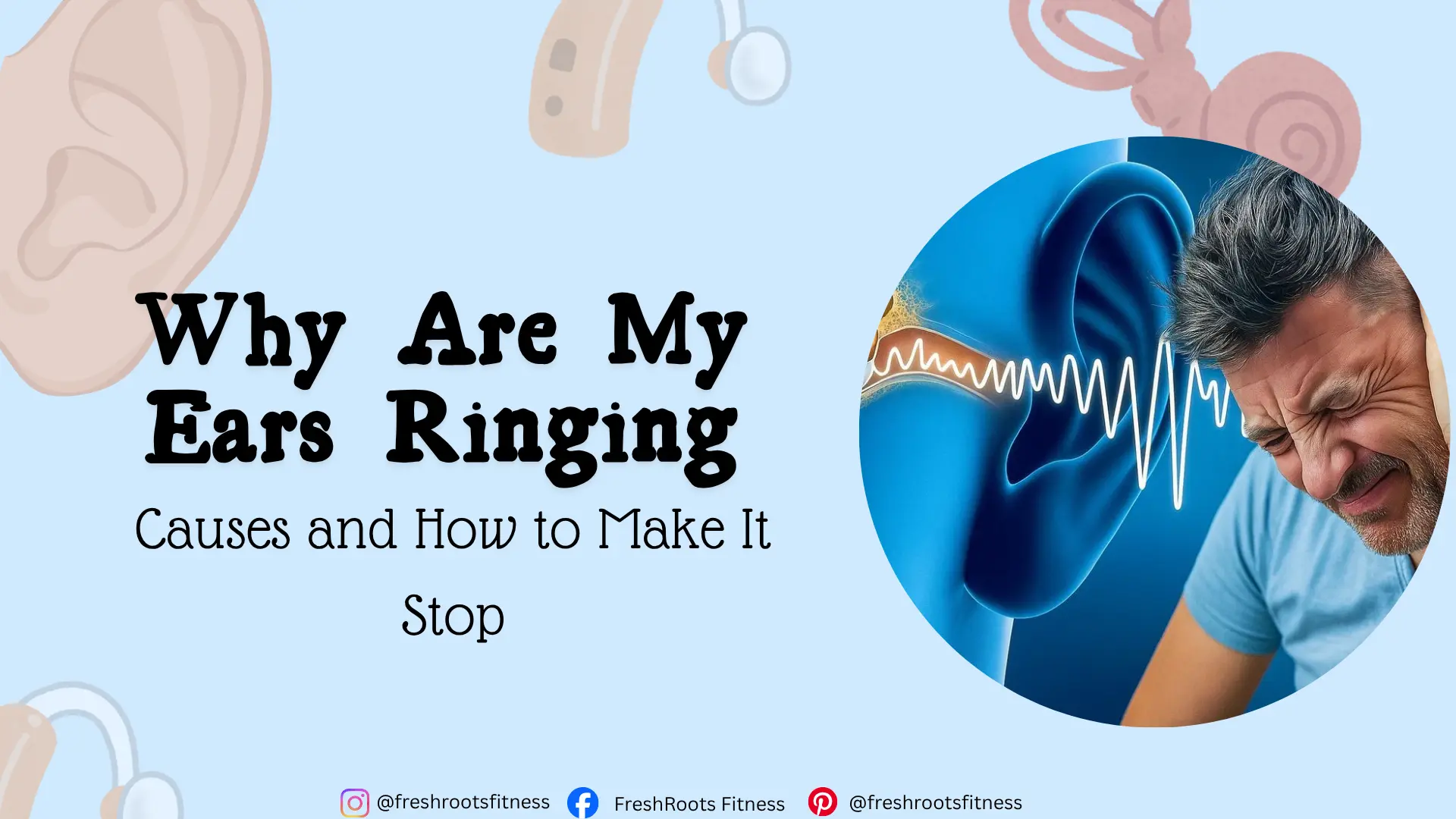
It starts quietly. A faint hum a soft whistle, a high-pitched tone that you notice only when the room goes quiet. You wait for it to go away. Sometimes it does. Sometimes it doesn’t. And if it’s been lingering for days or weeks or if it comes and goes so regularly it’s become a background feature of your life, you’ve probably asked yourself at some point. ” Why are my ears ringing”?
The medical term for this is tinnitus, the perception of sound in one or both ears without any external source. It can sound like ringing, buzzing, hissing, clicking, whooshing or even a low-frequency hum. For some people, it’s a minor inconvenience that fades within hours. For others, it’s a persistent, disruptive presence that affects concentration, sleep, mood and overall quality of life.
Tinnitus is far more common than most people realize. Research suggests it affects somewhere between 10 and 15 percent of adults worldwide, making it one of the most prevalent auditory conditions on the planet. And yet most people who experience it don’t seek help, either because they assume nothing can be done or because they don’t realize that many underlying causes are directly addressable.
The key to dealing with tinnitus effectively is understanding where it’s coming from because the cause determines the approach. This guide breaks down every major cause of ringing in the ears, identifies the warning signs that require medical attention and covers evidence-based strategies for reducing or managing the ringing.
What Is Tinnitus and Why Does It Happen?
Before answering the question of why my ears are ringing, it helps to understand what tinnitus actually is at a physiological level.
The auditory system works by converting sound waves into electrical signals that travel along the auditory nerve to the brain, where they’re interpreted as sound. When any part of this system is disrupted, whether in the ear itself, the auditory nerve or the brain’s auditory processing areas, the brain can generate phantom sounds to compensate for the disrupted input.
Think of it a little like a phantom limb sensation. Just as the brain can “feel” a limb that’s no longer there because it’s accustomed to receiving signals from that area, it can “hear” sounds when the normal flow of auditory information is altered.
Tinnitus is therefore not a disease itself, it’s a symptom. It’s the auditory system’s response to some form of disruption, damage or imbalance. Identifying what’s causing that disruption is the essential first step in addressing it.
Experts believe that in most cases, tinnitus originates at the level of the cochlea, the inner ear structure responsible for converting sound into nerve signals, though it can also involve the auditory nerve and central auditory processing pathways. The causes that disrupt these structures are varied and understanding them is the most practical way to answer the question Why are my ears ringing right now?
Common Causes of Ear Ringing
Noise-Induced Hearing Loss and Sound Exposure
This is by far the most common cause of tinnitus in adults. Exposure to loud sounds, whether a one-time event like a concert or explosion or repeated exposure over time in a noisy work environment, damages the delicate hair cells inside the cochlea. These hair cells convert sound vibrations into electrical signals. Once damaged, they cannot regenerate.
When hair cells are damaged, they sometimes send erratic electrical signals to the brain, even in the absence of external sound, which the brain interprets as tinnitus. This is why ringing after a loud concert is so common it’s a temporary sign that those hair cells have been stressed. Repeated exposure causes cumulative, permanent damage.
Research suggests that occupational noise exposure in construction, manufacturing, music and the military is the leading driver of chronic tinnitus in adults. Studies indicate that hearing protection used consistently can prevent the majority of noise-induced hearing damage.
Earwax Blockage
A surprisingly common and easily corrected cause of ear ringing is a buildup of earwax (cerumen) that partially or fully blocks the ear canal. The blockage alters pressure in the ear canal, can press against the eardrum and disrupts the normal processing of sound, which can trigger or worsen tinnitus.
Many people report that ear ringing resolves completely after professional earwax removal. If tinnitus came on gradually without obvious noise exposure and especially if there’s also a sensation of fullness or muffled hearing in one ear, earwax blockage is worth checking as a first step.
Age-Related Hearing Loss (Presbycusis)
Hearing naturally declines with age, a process called presbycusis that typically begins in the mid-40s and accelerates through the 60s and beyond. As the auditory system’s sensitivity reduces, tinnitus often emerges as a companion symptom. In older adults, tinnitus and age-related hearing loss are so closely linked that one rarely appears without the other.
Studies indicate that the prevalence of tinnitus increases significantly with age, with adults over 65 experiencing it at rates roughly double those of younger adult populations. Hearing aids that amplify external sound can often reduce tinnitus perception in these cases by restoring more normal auditory input.
Ear Infections and Fluid in the Middle Ear
Middle ear infections (otitis media) and conditions that cause fluid accumulation in the middle ear space, such as Eustachian tube dysfunction, can alter pressure and sound transmission in ways that produce tinnitus. The ringing in these cases is often accompanied by ear pain, a feeling of fullness, muffled hearing or fever.
The good news is that tinnitus caused by ear infections and fluid typically resolves once the underlying condition is treated. This is one of the more straightforwardly treatable causes, particularly when caught early.
Medications Ototoxic Drugs
A wide range of medications can cause or worsen tinnitus, a property called ototoxicity. The auditory system, particularly the cochlea and auditory nerve, is unusually sensitive to certain drug classes.
Common ototoxic medications include:
- High-dose aspirin is one of the most well-known causes; tinnitus from aspirin is often dose-dependent and may resolve when the dose is reduced.
- Non-steroidal anti-inflammatory drugs (NSAIDs), such as ibuprofen and naproxen, at high or sustained doses.
- Certain antibiotics, particularly aminoglycosides like gentamicin and streptomycin.
- Loop diuretics, such as furosemide and similar medications are used for fluid retention.
- Chemotherapy drugs, particularly cisplatin, which has significant ototoxic effects
- Quinine and antimalarial medications.
If ear ringing began or worsened after starting a new medication, this connection is worth discussing with the prescribing physician. In many cases, adjusting the dose or switching to an alternative resolves the tinnitus.
Temporomandibular Joint (TMJ) Disorders
The temporomandibular joint, the hinge joint connecting the jaw to the skull, sits in very close proximity to the ear canal and the structures of the middle ear. When this joint is dysfunctional, inflamed or misaligned, it can directly affect the muscles and structures around the ear.
Many people with TMJ disorders experience ear ringing a sensation of fullness in the ear and occasional ear pain, all without any direct ear pathology. Dental clenching, jaw grinding (bruxism), poor bite alignment and jaw trauma are common triggers.
If tinnitus is accompanied by jaw pain, difficulty chewing, clicking or popping of the jaw joint, or facial muscle tension, a dentist or oral medicine specialist is the appropriate first consultation.
Cardiovascular Conditions and Blood Flow
A specific subtype of tinnitus called pulsatile tinnitus produces a rhythmic sound that pulses in time with the heartbeat. This is distinct from the more common steady ringing and is often a sign of a vascular issue affecting blood flow near the ear.
Causes of pulsatile tinnitus include high blood pressure, atherosclerosis (narrowing of the arteries), arteriovenous malformations and certain types of anemia, including low hemoglobin, where the heart pumps harder to compensate for reduced oxygen-carrying capacity, creating turbulent blood flow audible to the inner ear.
Any pulsatile tinnitus that is new, persistent or worsening should be evaluated by a doctor promptly, as it can occasionally indicate a more serious vascular condition.
Stress and Anxiety
Chronic stress and anxiety don’t directly cause tinnitus, but they are among the most powerful amplifiers of existing tinnitus. The stress response activates the autonomic nervous system, increases sensitivity throughout the sensory system and heightens the brain’s attention to perceived threats, including internal sounds like tinnitus.
Many people notice their tinnitus becomes noticeably louder, more intrusive and more distressing during periods of high stress, even when the underlying audiological situation hasn’t changed. This is the brain’s attentional system, making the tinnitus harder to ignore.
Research suggests that addressing anxiety and stress through cognitive behavioral therapy, mindfulness and relaxation practices is one of the most consistently effective interventions for reducing tinnitus distress, even when the sound itself cannot be fully eliminated.
Meniere’s Disease
Meniere’s disease is an inner ear disorder caused by abnormal fluid pressure in the inner ear. It produces episodes of severe vertigo, fluctuating hearing loss, a sensation of ear fullness and tinnitus, often all occurring together in distinct attacks that last minutes to hours.
The tinnitus associated with Meniere’s typically presents as a low-frequency roaring or buzzing in one ear, often building in intensity before an attack. It’s a distinct clinical picture if tinnitus comes with vertigo and fluctuating hearing. Meniere’s disease is a specific diagnosis worth raising with an ENT specialist.
Head or Neck Injuries
Trauma to the head or neck, including whiplash, concussion and skull fractures, can damage auditory structures directly, affect nerve pathways involved in hearing or alter blood flow to the inner ear. Post-traumatic tinnitus can develop immediately after injury or emerge weeks later.
Neck injuries in particular can affect the somatosensory system in ways that trigger tinnitus through pathways that aren’t directly auditory, explaining why some people can modulate their tinnitus intensity by turning their head or applying pressure to the neck.
Acoustic Neuroma
An acoustic neuroma is a benign (non-cancerous) tumor that grows on the vestibular nerve, the nerve connecting the inner ear to the brain. As it grows, it can compress the auditory nerve and produce tinnitus, typically in one ear, alongside progressive one-sided hearing loss and sometimes balance difficulties.
While acoustic neuromas are relatively rare, one-sided tinnitus that is persistent, progressive and accompanied by hearing loss or balance issues warrants imaging (typically an MRI) to rule this out. Early detection significantly improves outcomes.
Signs That Your Ear Ringing Needs Urgent Medical Attention
Not all tinnitus requires emergency evaluation, but certain presentations should prompt medical assessment.
See a doctor urgently if tinnitus is:
- Pulsatile beating in time with your heartbeat
- Sudden onset, particularly in one ear, without obvious noise exposure
- Accompanied by sudden hearing loss in one or both ears
- Associated with severe dizziness, vertigo or balance problems
- Occurring alongside facial weakness, numbness or visual changes
- Accompanied by ear pain, discharge or signs of infection
- Getting progressively worse over the days without an obvious explanation
Sudden sensorineural hearing loss a medical emergency, can present alongside tinnitus and requires treatment within hours to days to maximize recovery potential. If hearing suddenly drops in one ear alongside ringing, do not wait to see a doctor.
How to Reduce or Manage Ear Ringing
For many people, particularly those with mild to moderate tinnitus, the question isn’t just why are my ears ringing, but what can I actually do about it. Here’s what the evidence supports.
Address the Underlying Cause First
This is the most important step. Tinnitus from earwax blockage resolves with cleaning. Tinnitus from ototoxic medication may resolve with dose adjustment. Tinnitus from an ear infection clears as the infection does. Tinnitus from TMJ dysfunction improves with dental treatment. Always pursue root cause resolution before jumping to symptom management.
Sound Therapy and Masking
One of the most practically effective approaches for persistent tinnitus is sound enrichment, introducing background sound that partially masks or distracts from the tinnitus signal options include:
- White noise machines are particularly helpful at night when silence makes tinnitus most intrusive
- Nature sounds, such as rain, ocean waves or forest ambience, are among the most commonly preferred masking sounds
- Low-level background music or podcasts, giving the auditory system external input, reduces its tendency to focus internally
- Hearing aids with built-in sound generators for those with accompanying hearing loss, these deliver both amplification and masking simultaneously
Sound therapy doesn’t eliminate tinnitus it reduces the contrast between the tinnitus and the surrounding sound environment, which significantly reduces distress.
Cognitive Behavioral Therapy (CBT)
CBT is the most evidence-backed psychological intervention for tinnitus distress. It doesn’t change the sound itself, it changes the emotional and attentional response to the sound. Research suggests CBT meaningfully reduces tinnitus-related distress, improves sleep and decreases the degree to which tinnitus interferes with daily life even when the sound remains present.
Tinnitus Retraining Therapy (TRT) combines sound therapy with counseling in a structured approach that aims to reclassify tinnitus signals as neutral rather than threatening, so the brain reduces its attentional response over time.
Protect Your Hearing Going Forward
For anyone with noise-induced tinnitus or anyone wanting to prevent tinnitus from developing, consistent hearing protection is the most important intervention. Custom earplugs for musicians, high-fidelity earplugs that preserve sound quality and earmuffs for industrial environments all reduce the ongoing damage that worsens tinnitus over time.
Reducing personal audio device volume, keeping earphones and headphones below 60% of maximum volume and limiting continuous listening to 60 minutes before giving the ears a rest, is the simplest preventive habit for everyday use.
Reduce Caffeine, Alcohol and Sodium
Research suggests that caffeine, alcohol and high sodium intake can worsen tinnitus in some individuals by affecting blood pressure, circulation and fluid balance in the inner ear. Many people notice tinnitus is more intrusive on days of high caffeine or alcohol intake.
Reducing these particularly during periods of tinnitus flare-up is a low-risk modification worth trying. The effect is highly individual, so tracking whether changes in these variables correspond to tinnitus changes is a useful personal experiment.
Manage Stress Actively
Given the powerful amplifying effect of stress on tinnitus perception, active stress management is one of the highest-impact non-medical interventions available. Regular aerobic exercise, mindfulness meditation, yoga, adequate sleep and social connection all reduce the nervous system’s reactivity and with it, tinnitus intrusiveness.
Research suggests that consistent mindfulness practice, in particular helps people shift from reacting to tinnitus as a threat to observing it as a neutral sensation a shift that dramatically changes the quality of life even when the sound remains.
Address Cardiovascular and Metabolic Risk Factors
High blood pressure, poor circulation, elevated blood sugar and anemia can all contribute to or worsen tinnitus through their effects on blood flow to the inner ear. Managing these through lifestyle and, where necessary, medication creates a better vascular environment for auditory health.
Studies indicate that blood pressure control, in particular, is associated with meaningful reductions in pulsatile tinnitus and improving cardiovascular health through exercise and diet benefits tinnitus alongside many other health outcomes.
Sleep Hygiene
Tinnitus and sleep disruption create a vicious cycle. Tinnitus makes it harder to fall asleep and poor sleep makes tinnitus more distressing and intrusive the next day. Breaking this cycle requires active sleep support.
Useful strategies include using background sound at a level that partially masks the tinnitus, keeping a consistent sleep schedule, avoiding screens before bed and keeping the bedroom cool and dark. For people with significant sleep disruption from tinnitus, CBT for insomnia (CBT-I) is one of the most effective non-pharmaceutical interventions available.
Lifestyle Habits That Support Ear and Auditory Health
Building habits that protect long-term auditory function is the most sustainable form of tinnitus management and prevention.
- Wear ear protection at loud events, concerts, sporting events and fireworks shows all of which exceed safe exposure levels without protection
- Take listening breaks, particularly during prolonged headphone use; the ears need recovery time after exposure
- Stay physically active, exercise improves cochlear blood flow and reduces cardiovascular risk factors that contribute to auditory decline
- Eat a diet rich in antioxidants. Oxidative stress is a key driver of cochlear hair cell damage; the anti-inflammatory foods list covered previously is directly relevant here
- Maintain healthy blood pressure, chronic hypertension damages the arterial blood vessels over time
- Monitor medications, be aware of ototoxic drugs and discuss alternatives with your doctor when tinnitus is a concern
- Get regular hearing tests, particularly after age 50. Early detection of hearing loss allows earlier and more effective intervention.
Conclusion
Ear ringing rarely appears without a reason. It’s your auditory system communicating that something has changed, whether that’s noise exposure, a medication, a shift in blood pressure, an inner ear imbalance or a stress response that’s stuck on high. The question why are my ears ringing is worth asking seriously, not dismissing.
For many people, identifying and addressing the cause brings meaningful relief, sometimes completely. For others, where the cause is permanent or structural, learning to manage the relationship with the sound through sound therapy, CBT and stress management can reduce its impact on daily life dramatically.
By MayoClinic Tinnitus – Symptoms and causes
Don’t accept persistent ear ringing as something you simply have to live with until you’ve properly investigated it. See an audiologist or ENT specialist. Protect your ears going forward. Address the lifestyle factors that make the auditory system more vulnerable.
Your ears have been working quietly and faithfully for your entire life. They deserve that level of attention in return.
FAQs
-
Why are my ears ringing suddenly without any loud noise exposure?
Sudden tinnitus without noise exposure can result from earwax blockage, ear infection, medication side effects, jaw dysfunction, blood pressure changes or in rare cases, acoustic neuroma. Persistent sudden tinnitus warrants prompt medical evaluation.
-
Can stress and anxiety cause ear ringing?
Stress doesn’t directly cause tinnitus but powerfully amplifies existing ringing by heightening the nervous system’s sensitivity and attention to internal sounds. Managing stress consistently is one of the most effective tinnitus management strategies available.
-
When should I see a doctor about ear ringing?
See a doctor promptly for pulsatile tinnitus, sudden one-sided hearing loss, tinnitus with dizziness or facial symptoms or ringing that worsens progressively. Tinnitus lasting more than one week without an obvious cause warrants audiological evaluation.
-
Is there a permanent cure for tinnitus?
No universal cure exists currently. However, many cases resolve when the underlying cause is treated. For persistent tinnitus, sound therapy, CBT and tinnitus retraining therapy significantly reduce distress and improve quality of life for most people.
-
What makes ear ringing worse?
Common aggravating factors include loud noise, high caffeine and alcohol intake, elevated sodium, poor sleep, chronic stress, high blood pressure and ototoxic medications. Identifying personal triggers through observation helps guide management effectively.
-
Will ear ringing go away on its own?
Tinnitus after brief loud noise exposure typically resolves within hours to days. Persistent tinnitus lasting more than a week without an obvious temporary cause is unlikely to resolve without identifying and addressing the underlying reason.

- How to Reduce Cholesterol Naturally With Simple Food Habits - July 4, 2026
- Early Signs of High Blood Sugar Most People Miss Daily - June 25, 2026
- How to Boost Immunity Naturally: Simple Daily Habits - June 23, 2026