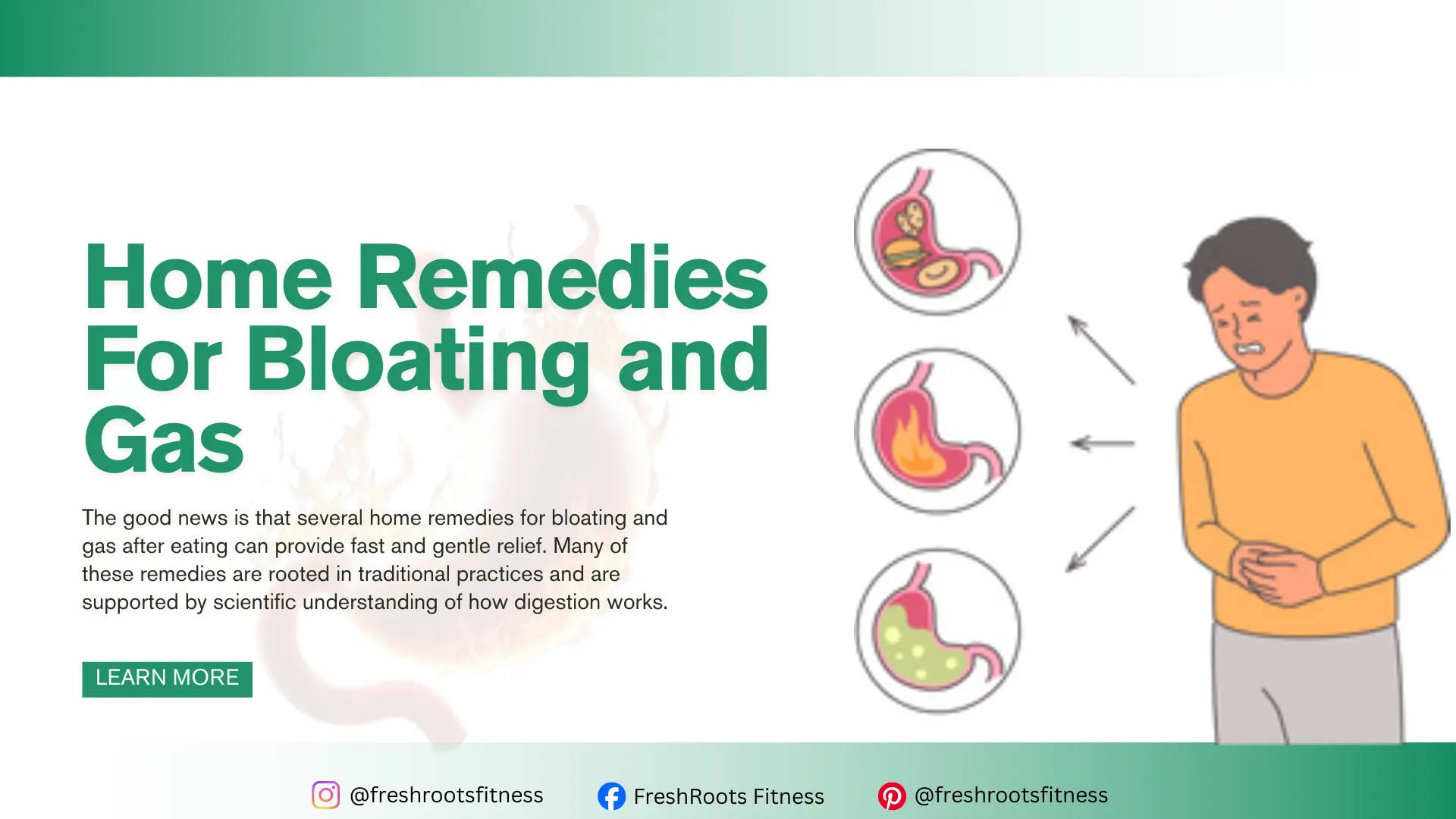
Feeling uncomfortable, tight, or heavy after meals? Bloating and gas are common digestive complaints, especially after large or heavy meals. While occasional bloating is normal, frequent discomfort may signal poor digestion or food sensitivity.
The good news is that several home remedies for bloating and gas after eating can provide fast and gentle relief. Many of these remedies are rooted in traditional practices and are supported by scientific understanding of how digestion works.
Let’s explore why bloating happens and what you can do naturally.
Why Do Bloating and Gas Happen After Eating?
Bloating usually occurs when excess gas builds up in the digestive tract. This can happen due to:
- Eating too quickly
- Swallowing air
- Overeating
- Poor food combinations
- High-fiber meals without enough water
- Food intolerances (like lactose sensitivity)
Research suggests that incomplete digestion allows food to ferment in the gut, producing gas. Experts believe gut bacteria balance also plays a major role.
Understanding the cause helps choose the right home remedies for bloating and gas after eating.
Home Remedies for Bloating and Gas After Eating
Here are effective natural remedies you can try.
1. Warm Water or Herbal Tea
Drinking warm water after meals may support digestion.
Herbal teas like:
- Ginger tea
- Peppermint tea
- Fennel tea
are traditionally recommended for gas relief.
Studies indicate peppermint may relax intestinal muscles, allowing trapped gas to pass more easily. Many people report noticeable relief within 20-30 minutes.
2. Ginger for Digestive Support
Ginger has been used in traditional medicine for centuries.
It may:
- Stimulate digestive enzymes
- Reduce inflammation
- Improve stomach emptying
Research suggests ginger helps reduce bloating linked to delayed gastric emptying.
You can:
- Chew a small piece of fresh ginger
- Add ginger to warm water
- Use it in meals
3. Fennel Seeds (Saunf)
Chewing fennel seeds after meals is a common digestive practice.
Fennel may:
- Relax digestive muscles
- Reduce gas formation
- Improve breath
Experts believe fennel’s natural oils support smooth muscle relaxation in the gut. This is one of the simplest home remedies for bloating and gas after eating.
4. Gentle Walking After Meals
Sitting or lying down immediately after eating may slow digestion.
A 10-15 minute light walk:
- Stimulates intestinal movement
- Helps gas move through the system
- Prevents heaviness
Studies indicate that light physical activity improves digestive efficiency.
5. Avoid Drinking Excess Water During Meals
Drinking too much water during meals may dilute stomach acids.
Stomach acid is necessary for proper digestion. Poor digestion can lead to fermentation and gas formation.
Sip small amounts if needed, but avoid large volumes during meals.
6. Apple Cider Vinegar (Diluted)
Some users report relief by taking:
- 1 teaspoon apple cider vinegar
- Mixed in a glass of warm water
- Before meals
Experts suggest it may support stomach acid levels in people with low acid production. However, this may not suit everyone and should be used cautiously.
7. Improve Eating Habits
Many bloating issues are caused by how we eat rather than what we eat.
Try:
- Chewing food slowly
- Avoiding talking while eating
- Eating smaller portions
- Avoiding overeating
Research suggests proper chewing supports enzyme release and smoother digestion.
8. Identify Food Triggers
Common bloating triggers include:
- Fried foods
- Processed snacks
- Carbonated drinks
- Dairy (for lactose-sensitive individuals)
- Beans (if not soaked properly)
Keeping a food diary may help identify patterns. Many people report reduced bloating once trigger foods are minimized.
9. Probiotics for Gut Balance
Gut bacteria help break down food. An imbalance may lead to excessive gas production.
Sources of natural probiotics:
- Yogurt
- Curd
- Fermented vegetables
Studies indicate probiotics may improve digestive comfort over time.
10. Apply a Warm Compress
Placing a warm heating pad on the abdomen may relax abdominal muscles and relieve discomfort.
Heat improves blood circulation and may ease cramps associated with gas.
These Articles You Should Read
Home Remedies for Digestive Problems
Garlic Honey Remedy for Cold and Cough
Natural Home Remedies for Common Ailments
How Digestion Works
When you eat, food moves from the stomach to the small intestine, where enzymes break it down.
If digestion is slow or incomplete:
- Undigested food reaches the large intestine
- Gut bacteria ferment it
- Gas forms as a byproduct
This gas builds pressure, causing bloating.
Research suggests stress can also slow digestion by diverting blood flow away from the digestive system.
When Bloating May Indicate a Bigger Issue
Occasional bloating is normal. However, consult a doctor if you experience:
- Severe abdominal pain
- Persistent bloating for weeks
- Unexplained weight loss
- Blood in stool
- Chronic constipation or diarrhea
Conditions like IBS, food intolerances, or hormonal imbalances may require medical evaluation.
Long-Term Prevention Tips
To prevent frequent bloating:
- Eat balanced meals
- Stay hydrated
- Exercise regularly
- Manage stress
- Avoid excessive processed foods
Experts believe consistency in daily habits significantly improves gut health.
How Fast Do These Remedies Work?
Some home remedies for bloating and gas after eating may provide relief within 20-60 minutes, especially herbal teas and walking.
However, if bloating is linked to gut imbalance, improvement may take a few weeks of dietary consistency.
Patience and observation are important.
By HealthLine- 9 Home Remedies and Prevention Tips
Conclusion
Bloating and gas after eating can be uncomfortable, but they are usually manageable with simple changes. Understanding the root cause helps choose the right home remedies for bloating and gas after eating.
Ginger, fennel seeds, herbal teas, mindful eating, light walking and probiotic support are safe and practical options for many people.
If symptoms are frequent or severe, professional evaluation is recommended to rule out underlying conditions. Listening to your digestive system and making small daily adjustments can lead to lasting comfort.
FAQs
-
What are the best home remedies for bloating and gas after eating?
Ginger tea, fennel seeds, light walking, warm water and mindful eating are commonly effective remedies.
-
Why do I feel bloated immediately after eating?
Eating too fast, swallowing air or poor digestion may cause immediate bloating.
-
Does stress cause bloating?
Yes. Stress can slow digestion and increase gas formation.
-
How long does bloating last?
Mild bloating often improves within a few hours. Persistent bloating may require dietary changes or medical evaluation.
-
Are probiotics helpful for gas?
Research suggests probiotics may improve gut balance and reduce gas over time.
-
When should I see a doctor for bloating?
If bloating is severe, persistent or accompanied by pain or weight loss, consult a healthcare professional.