Stress is part of modern life. But when stress becomes constant, your body produces too much cortisol, often called the “stress hormone.” Over time, high cortisol can affect your sleep, weight, mood and overall health.
If you’ve been feeling anxious, tired, gaining belly fat or struggling with poor sleep, your cortisol levels might be higher than normal. The good news? There are simple and safe home remedies to reduce cortisol levels naturally. In this guide, we’ll explore what cortisol does, why it increases and practical remedies you can start today.
What Is Cortisol and Why Does It Matter?
Cortisol is a hormone produced by your adrenal glands. It plays an important role in:
- Managing stress response
- Regulating blood sugar
- Controlling inflammation
- Supporting metabolism
- Helping you wake up in the morning
In small amounts, cortisol is helpful. But when stress becomes chronic, your body stays in “fight or flight” mode.
Research suggests that prolonged high cortisol may contribute to:
- Weight gain (especially around the abdomen)
- Insomnia
- Anxiety or irritability
- Hormonal imbalance
- Digestive issues
- Weakened immunity
That’s why many experts believe managing stress daily is essential for long-term health.
Natural Ways and Home Remedies to Reduce Cortisol Levels
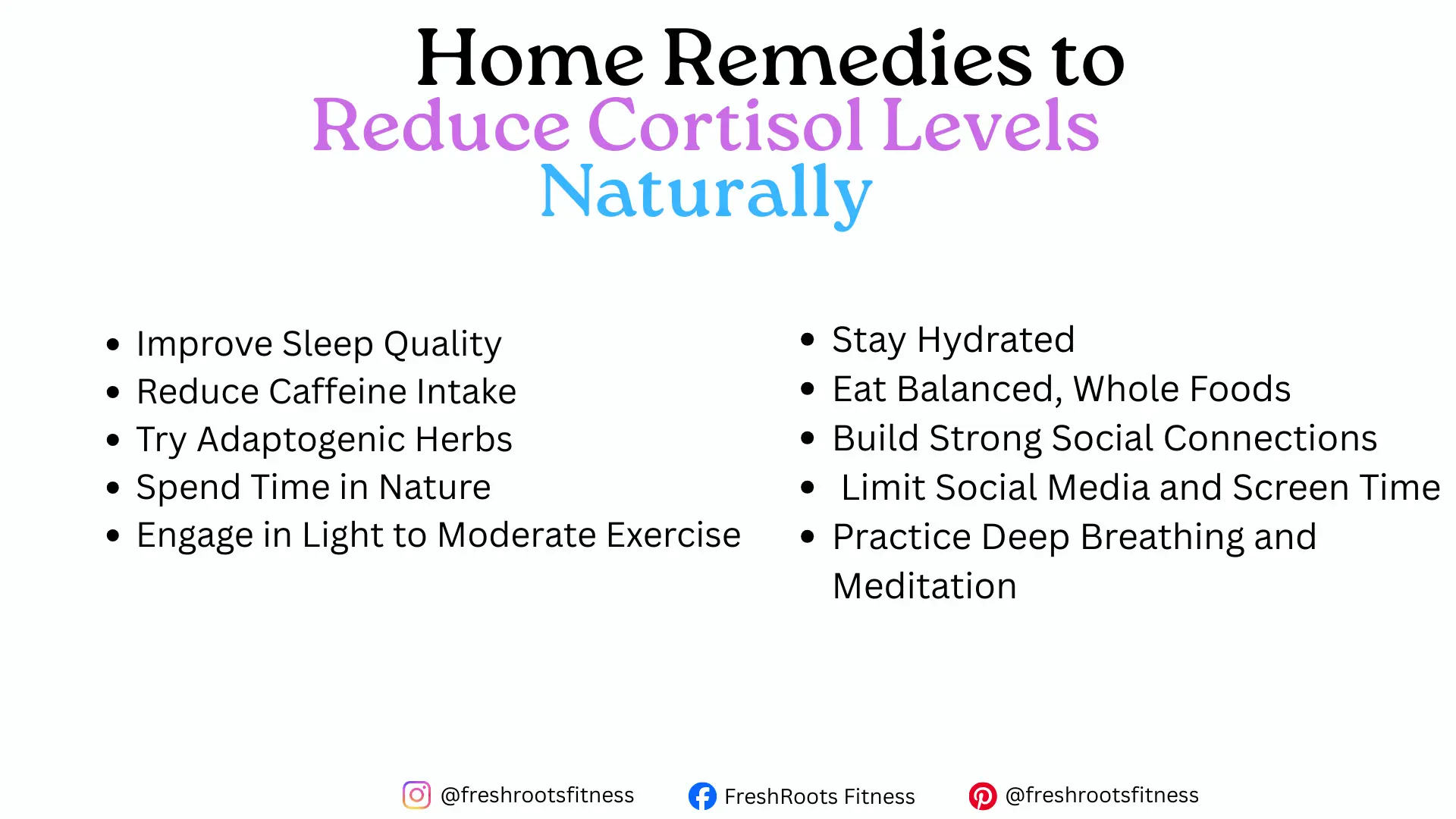
Below are effective and practical home remedies to reduce cortisol levels without medication. These methods focus on calming the nervous system and supporting hormone balance.
1. Improve Sleep Quality
Sleep is one of the most powerful natural regulators of cortisol.
When you don’t sleep enough, cortisol rises the next day. Studies indicate that even one night of poor sleep can increase stress hormone levels.
What helps:
- Sleep 7-8 hours daily
- Avoid screens 1 hour before bed
- Keep your room dark and cool
- Go to bed at the same time every night
Many people report improved mood and reduced stress within a week of consistent sleep habits.
2. Practice Deep Breathing and Meditation
Slow breathing signals your brain that you are safe. This reduces cortisol production.
Experts believe mindfulness practices activate the parasympathetic nervous system, the body’s “rest and repair” mode.
Try this simple breathing technique:
- Inhale slowly for 4 seconds
- Hold for 4 seconds
- Exhale for 6 seconds
- Repeat for 5 minutes
Some users notice a sense of calm immediately after breathing exercises. This is one of the easiest home remedies to reduce cortisol levels because it costs nothing and works quickly.
3. Reduce Caffeine Intake
Too much caffeine can increase cortisol, especially if consumed on an empty stomach.
If you feel jittery, anxious or experience energy crashes, caffeine may be contributing.
Tips:
- Limit coffee to 1 cup daily
- Avoid caffeine after 2 PM
- Switch to herbal teas like chamomile or tulsi
Herbal teas are often recommended in traditional practice to calm the body naturally.
4. Eat Balanced, Whole Foods
Blood sugar spikes and crashes can increase cortisol production. Research suggests that unstable blood sugar keeps the body in stress mode.
Focus on:
- Protein-rich meals (eggs, lentils, nuts)
- Healthy fats (seeds, olive oil)
- Fiber (vegetables, fruits)
- Avoiding excess sugar and processed foods
Stable blood sugar supports stable hormones. Many people notice better energy levels within 2-3 weeks of balanced eating.
5. Try Adaptogenic Herbs
Adaptogens are herbs that help the body adapt to stress.
Some commonly used adaptogens include:
- Ashwagandha
- Rhodiola
- Holy basil (Tulsi)
Studies indicate that certain adaptogenic herbs may help reduce perceived stress and balance cortisol levels.
Ashwagandha, in particular, is widely used in traditional wellness systems. However, it’s best to consult a healthcare professional before starting any supplement.
This remedy is often recommended in traditional practice for stress support.
6. Engage in Light to Moderate Exercise
Exercise reduces stress, but overtraining can increase cortisol. Experts believe moderate activity supports hormone balance, while intense daily workouts may have the opposite effect.
Good options:
- Brisk walking
- Yoga
- Swimming
- Light strength training
Yoga, especially, combines movement with breath control, making it one of the most effective home remedies to reduce cortisol levels naturally. Many people report feeling calmer after just 20-30 minutes of movement.
7. Spend Time in Nature
Nature exposure lowers stress hormones. Research suggests that spending even 20 minutes outdoors may reduce cortisol levels.
- Walk barefoot on the grass
- Sit in the sunlight in the morning
- Visit a park or garden
Sunlight also helps regulate your circadian rhythm, which supports better sleep.
8. Limit Social Media and Screen Time
Constant notifications and comparison culture can silently increase stress. Digital overstimulation keeps your brain alert and prevents relaxation.
Try:
- No phone 30 minutes after waking up
- Screen-free time before bed
- One “digital detox” day per week
Many users notice reduced anxiety and better focus after limiting screen time.
9. Stay Hydrated
Dehydration is a physical stressor. When your body lacks water, cortisol may rise. Drink enough water throughout the day, especially in warm weather or after exercise.
Add:
- Lemon water
- Coconut water (natural electrolytes)
Simple hydration can support overall stress regulation.
10. Build Strong Social Connections
Emotional support matters.
Experts believe positive social interaction lowers stress hormone production. Talking to someone you trust, laughing with family or spending time with friends can naturally reduce stress levels.
Human connection is one of the most overlooked home remedies to reduce cortisol levels.
These Articles You Should Read
Home Remedies for Digestive Problems
Home Remedies for Knee Pain in Women Over 40
Home Remedies for Bloating and Gas After Eating
10 Simple Yoga Poses to Reduce Stress and Anxiety at Home
Signs Your Cortisol May Be High
You might consider stress management if you experience:
- Persistent fatigue
- Belly fat gain
- Trouble sleeping
- Sugar cravings
- Mood swings
- Irregular periods (in women)
These symptoms can have many causes, so proper medical evaluation is important if problems persist.
How Long Does It Take to Lower Cortisol Naturally?
The timeline varies.
Some people notice improvement in sleep and mood within 1-2 weeks of lifestyle changes. Hormonal balance may take longer depending on stress levels and overall health.
Consistency is key. Small daily habits make a big difference over time.
When to See a Doctor
While these home remedies to reduce cortisol levels are helpful, seek medical advice if you experience:
- Severe anxiety or depression
- Rapid unexplained weight gain
- Very high blood pressure
- Persistent fatigue despite rest
In rare cases, medical conditions may affect cortisol production.
By The HealthLine- Natural Ways to Lower Your Cortisol Levels
Conclusion
Chronic stress affects more than just your mood, it impacts your hormones, sleep and overall well-being.
The good news is that simple lifestyle changes can support healthy stress hormone levels. Improving sleep, practicing breathing exercises, eating balanced meals and spending time in nature are powerful home remedies to reduce cortisol levels naturally. You don’t need drastic measures. Start small. Stay consistent. Over time, your body will respond positively.
FAQs
-
What is the fastest way to lower cortisol naturally?
Deep breathing, short walks and reducing caffeine can help calm the body quickly.
-
Can high cortisol cause weight gain?
Research suggests prolonged high cortisol may contribute to abdominal weight gain.
-
Does yoga reduce cortisol?
Studies indicate that yoga may help lower stress hormone levels by activating relaxation pathways.
-
Are supplements necessary to lower cortisol?
Not always. Lifestyle changes are often effective. Supplements should be used under professional guidance.
-
How do I know if my cortisol is high?
Symptoms like fatigue, poor sleep, anxiety and weight gain may indicate imbalance, but testing is required for confirmation.