Perimenopause is often associated with women in their late 40s. But for some women, symptoms can begin much earlier. Recognizing the signs of perimenopause under 40 is important because early awareness allows you to manage symptoms and protect long-term health.
If you are under 40 and noticing irregular periods, mood changes or unusual body shifts, you may wonder what is happening. While stress and lifestyle factors can influence hormones, early perimenopause is a real possibility for some women.
Let’s understand what perimenopause means, why it can happen early and what signs to look for.
What Is Perimenopause?
Perimenopause is the transitional phase before menopause. During this time, estrogen and progesterone levels begin fluctuating.
Unlike menopause, which is confirmed after 12 consecutive months without a period, perimenopause can last several years. Hormone levels may rise and fall unpredictably.
Research suggests that hormonal fluctuations, rather than low hormones alone, often cause most symptoms.
Can Perimenopause Start Before 40?
Yes, though it is less common.
Experts believe early perimenopause may occur due to:
- Genetic factors
- Autoimmune conditions
- Thyroid disorders
- Chronic stress
- Smoking
- Surgical procedures affecting the ovaries
Studies indicate that lifestyle stressors combined with genetic predisposition may accelerate ovarian aging in some women.
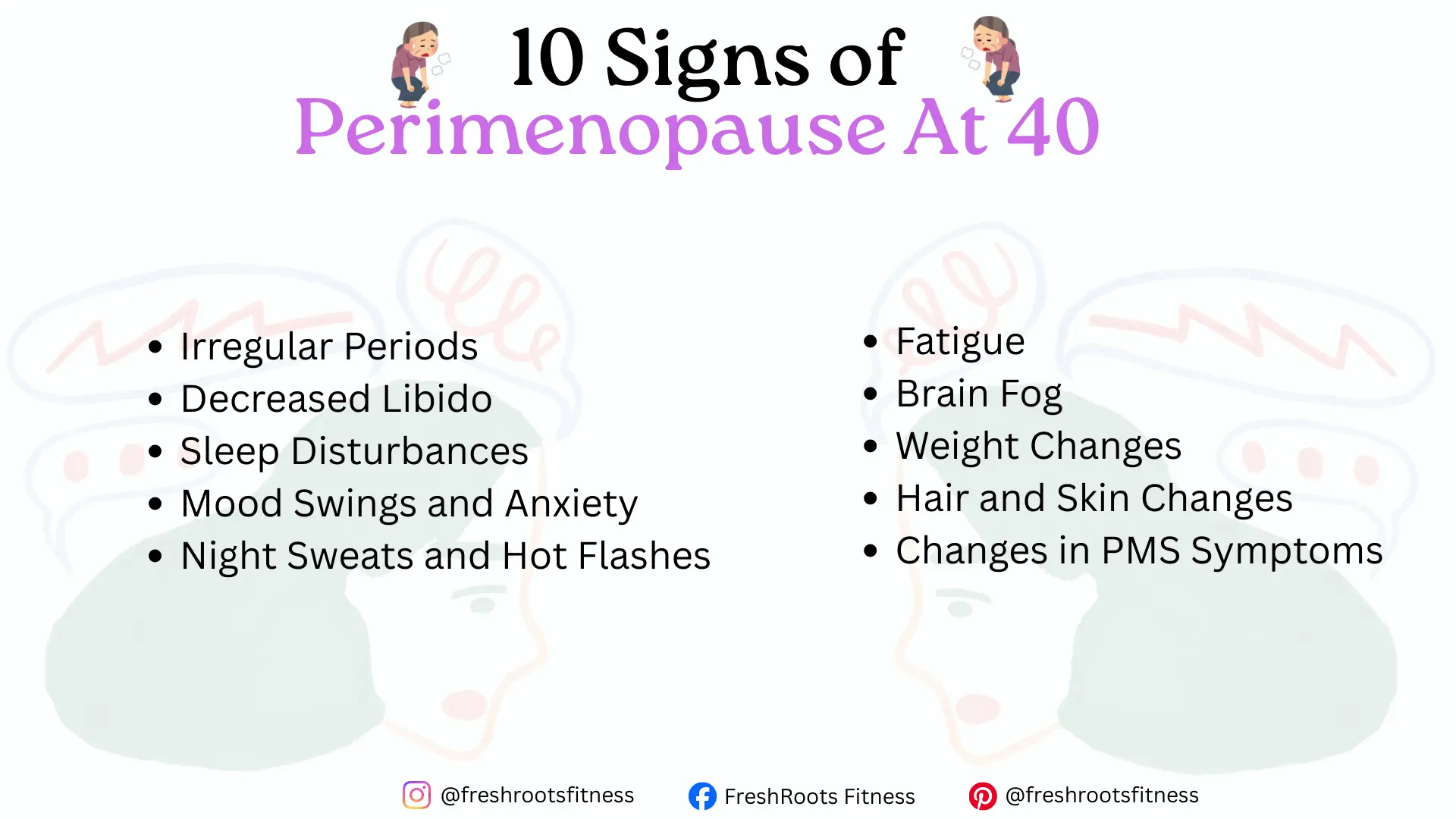
Common Signs of Perimenopause Under 40
Here are the most noticeable symptoms.
1. Irregular Periods
One of the earliest signs of perimenopause under 40 is cycle irregularity.
You may notice:
- Shorter cycles
- Longer cycles
- Heavier or lighter bleeding
- Skipped periods
Hormonal fluctuations affect ovulation timing, leading to unpredictable cycles.
2. Mood Swings and Anxiety
Estrogen influences serotonin, a brain chemical linked to mood.
When estrogen levels fluctuate, you may experience:
- Irritability
- Anxiety
- Low mood
- Emotional sensitivity
Many women report feeling “not like themselves” during this phase.
3. Night Sweats and Hot Flashes
Although more common later, some women experience early hot flashes.
These sudden heat waves may include:
- Flushing
- Sweating
- Rapid heartbeat
Research suggests that fluctuating estrogen affects the body’s temperature regulation center in the brain.
4. Sleep Disturbances
- Difficulty falling asleep or waking at night is common.
Hormonal changes may disrupt melatonin and cortisol balance. Poor sleep can further worsen fatigue and mood swings.
5. Decreased Libido
- Lower estrogen and testosterone levels may reduce sexual desire.
- Some users notice vaginal dryness or discomfort as well.
6. Brain Fog
- Forgetting small details or struggling to concentrate can feel frustrating.
- Experts believe estrogen plays a role in cognitive function and memory support.
7. Fatigue
- Persistent tiredness is one of the overlooked signs of perimenopause under 40.
- Hormonal shifts may affect energy production, sleep quality and thyroid function.
8. Changes in PMS Symptoms
You might notice PMS becoming more intense than before.
Symptoms may include:
- Breast tenderness
- Bloating
- Headaches
- Emotional swings
This happens because progesterone levels often decline earlier than estrogen.
9. Weight Changes
- Some women experience weight gain around the abdomen.
- Studies indicate hormonal fluctuations can influence metabolism and fat distribution.
10. Hair and Skin Changes
Lower estrogen levels may lead to:
- Dry skin
- Thinning hair
- Reduced skin elasticity
Estrogen supports collagen production, which declines gradually.
These Articles You Should Read
Why Am I Always Tired?
Natural Ways to Balance Estrogen
Early Signs of Hormonal Imbalance
Best Home Remedies for Irregular Periods
Why Early Perimenopause Happens
The ovaries contain a finite number of eggs. Over time, both egg quantity and quality decline. When ovarian function starts fluctuating earlier than expected, hormone patterns change sooner.
Research suggests chronic inflammation, smoking and environmental toxins may influence ovarian aging.
However, each woman’s timeline is unique.
How Is It Diagnosed?
Diagnosing early perimenopause can be challenging.
Doctors may evaluate:
- Menstrual history
- Symptoms
- Blood hormone levels (FSH, estrogen)
- Thyroid function
Hormone levels fluctuate daily, so a single test may not always give a complete picture.
Natural Ways to Support Hormones During Early Perimenopause
If you notice signs of perimenopause under 40, lifestyle support becomes important.
1. Prioritize Balanced Nutrition
Include:
- Protein-rich meals
- Healthy fats
- Leafy greens
- Seeds like flax and chia
Research suggests stable blood sugar helps regulate hormone fluctuations.
2. Strength Training
Muscle mass naturally declines with age.
Strength training supports:
- Metabolism
- Bone density
- Hormonal balance
Experts recommend at least 2-3 sessions weekly.
3. Manage Stress
Chronic stress increases cortisol levels, which may disrupt reproductive hormone levels.
Try:
- Meditation
- Deep breathing
- Yoga
- Journaling
Many women report improved mood stability after consistent stress management.
4. Improve Sleep Hygiene
- Aim for 7-9 hours of quality sleep.
- Create a calming bedtime routine and limit screen exposure before sleep.
5. Consider Medical Guidance
If symptoms are severe, healthcare providers may suggest hormone therapy or other treatments depending on individual needs.
Natural support is helpful, but professional advice ensures safety.
According to the Mayo Clinic – Perimenopause: Symptoms
When to See a Doctor
Seek medical evaluation if you experience:
- Missed periods for several months
- Severe depression or anxiety
- Intense hot flashes
- Fertility concerns
- Sudden early menopausal symptoms
Early diagnosis helps protect bone, heart and reproductive health.
Is Early Perimenopause Permanent?
Perimenopause is a transitional stage, not a disease.
Symptoms may fluctuate for years before menopause occurs. Some women experience mild symptoms, while others find them more disruptive.
Understanding the signs of perimenopause under 40 helps you take proactive steps rather than feeling confused or anxious.
Conclusion
Experiencing unexpected body changes before 40 can feel overwhelming. However, recognizing the signs of perimenopause under 40 allows you to respond with awareness instead of fear. Irregular periods, mood changes, fatigue, sleep disturbances and hot flashes are common early signals. While not every symptom means perimenopause, persistent changes deserve attention.
With balanced nutrition, stress management, exercise and medical guidance when necessary, many women successfully navigate this phase while maintaining energy and emotional well-being.
Your body evolves with time. Listening carefully is the first step toward long-term health.
FAQs
-
What are the early signs of perimenopause under 40?
Irregular periods, mood swings, sleep problems, hot flashes and fatigue are common signs.
-
Can stress cause early perimenopause?
Chronic stress may influence hormone balance, though genetics also play a role.
-
How is early perimenopause diagnosed?
Doctors review symptoms, menstrual history and sometimes hormone blood tests.
-
Is perimenopause under 40 common?
It is less common but possible. Each woman’s hormonal timeline is different.
-
Can early perimenopause affect fertility?
Yes, ovulation may become irregular, which can affect fertility.