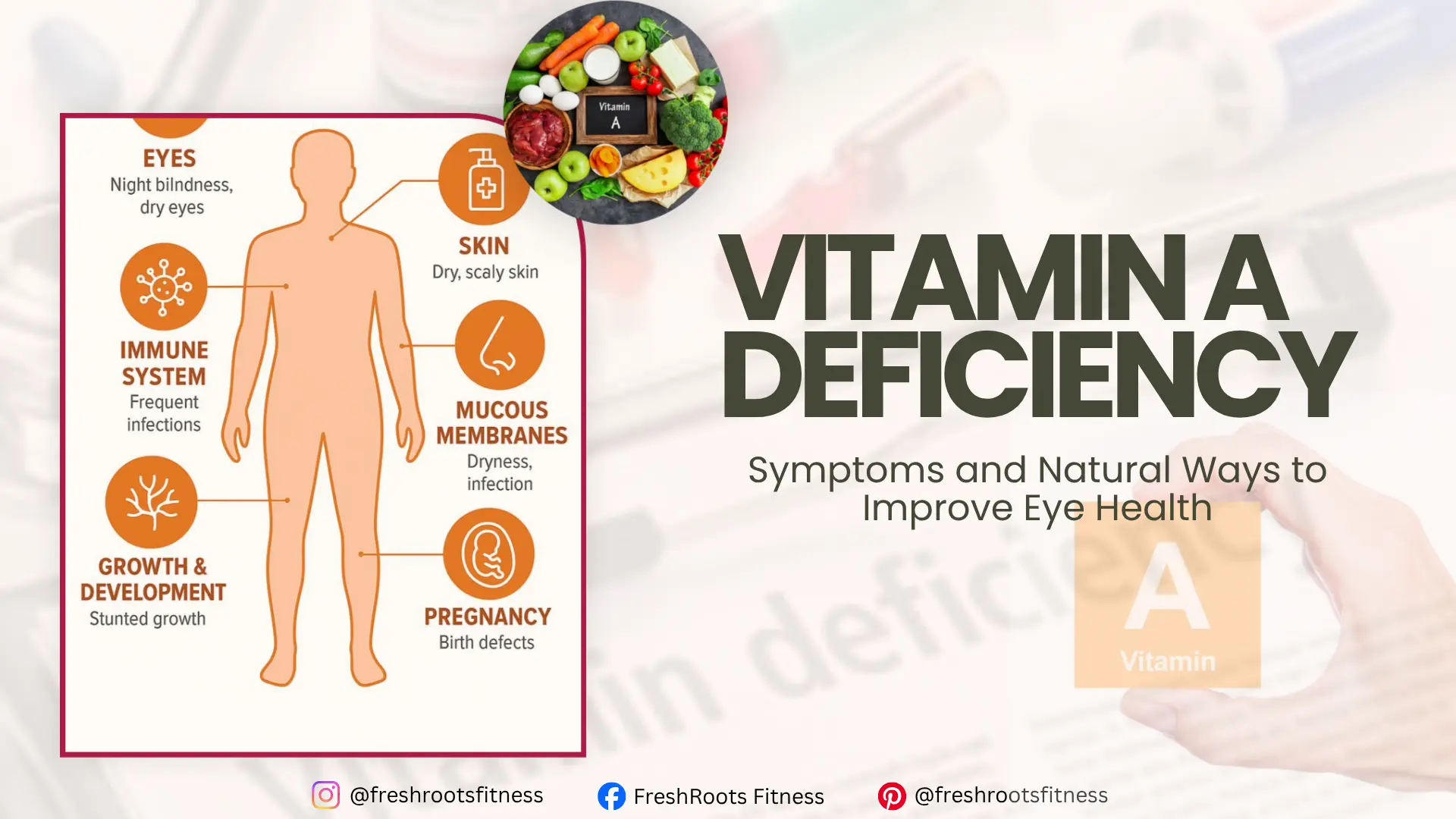
Have you ever noticed difficulty seeing clearly in dim light or felt that your eyes get tired faster than usual? These may seem like small issues, but sometimes they are early signals your body is giving you. One of the most common yet overlooked nutritional problems is related to Vitamin A Deficiency Symptoms. Vitamin A plays a vital role in maintaining healthy vision, immune function and skin health. When your body doesn’t get enough of it, the effects can slowly start showing in different ways.
Many people ignore these early signs until they become more noticeable. The good news is that with the right awareness and simple lifestyle changes, you can support your eye health naturally.
Why Vitamin A Is Important for Your Body
Vitamin A is a fat-soluble vitamin that supports multiple functions in your body, especially your eyes.
It helps:
- Maintain normal vision, especially in low light
- Support immune system function
- Keep skin and tissues healthy
Experts believe that Vitamin A is essential for producing rhodopsin, a pigment in the eyes that helps you see in low-light conditions. Without enough of it, your vision can be affected over time.
That’s why recognizing Vitamin A Deficiency Symptoms early is so important.
Common Vitamin A Deficiency Symptoms You Should Not Ignore
Vitamin A deficiency doesn’t usually appear suddenly. It develops gradually and the symptoms may start small.
1. Night Blindness (Difficulty Seeing in Low Light)
This is one of the earliest and most noticeable signs. You may find it difficult to see clearly at night or in dim lighting. Driving at night or moving in dark spaces may feel challenging.
Research suggests that this happens because the eye lacks enough rhodopsin to function properly.
2. Dry Eyes and Irritation
Your eyes may feel:
- Dry or uncomfortable
- Irritated or itchy
- Sensitive to light
This condition occurs because Vitamin A helps maintain moisture in the eyes.
3. Frequent Eye Infections
Low Vitamin A levels can weaken your immune system, especially in the eyes. You may experience repeated infections or slower healing of eye-related issues.
Experts believe that proper nutrition supports your body’s natural defense system.
4. Rough or Dry Skin
Vitamin A is important for skin health.
Deficiency may lead to:
- Dry or flaky skin
- Rough texture
- Increased sensitivity
Many people notice changes in skin quality when nutrient levels are low.
5. Poor Wound Healing
If small cuts or wounds take longer to heal, it could be linked to low Vitamin A levels. This vitamin supports tissue repair and regeneration.
6. Increased Risk of Infections
Vitamin A plays a role in maintaining your immune system.
When levels are low, your body may become more vulnerable to infections, especially respiratory ones.
These Articles You Should Read
Vitamin D Deficiency
Vitamin E Benefits for Skin and Hair
Top 10 Supplements For Weight Loss
What Causes Vitamin A Deficiency?
Understanding the cause helps you fix the problem more effectively.
Common reasons include:
- Poor diet lacking Vitamin A-rich foods
- Digestive issues affecting nutrient absorption
- Strict dieting or low-fat diets
- Chronic health conditions
Experts believe that a combination of poor nutrition and lifestyle habits often leads to Vitamin A Deficiency Symptoms.
Natural Ways to Improve Vitamin A Levels
The good part is that this deficiency can often be improved naturally with the right approach.
1. Include Vitamin A-Rich Foods
Adding the right foods to your diet is the most effective step.
You can include:
- Carrots
- Sweet potatoes
- Spinach and leafy greens
- Mangoes
- Eggs and dairy products
These foods provide either preformed Vitamin A or beta-carotene, which your body converts into Vitamin A.
2. Don’t Ignore Healthy Fats
Since Vitamin A is fat-soluble, your body needs fat to absorb it properly.
Adding small amounts of healthy fats like:
- Nuts
- Seeds
- Ghee or healthy oils
can improve absorption.
3. Maintain a Balanced Diet
Instead of focusing on just one nutrient, aim for overall balance. Experts believe that a well-rounded diet supports better nutrient absorption and long-term health.
4. Consider Supplements (If Needed)
If your levels are very low, supplements may be recommended. Many people notice improvement after correcting deficiencies under proper guidance.
Avoid self-medication, as excess Vitamin A can be harmful.
5. Take Care of Your Eye Health
Simple habits can support your vision:
- Reduce screen time
- Take regular eye breaks
- Stay hydrated
These small changes work alongside nutrition to improve overall eye health.
How Long Does It Take to Recover?
Recovery depends on the severity of the deficiency. Some users notice improvement in symptoms like dryness and fatigue within a few weeks. However, vision-related improvements may take longer.
Studies indicate that consistent dietary changes and proper care lead to gradual but steady improvement.
By The HealthLine – Signs and Symptoms of Vitamin A Deficiency
When Should You See a Doctor?
While mild cases can be managed at home, some symptoms should not be ignored.
Seek medical advice if:
- Night vision becomes significantly worse
- Eye pain or severe dryness persists
- Symptoms continue despite dietary changes
Early diagnosis helps prevent complications.
Conclusion
Your body always gives small signals before a bigger problem develops. Recognizing Vitamin A Deficiency Symptoms early can help you take action before it affects your vision and overall health.
Simple changes like improving your diet, supporting absorption and maintaining healthy habits can make a big difference over time. Start paying attention to what your body is telling you. With consistent care, many people notice better eye comfort, improved skin health and stronger immunity.
Your health is built on small daily choices, make them count.
FAQs
-
What are the early Vitamin A Deficiency Symptoms?
Night blindness, dry eyes and skin dryness are among the earliest signs.
-
Which food is highest in Vitamin A?
Carrots, sweet potatoes and leafy greens are excellent sources.
-
Can Vitamin A deficiency affect vision permanently?
If untreated for a long time, it may cause serious eye issues, so early care is important.
-
How long does it take to correct Vitamin A deficiency?
It may take a few weeks to months, depending on severity and diet.
-
Is it safe to take Vitamin A supplements daily?
Only under medical guidance, as excessive intake can be harmful.