Do you often feel tired even after getting enough rest? Or notice that your energy levels drop quickly during the day without any clear reason? Sometimes, these signs are not just about stress or workload, they may be linked to nutritional deficiencies. One such important but often ignored nutrient is Vitamin B1, also known as thiamine. Recognizing vitamin B1 deficiency symptoms early can help you understand why your body feels low on energy and how you can fix it naturally.
Vitamin B1 plays a key role in converting food into energy. Without enough of it, your body may struggle to perform even basic functions efficiently. Many people report feeling more active and mentally sharp once their levels improve.
Let’s explore how this vitamin works, the warning signs of deficiency and the best foods to restore your energy naturally.
What Is Vitamin B1 and Why Is It Important?
Vitamin B1 (thiamine) is a water-soluble vitamin that is essential for energy production and nervous system function.
It helps your body:
- Convert carbohydrates into energy
- Support brain and nerve function
- Maintain heart health
Experts believe that thiamine plays a crucial role in how your body processes glucose. Since glucose is a primary energy source, low Vitamin B1 levels can directly affect your energy levels.
This is why vitamin B1 deficiency symptoms are often linked with fatigue and weakness.
How Vitamin B1 Affects Your Energy Levels
Every time you eat food, your body breaks it down into nutrients and converts it into usable energy. Vitamin B1 acts like a helper in this process. It supports enzymes that are responsible for energy metabolism.
When levels are low:
- Energy production slows down
- Cells don’t function efficiently
- You feel tired even without heavy work
Research suggests that even a mild deficiency can impact daily energy and mental performance.
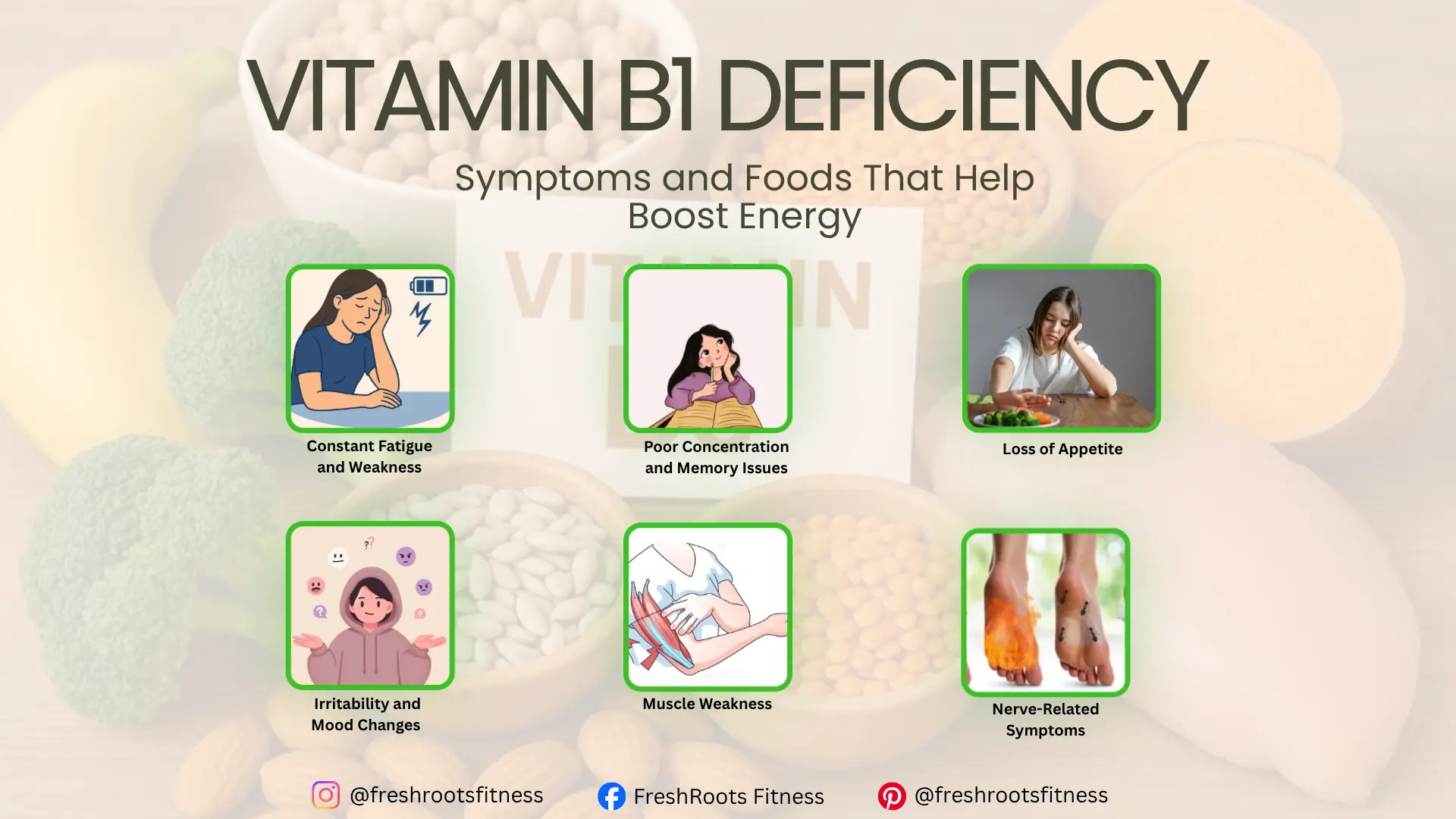
Common Vitamin B1 Deficiency Symptoms
The symptoms usually develop gradually and may be mistaken for general tiredness or stress.
1. Constant Fatigue and Weakness
This is one of the earliest signs.
You may feel:
- Low energy throughout the day
- Weakness in the body
- Lack of motivation
Many users report that fatigue improves once Vitamin B1 levels are corrected.
2. Poor Concentration and Memory Issues
Your brain needs energy to function properly.
Low Vitamin B1 may lead to:
- Difficulty focusing
- Brain fog
- Forgetfulness
Experts believe that thiamine supports nerve function, which affects mental clarity.
3. Loss of Appetite
You may notice reduced hunger or lack of interest in food. This can further worsen the deficiency if not addressed.
4. Irritability and Mood Changes
Mental and emotional changes are also common.
You might feel:
- Irritated easily
- Low mood
- Mentally exhausted
Studies indicate that nutrient deficiencies can influence mood and emotional balance.
5. Muscle Weakness
Since muscles depend on energy, low Vitamin B1 can lead to:
- Weak muscles
- Reduced stamina
- Difficulty in physical activity
6. Nerve-Related Symptoms (In Severe Cases)
In a more advanced deficiency, symptoms may include:
- Tingling or numbness
- Burning sensation in hands and feet
This condition is linked to nerve damage and should not be ignored.
Related Articles
Vitamin D Deficiency
Vitamin A Deficiency
Vitamin E Benefits for Skin and Hair
What Causes Vitamin B1 Deficiency?
Understanding the causes helps you prevent them effectively.
Common reasons include:
- Poor diet lacking whole foods
- High intake of processed or refined foods
- Excess alcohol consumption
- Chronic stress
- Certain medical conditions
Experts believe that modern diets, which often rely on refined grains, are a major reason behind increasing vitamin B1 deficiency symptoms.
Foods That Help Boost Vitamin B1 Naturally
The best way to improve your levels is through diet. Including the right foods regularly can restore balance and improve energy.
1. Whole Grains
Whole grains are one of the richest sources of Vitamin B1.
Examples include:
- Brown rice
- Whole wheat
- Oats
Unlike refined grains, they retain their nutrient content.
2. Nuts and Seeds
Nuts and seeds provide both energy and essential nutrients.
You can include:
- Sunflower seeds
- Flaxseeds
- Almonds
They also contain healthy fats that support overall health.
3. Legumes
Legumes are excellent plant-based sources.
Options include:
- Lentils
- Beans
- Chickpeas
They also provide protein, making them a great addition to your diet.
4. Green Vegetables
Leafy greens support overall nutrition. Including them regularly helps maintain balanced nutrient levels.
5. Animal-Based Sources
For those who consume non-vegetarian foods:
- Eggs
- Fish
- Lean meats
These provide easily absorbable forms of Vitamin B1.
Simple Daily Habits to Improve Energy Naturally
Along with diet, your lifestyle plays a major role. Small habits can make a noticeable difference over time.
- Eat balanced meals regularly
- Avoid skipping meals
- Stay hydrated
- Reduce processed food intake
- Manage stress levels
Experts believe that combining proper nutrition with healthy habits enhances energy levels naturally.
How Long Does It Take to Recover?
Recovery depends on how severe the deficiency is. Some people notice improved energy and focus within a few weeks. However, deeper recovery may take longer.
Studies suggest that consistency in diet and lifestyle is the key to long-term improvement.
This Articles of National Institute of Health- Vitamin B1 Deficiency
When Should You See a Doctor?
While mild deficiency can be managed through diet, some cases need medical attention.
Consult a professional if:
- Fatigue becomes severe
- Nerve-related symptoms appear
- Symptoms do not improve over time
Early diagnosis helps prevent complications.
Conclusion
Your energy levels are directly connected to how well your body is nourished. Ignoring vitamin B1 deficiency symptoms can affect not only your physical health but also your mental clarity and daily performance. The good news is that simple changes, like improving your diet and maintaining a healthy routine, can make a big difference. By including Vitamin B1-rich foods and staying consistent, you can support your body’s natural energy system.
Start small, stay regular and give your body what it truly needs. Over time, you’ll likely notice better energy, focus and overall well-being.
FAQs
-
What are the early vitamin B1 deficiency symptoms?
Fatigue, weakness and poor concentration are common early signs.
-
Which foods are rich in Vitamin B1?
Whole grains, legumes, nuts and seeds are excellent sources.
-
Can Vitamin B1 deficiency cause tiredness?
Yes, it directly affects energy production, leading to fatigue.
-
How long does it take to improve Vitamin B1 levels?
It may take a few weeks with a proper diet and consistency.
-
Is it safe to take Vitamin B1 supplements?
Yes, but it’s best to take them under proper guidance.