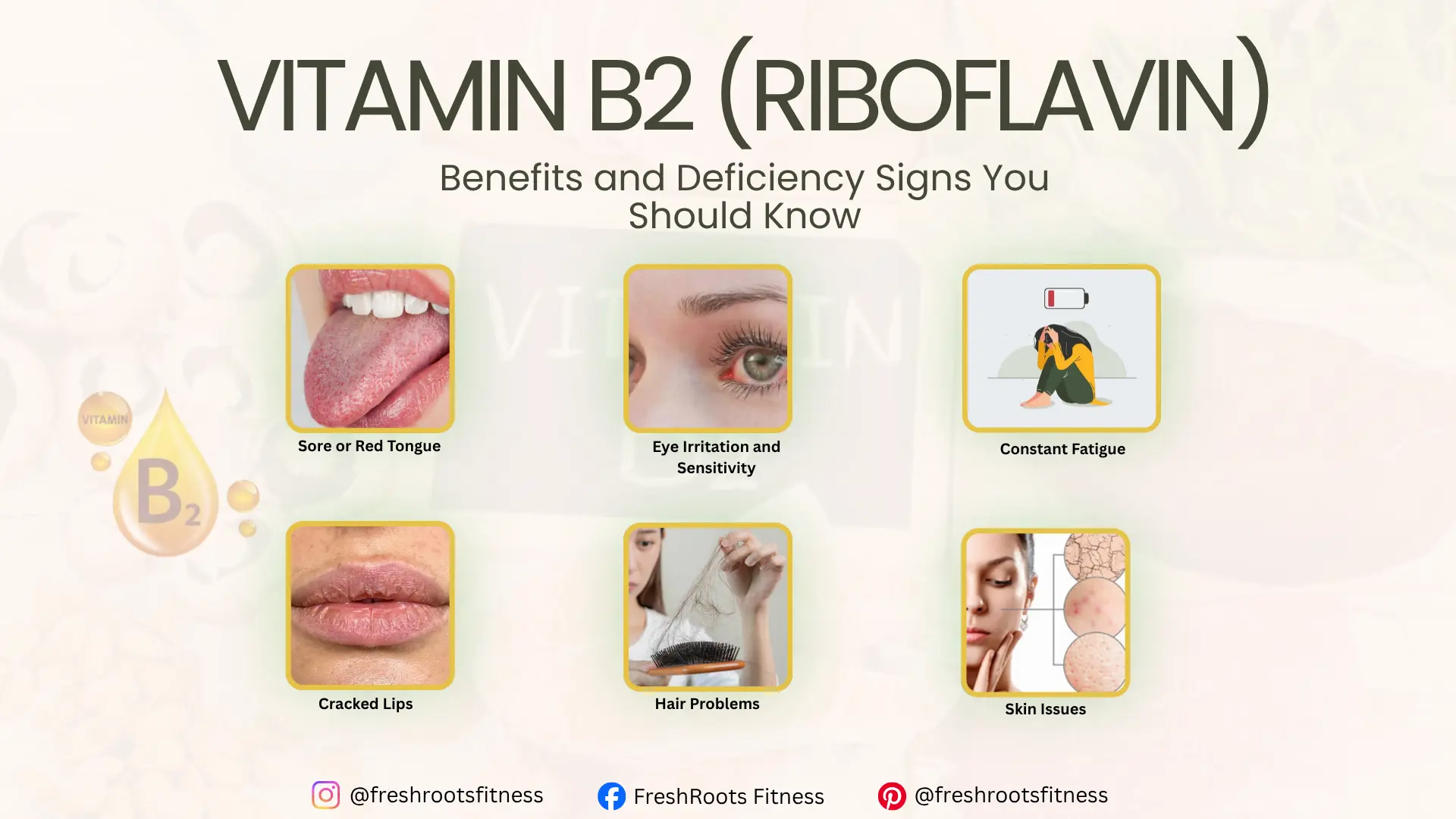
Have you ever experienced cracked lips, constant tiredness or irritation in your eyes without knowing the exact reason? These small but uncomfortable signs are often ignored, but they may be your body’s way of telling you something important. One such hidden issue could be related to vitamin B2 deficiency symptoms. Vitamin B2, also known as riboflavin, is essential for energy production, skin health and overall cellular function. When your body lacks this vitamin, it can slowly affect multiple systems.
Many people don’t realize how important riboflavin is until symptoms begin to show. The good news is that with the right knowledge and simple dietary changes, you can improve your levels naturally and support your overall health.
What Is Vitamin B2 and Why Does Your Body Need It?
Vitamin B2 is a water-soluble vitamin that plays a key role in energy production and maintaining healthy tissues.
It helps your body:
- Convert food into usable energy
- Support healthy skin and eyes
- Maintain proper nerve function
- Assist in the production of important enzymes
Experts believe that riboflavin is involved in metabolic processes that help your body use carbohydrates, fats and proteins efficiently. Because your body cannot store large amounts of it, regular intake is necessary. This is why recognizing vitamin B2 deficiency symptoms early becomes important.
How Vitamin B2 Supports Energy and Overall Health
Every cell in your body needs energy to function and Vitamin B2 plays a central role in this process. It supports enzymes that help break down nutrients and convert them into energy. Without enough riboflavin, your body may struggle to maintain energy levels.
Research suggests that even a mild deficiency can lead to reduced efficiency in energy production, which may result in fatigue and weakness. Beyond energy, Vitamin B2 also supports antioxidant activity. It helps protect cells from damage caused by oxidative stress, which is linked to aging and various health issues.
Common Vitamin B2 Deficiency Symptoms
The signs of deficiency often appear gradually and may be mistaken for minor health issues.
1. Cracked Lips and Mouth Corners
One of the most noticeable signs is cracking at the corners of the mouth.
You may also experience:
- Dry or chapped lips
- Pain while opening the mouth
Experts believe this happens due to poor tissue repair and skin health.
2. Sore or Red Tongue
Your tongue may appear:
- Swollen
- Red
- Sensitive
This condition is often linked to nutrient deficiencies affecting oral health.
3. Eye Irritation and Sensitivity
Your eyes may feel:
- Irritated or watery
- Sensitive to light
- Tired after screen use
Studies indicate that riboflavin supports eye health and low levels can lead to discomfort.
4. Constant Fatigue
Low energy is a common symptom.
You may feel:
- Physically tired
- Mentally drained
- Less productive during the day
This is directly linked to reduced energy production in the body.
5. Skin Issues
Vitamin B2 supports healthy skin.
Deficiency may cause:
- Dry or flaky skin
- Redness or irritation
- Uneven texture
Many users report improvement in skin condition after correcting deficiencies.
6. Hair Problems
Although not always directly linked, some people notice:
- Dull hair
Increased hair fall
This may happen due to overall nutrient imbalance.
What Causes Vitamin B2 Deficiency?
Several factors can contribute to low riboflavin levels.
Common causes include:
- Poor diet lacking nutrient-rich foods
- High consumption of processed foods
- Chronic stress
- Certain medical conditions
- Alcohol consumption
Experts believe that modern dietary habits are a major reason for the increase in vitamin B2 deficiency symptoms.
Natural Sources of Vitamin B2
Improving your diet is the best way to restore riboflavin levels.
You can include:
- Milk and dairy products
- Eggs
- Almonds
- Green leafy vegetables
- Mushrooms
- Whole grains
Experts suggest that a balanced diet with a mix of plant and animal sources provides better nutrient coverage.
Best Ways to Include Vitamin B2 in Your Daily Routine
Consistency is key when it comes to nutrient intake.
You can:
- Add milk or yogurt to your breakfast
- Include leafy vegetables in lunch or dinner
- Snack on nuts like almonds
- Choose whole grains over refined options
Small daily changes can help maintain stable levels over time.
Can You Take Vitamin B2 Supplements?
In some cases, supplements may be useful.
They are often recommended when:
- Dietary intake is insufficient
- Symptoms are noticeable
- There is a diagnosed deficiency
Many people report improved energy and skin health after supplementation.
However, it’s important to avoid unnecessary intake. Experts recommend using supplements only when needed and under proper guidance.
Read These Articles Also
Vitamin B1 Deficiency
Vitamin A Deficiency
Vitamin D Deficiency
Vitamin E Benefits for Skin and Hair
Vitamin C Benefits for Immunity and Skin Health
How Long Does It Take to See Improvement?
This depends on how low your levels are. Some symptoms, like fatigue and irritation, may start improving within a few weeks. Skin and hair-related changes may take a bit longer.
Studies suggest that consistent intake and a balanced diet are essential for long-term improvement.
Lifestyle Tips to Prevent Deficiency
Along with diet, your lifestyle also matters.
To support overall health:
- Eat fresh and balanced meals
- Avoid excessive processed food
- Stay hydrated
- Manage stress effectively
- Maintain a routine
Experts believe that healthy habits improve nutrient absorption and overall well-being.
By The National Institute of Health – Vitamin B2 Benefits and Deficiency
When Should You See a Doctor?
While mild deficiency can be managed at home, some symptoms need attention.
Consult a professional if:
- Mouth sores or cracks worsen
- Fatigue becomes severe
- Eye irritation persists
- Symptoms do not improve
Early action helps prevent complications.
Conclusion
Your body depends on essential nutrients to function properly and Vitamin B2 is one of them. Ignoring vitamin B2 deficiency symptoms can affect your energy, skin and overall health over time.
The good part is that simple changes in your diet and daily habits can make a noticeable difference. By including riboflavin-rich foods and staying consistent, you can support your body naturally.
Start small, stay aware and give your body the nutrients it needs to perform at its best.
FAQs
-
What are the main vitamin B2 deficiency symptoms?
Cracked lips, sore tongue, fatigue and eye irritation are common signs.
-
Which foods are rich in Vitamin B2?
Milk, eggs, almonds, leafy greens and whole grains are good sources.
-
Can Vitamin B2 deficiency cause tiredness?
Yes, it affects energy production, leading to fatigue.
-
How long does it take to recover from a deficiency?
It may take a few weeks with a proper diet and consistency.
-
Is Vitamin B2 safe to take daily?
Yes, in normal amounts, but supplements should be taken under guidance.