Have you ever noticed that a small cut takes longer than usual to stop bleeding? Or that you bruise easily without any clear reason? These signs might seem minor, but they could be linked to something important happening inside your body. One of the lesser-known yet essential nutrients is Vitamin K and ignoring Vitamin K deficiency symptoms can affect your body more than you might expect. This vitamin plays a crucial role in blood clotting, which helps your body stop bleeding and heal properly.
Many people are not aware of how important Vitamin K is until symptoms start appearing. The good news is that with the right knowledge and simple lifestyle changes, you can manage and prevent deficiency effectively.
What Is Vitamin K and Why Is It Important?
Vitamin K is a fat-soluble vitamin that is essential for blood clotting and bone health.
It helps your body:
- Form blood clots to stop bleeding
- Support bone strength
- Maintain overall health
Experts believe that Vitamin K activates proteins required for proper clotting. Without enough of it, your body may struggle to control bleeding effectively. That’s why understanding vitamin K deficiency symptoms is important for your overall well-being.
How Vitamin K Helps in Blood Clotting
Blood clotting is your body’s natural defense mechanism. When you get a cut or injury, your body triggers a process where blood thickens and forms a clot to stop bleeding. Vitamin K plays a key role in activating clotting factors that make this process possible.
Research suggests that without sufficient Vitamin K, this clotting process becomes slower and less effective, increasing the risk of prolonged bleeding.
Common Vitamin K Deficiency Symptoms
Vitamin K deficiency is not very common, but when it occurs, the symptoms can be noticeable.
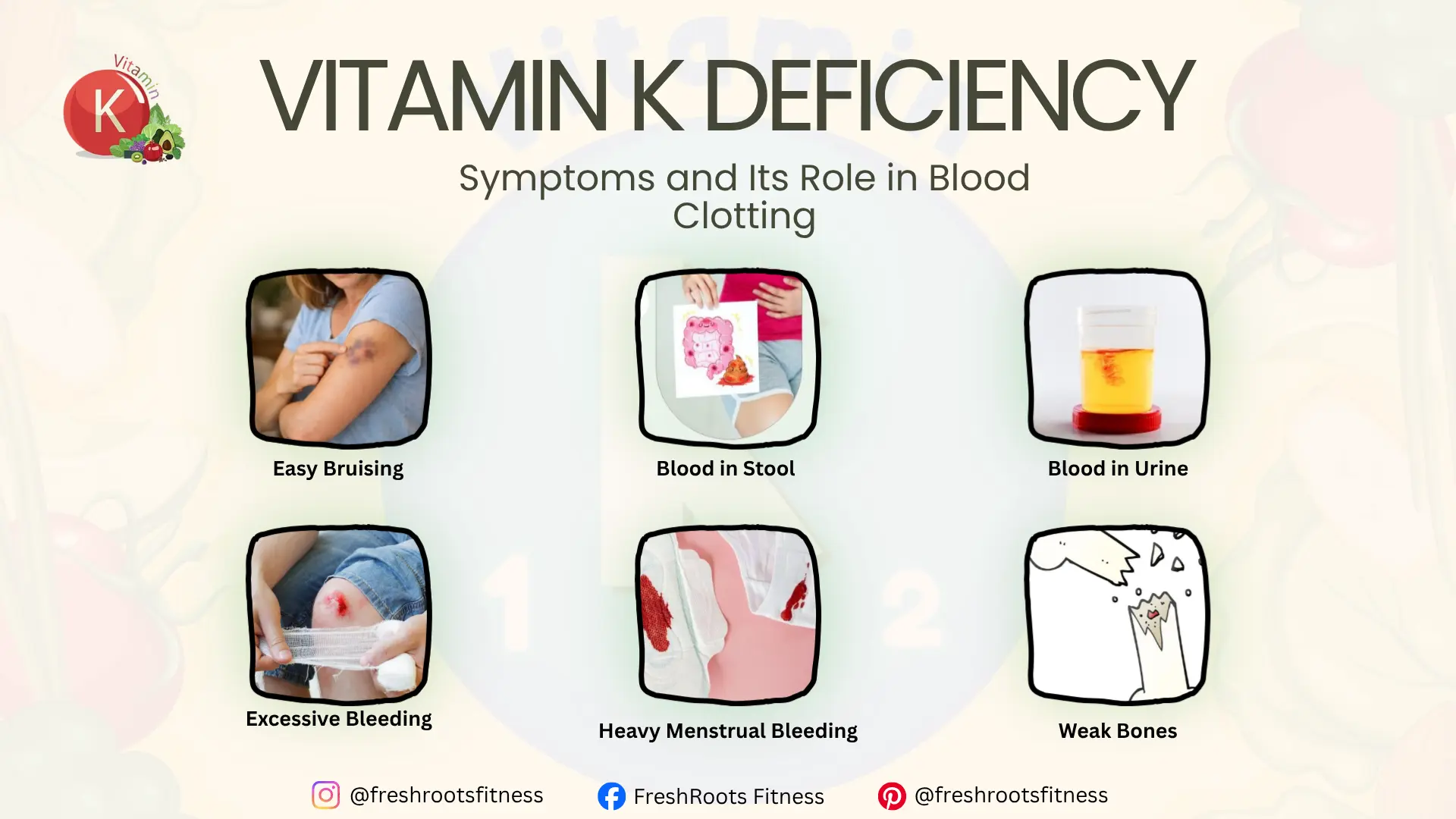
1. Easy Bruising
You may notice bruises appearing even after minor bumps. This happens because small blood vessels break easily and the blood does not clot quickly.
2. Excessive Bleeding
One of the most important signs.
You may experience:
- Bleeding that takes longer to stop
- Frequent nosebleeds
- Bleeding gums
Experts believe that this is directly linked to poor clotting ability.
3. Heavy Menstrual Bleeding
Women may notice heavier or longer periods than usual. This can be a sign that the body is not clotting blood efficiently.
4. Blood in Stool or Urine
In more serious cases, deficiency may lead to internal bleeding. This can appear as blood in stool or urine and should not be ignored.
5. Weak Bones (Long-Term Effect)
Vitamin K also supports bone health. Low levels over time may contribute to weaker bones and an increased risk of fractures.
These Articles You Should Read
Vitamin D Deficiency
Vitamin B1 Deficiency
Vitamin A Deficiency
Vitamin E Benefits for Skin and Hair
Vitamin C Benefits for Immunity and Skin Health
Best High-Calorie Foods for Healthy Weight Gain
What Causes Vitamin K Deficiency?
Several factors can lead to low Vitamin K levels.
Common causes include:
- Poor diet lacking green leafy vegetables
- Digestive disorders affecting absorption
- Long-term use of antibiotics
- Liver-related issues
Experts believe that gut health also plays a role, as certain bacteria in the intestines help produce Vitamin K.
Natural Ways to Improve Vitamin K Levels
Improving Vitamin K levels is usually simple with the right approach.
1. Eat Vitamin K-Rich Foods
Diet is the best source.
Include foods like:
- Spinach and kale
- Broccoli
- Cabbage
- Green leafy vegetables
These foods provide Vitamin K1, which supports blood clotting.
2. Support Gut Health
Your gut bacteria help produce Vitamin K. Maintaining a healthy digestive system through a balanced diet and hydration can support natural production.
3. Include Healthy Fats
Since Vitamin K is fat-soluble, it needs fat for proper absorption. Adding small amounts of healthy fats improves its effectiveness.
4. Avoid Unnecessary Medications
Certain medications can interfere with Vitamin K absorption. Always use medicines responsibly and under guidance.
How Long Does It Take to Recover?
Recovery depends on the severity of the deficiency. Some people notice improvement in symptoms like bleeding or bruising within a few weeks of improving their diet.
Studies indicate that consistent intake of Vitamin K-rich foods helps restore normal levels over time.
When Should You See a Doctor?
Do not ignore symptoms if they seem serious.
Seek medical help if:
- Bleeding does not stop easily
- You notice blood in stool or urine
- Bruising becomes frequent
- Symptoms worsen over time
Early diagnosis can prevent complications.
By Healthdirect – Vitamin K Deficiency
Conclusion
Your body depends on small nutrients to perform essential functions and Vitamin K is one of them. Ignoring vitamin K deficiency symptoms can affect your body’s ability to heal and protect itself. By making simple changes, such as improving your diet and maintaining a healthy lifestyle, you can support proper blood clotting and overall health.
Start paying attention to small signs, your body often tells you what it needs.
FAQs
-
What are the main vitamin K deficiency symptoms?
Easy bruising, excessive bleeding and slow clotting are common signs.
-
Which foods are rich in Vitamin K?
Green leafy vegetables like spinach, kale and broccoli are excellent sources.
-
Can Vitamin K deficiency be serious?
Yes, if untreated, it can lead to excessive bleeding and other complications.
-
How long does it take to improve Vitamin K levels?
It may take a few weeks with proper diet and care.
-
Is Vitamin K important for bones?
Yes, it plays a role in maintaining bone strength.

- How to Reduce Cholesterol Naturally With Simple Food Habits - July 4, 2026
- Early Signs of High Blood Sugar Most People Miss Daily - June 25, 2026
- How to Boost Immunity Naturally: Simple Daily Habits - June 23, 2026