Most people have never given selenium a second thought. It doesn’t have the name recognition of vitamin D or iron. It doesn’t come up in routine blood panels unless specifically requested. And yet this quiet trace mineral is doing something absolutely critical inside your body every single day.
Selenium is essential for thyroid hormone production, immune defense, DNA synthesis, reproductive health, and is one of the most powerful antioxidant systems the human body operates. It is required in tiny amounts, micrograms, not milligrams, but those micrograms matter enormously. When they’re missing, the consequences show up across multiple body systems in ways that are easy to misattribute to other causes.
Understanding selenium deficiency symptoms matters because this deficiency is far more common than most people realize and far more impactful. Research suggests selenium deficiency affects hundreds of millions of people globally, particularly in regions where soil selenium content is low. And because the symptoms develop gradually and resemble those of other conditions, it often goes unrecognized for months or years.
What Selenium Does in Your Body And Why It’s Non-Negotiable
Before exploring selenium deficiency symptoms, understanding the mineral’s roles helps connect the dots between deficiency and its wide-ranging effects.
Selenium works primarily through selenoproteins, a family of over 25 proteins that incorporate selenium as a functional component. These selenoproteins include:
- Glutathione peroxidases (GPx) – Among the body’s most important antioxidant enzymes. They neutralize hydrogen peroxide and lipid peroxides, reactive molecules that damage cell membranes, proteins, and DNA. Without selenium, these enzymes cannot function, leaving cells vulnerable to oxidative damage.
- Thioredoxin reductases – Enzymes that regenerate antioxidant molecules like vitamin C and thioredoxin, supporting cellular redox balance and DNA repair.
- Iodothyronine deiodinases – Enzymes responsible for converting inactive thyroid hormone (T4) into active thyroid hormone (T3). Without adequate selenium, this conversion is impaired, meaning even people with adequate iodine and a functioning thyroid may have low active thyroid hormone due to selenium deficiency.
- Selenoprotein P – The primary selenium transport protein in the blood, responsible for delivering selenium to the brain and other priority organs.
- Selenoprotein N – Involved in muscle development and the regulation of calcium signaling in muscle cells.
Beyond these enzymatic functions, selenium plays a role in:
- Immune cell activation and antibody production.
- Sperm motility and male reproductive function.
- Inflammation regulation, selenium deficiency is associated with increased inflammatory markers.
- Cancer prevention research suggests adequate selenium status is associated with reduced risk of certain cancers through its antioxidant and DNA-protective effects.
- Cardiovascular protection: Selenoproteins protect heart muscle cells from oxidative damage.
Given this breadth of function, selenium deficiency produces a pattern of symptoms that spans energy, immunity, thyroid function, reproductive health, mood and skin, which is precisely why it’s so often missed.
Causes of Selenium Deficiency
Selenium levels in the body reflect a combination of dietary intake and the selenium content of the soil in which food is grown:
Low Soil Selenium
This is the most significant driver of selenium deficiency globally. Selenium content in soil varies dramatically by geographic regions, with selenium-poor soil producing crops and livestock with lower selenium content, regardless of how much of those foods are consumed. Large parts of Europe, China, New Zealand and parts of India have selenium-poor soil. People eating locally grown food in these regions are at elevated baseline risk.
Low Dietary Intake
Even in regions with adequate soil selenium, dietary patterns that exclude the richest selenium sources, particularly Brazil nuts, organ meats, seafood and meat, reduce intake significantly. Vegetarians and vegans who live in low-selenium regions and eat only locally grown plant foods are at particularly high risk.
Digestive Disorders
Conditions that impair nutrient absorption, such as Crohn’s disease, celiac disease, short bowel syndrome and chronic inflammatory bowel disease, reduce selenium absorption from food and increase the risk of deficiency even with adequate dietary intake.
Kidney Disease and Dialysis
The kidneys are involved in selenium metabolism and dialysis removes selenium from the blood. People on long-term dialysis have significantly elevated deficiency risk and require monitoring.
Parenteral Nutrition
People receiving long-term total parenteral nutrition (IV feeding) without selenium supplementation regularly develop a deficiency, as selenium is absent from many standard parenteral solutions.
Oxidative Stress and Illness
Severe illness, major surgery, burns and HIV infection all increase selenium utilization as the body deploys selenoprotein antioxidant systems more intensively. This can deplete selenium stores even when dietary intake appears adequate.
Selenium Deficiency Symptoms
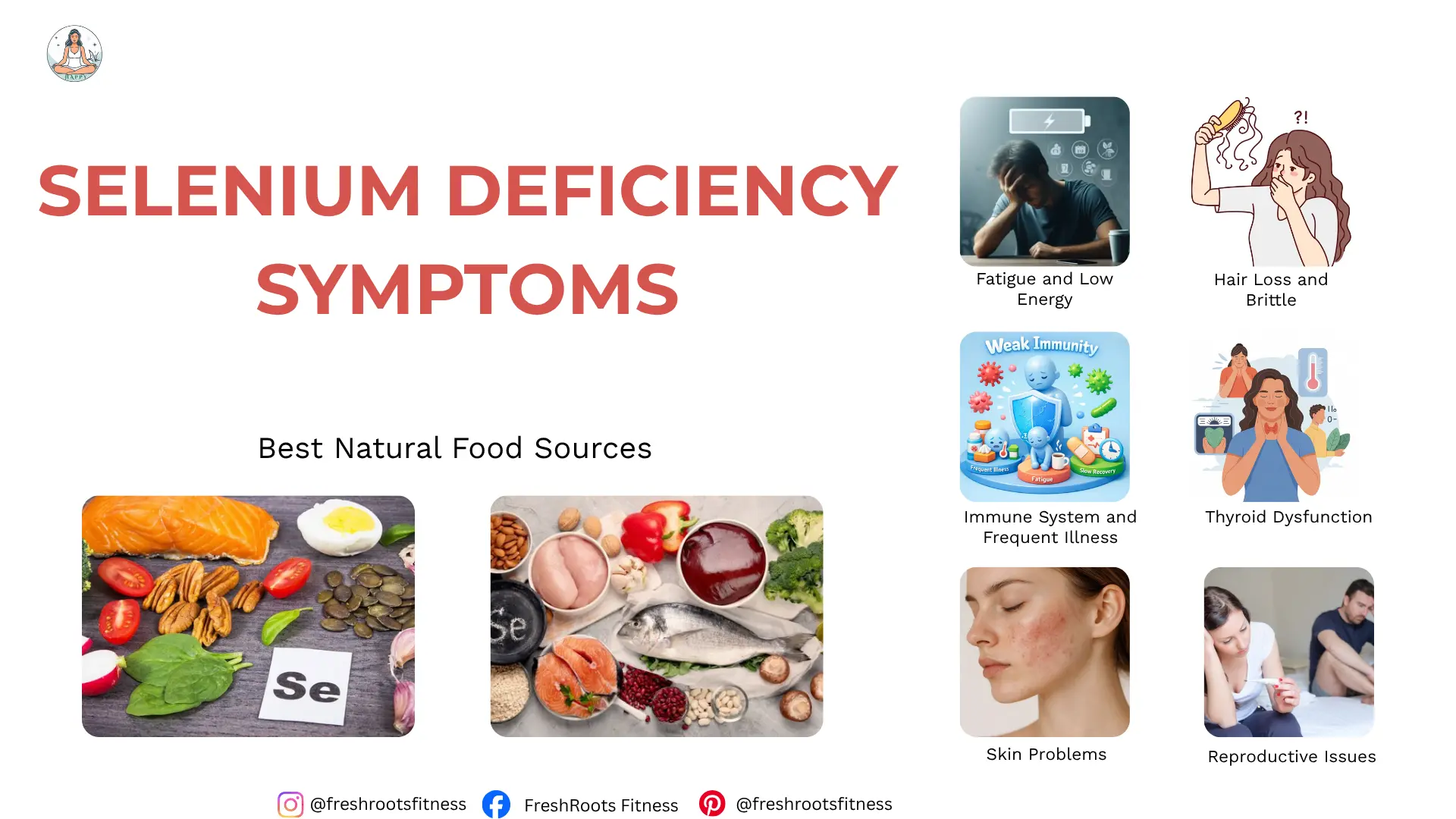
Here is a comprehensive breakdown of the most significant selenium deficiency symptoms, with the physiological explanation for each.
1. Chronic Fatigue and Low Energy
Fatigue is one of the most commonly reported selenium deficiency symptoms and it operates through multiple pathways simultaneously. Selenium is required for thyroid hormone activation (T4 to T3 conversion) and low active T3 directly reduces metabolic rate and energy production. Simultaneously, impaired glutathione peroxidase function allows oxidative stress to accumulate in mitochondria, the energy-producing organelles of every cell, reducing their efficiency.
The result is a pervasive, cellular-level fatigue that doesn’t resolve with rest, because the underlying problem isn’t tiredness but impaired energy metabolism. Many people describe this as feeling physically sluggish and mentally drained simultaneously, even after a full night of sleep.
This overlap with hypothyroid fatigue is not coincidental, it’s mechanistic. Selenium deficiency and thyroid dysfunction frequently coexist and reinforce each other.
2. Hair Loss and Brittle, Thin Hair
Hair follicles are among the most rapidly dividing and metabolically active cells in the body and they are highly sensitive to selenium status. Selenoproteins help protect follicle cells from oxidative damage during the active growth phase of the hair cycle.
Selenium deficiency allows oxidative damage to accumulate in follicle cells, disrupting the hair growth cycle and causing premature transition from the growth (anagen) phase to the resting (telogen) phase, resulting in increased shedding. The shedding is typically diffuse rather than patchy, gradually affecting the entire scalp.
Hair thinning from selenium deficiency is also associated with changes in hair texture, hair may become dull, dry, brittle and slower-growing before shedding increases noticeably. Many users initially attribute these changes to stress or aging before the selenium connection is identified.
Interestingly, selenium toxicity (selenosis from excessive supplementation) also causes hair loss, making this a bidirectional marker worth monitoring carefully in either direction.
3. Weakened Immune System and Frequent Illness
Selenium is one of the most studied micronutrients for immune function. It is required for:
- The proliferation and differentiation of T lymphocytes
- Natural killer cell activity against virally infected cells
- Neutrophil function is the first-line immune cells that engulf and destroy bacteria
- Antibody production following vaccination or infection
- Regulation of inflammatory cytokines
Research suggests that selenium deficiency impairs both innate and adaptive immune responses, increasing susceptibility to viral and bacterial infections, prolonging illness duration and reducing vaccine effectiveness.
Studies indicate that selenium deficiency allows certain viruses, particularly RNA viruses like influenza, to mutate more rapidly and become more virulent, because oxidative stress in selenium-depleted host cells increases viral mutation rates. This finding underscores why selenium status has been studied in the context of emerging viral infections, including COVID-19.
If you find yourself getting sick more often than the people around you or infections lasting longer and hitting harder than expected, selenium status is worth including in your investigation.
4. Thyroid Dysfunction and Hypothyroid Symptoms
The thyroid gland contains the highest selenium concentration of any organ in the body, reflecting its critical dependence on this mineral. Selenium is required at multiple points in thyroid physiology:
- Thyroid hormone synthesis – Selenoproteins protect thyroid cells from hydrogen peroxide generated during hormone synthesis
- T4 to T3 conversion – Iodothyronine deiodinase enzymes, all selenium-dependent convert inactive T4 into active T3 in the liver, kidneys, and thyroid
- Autoimmune thyroid protection – Selenium deficiency is associated with increased thyroid inflammation and elevated thyroid antibodies
Research suggests that selenium deficiency directly causes or worsens hypothyroid symptoms even when iodine is adequate, because T3 levels fall when conversion enzymes are selenium-limited. This produces the classic hypothyroid symptom cluster: fatigue, cold intolerance, weight gain, dry skin, hair thinning, brain fog and constipation.
Multiple clinical trials have found that selenium supplementation reduces thyroid antibody levels (TPO and TgAb) in people with Hashimoto’s thyroiditis, suggesting a protective role against autoimmune thyroid damage. This is one of the most clinically meaningful findings in selenium research and is directly relevant to the large number of people with autoimmune thyroid disease.
People with Hashimoto’s who are not already testing and monitoring their selenium status are missing an important piece of their thyroid management picture.
5. Brain Fog and Cognitive Impairment
The brain prioritizes selenium above other organs, selenoprotein P preferentially delivers selenium to the brain even during states of overall deficiency. This prioritization reflects how critical selenium is to neurological function.
Despite this priority delivery, severe or prolonged selenium deficiency does affect brain function. Glutathione peroxidase activity in brain tissue falls with deficiency, allowing oxidative stress to damage neurons. Research suggests selenium deficiency is associated with:
- Impaired memory and recall
- Reduced processing speed and attention
- Increased risk of cognitive decline in older adults
- Elevated risk of depression and anxiety
Several studies have found associations between low selenium status and depression severity and some clinical trials suggest selenium supplementation improves mood in deficient individuals. Experts believe this operates through selenium’s role in reducing neuroinflammation and supporting neurotransmitter synthesis.
Many people who describe persistent brain fog, difficulty concentrating or a low-level emotional flatness that doesn’t respond to standard interventions may have selenium deficiency as a contributing factor, particularly if they live in low-selenium regions or eat restricted diets.
6. Muscle Weakness and Muscle Pain
Selenoprotein N is directly involved in muscle function, specifically in regulating calcium signaling within muscle cells and protecting muscle fibers from oxidative damage during contraction. Selenium deficiency impairs these functions, producing muscle-related symptoms including:
- Generalized muscle weakness that is disproportionate to activity level
- Muscle tenderness or aching at rest
- Slow recovery from physical exertion
- In severe cases, cardiomyopathy (weakness of the heart muscle) is a condition called Keshan disease, first identified in selenium-deficient regions of China
Muscle symptoms from selenium deficiency are easily confused with those of magnesium deficiency, hypothyroidism or general deconditioning. The combination of muscle weakness with other selenium deficiency symptoms, fatigue, hair loss and immune impairment provides the clinical pattern that points more specifically to selenium.
7. Reproductive Issues
Selenium has well-documented roles in reproductive health for both sexes:
In Men: Selenium is concentrated in the testes and is incorporated into sperm, specifically into selenoprotein capsule proteins that protect sperm from oxidative damage during maturation and give sperm flagella their structural integrity. Studies consistently show that selenium deficiency is associated with reduced sperm motility, increased DNA damage in sperm, and reduced fertility. Research suggests that selenium supplementation in deficient men improves sperm parameters and conception rates.
In Women: Selenium plays a role in follicle development, the implantation environment, and pregnancy maintenance. Selenium deficiency is associated with recurrent miscarriage, possibly through impaired placental development and increased oxidative stress in the uterine environment. Adequate selenium during pregnancy is also important for fetal thyroid development and brain formation.
For anyone dealing with unexplained fertility challenges, selenium status alongside other nutritional and hormonal assessments is worth evaluating.
8. Skin Problems
Selenium’s antioxidant role is particularly visible in skin health. Glutathione peroxidase activity in skin cells protects against UV-induced oxidative damage, inflammation and premature aging. With selenium deficiency, this protection is reduced, producing:
- Dry, rough and dull-looking skin
- Increased skin inflammation and sensitivity
- Slower healing of minor wounds and irritation
- Increased susceptibility to UV damage
- Possible worsening of inflammatory skin conditions
7 Simple Beauty Hacks You Can Do at Home
Research suggests selenium works synergistically with vitamin E in protecting skin cell membranes from oxidative damage. The two antioxidants regenerate each other in a complementary cycle. Deficiency in either impairs the effectiveness of both.
9. Mental Health
The association between selenium status and mental health is one of the more intriguing and consistently replicated findings in nutritional psychiatry research. Multiple population studies have found that low dietary selenium intake is associated with elevated rates of depression, anxiety and negative mood states.
Studies indicate the relationship is dose-dependent within the normal range, people with higher (but not excessive) selenium intake report better mood states than those with low intake. Intervention studies using selenium supplementation have shown improvements in mood and reduced anxiety in people with low baseline selenium status.
The mechanism likely involves selenium’s role in reducing neuroinflammation, supporting thyroid-mediated mood regulation and influencing serotonin and dopamine metabolism through selenoprotein-dependent pathways.
10. Nail Changes
Nails reflect internal nutritional status in visible ways. Selenium deficiency is associated with brittle nails that break or chip easily, changes in nail texture and, in some cases, whitening or banding of the nails. These changes develop gradually and are easy to overlook or attribute to external factors like frequent handwashing or nail product use.
White horizontal bands across the nails, called Mees’ lines, can occur with various mineral deficiencies, including selenium and alongside other selenium deficiency symptoms, they contribute to the overall picture worth investigating.
How Is Selenium Deficiency Diagnosed?
Selenium status can be assessed through:
- Serum selenium – The most commonly available test; reflects recent intake but not long-term stores accurately
- Plasma selenium – Similar to serum; useful for identifying clear deficiency, but may not detect subclinical depletion
- Red blood cell selenium – Reflects longer-term selenium status more accurately than serum
- Selenoprotein P – The most accurate functional marker of selenium status; less widely available but increasingly used in research settings
- Urinary selenium – Reflects recent intake; can indicate excessive intake as well as deficiency
- Hair and nail selenium – Reflect long-term status; require careful collection and analysis
Because testing availability varies and results require clinical interpretation, the combination of symptom pattern, dietary history, geographical risk factors and available laboratory testing gives the most complete picture.
Best Natural Food Sources of Selenium
Restoring selenium through diet is achievable and preferable to supplementation for most people. Here are the best natural sources:
Brazil Nuts
Brazil nuts stand entirely alone as a selenium source. One to two Brazil nuts provide approximately 70-180 mcg of selenium, which meets or exceeds the adult recommended daily intake of 55 mcg in a single nut. This extraordinary concentration reflects the exceptionally selenium-rich soil of the Amazon basin, where Brazil nut trees grow.
The practical implication: one or two Brazil nuts per day is sufficient for most people to maintain adequate selenium status, making them the most efficient dietary intervention for selenium deficiency available. Three to four per day for a few weeks can help restore depleted levels. More than four to six daily for extended periods risks selenium toxicity (selenosis).
Brazil nuts are best eaten plain roasted or raw. Their high selenium content makes them valuable regardless of their fat content.
Seafood
Most seafood is an excellent selenium source because marine organisms bioaccumulate selenium from seawater, which contains consistent selenium regardless of soil variation:
- Oysters – Approximately 50-60 mcg per 100 grams also among the best dietary sources of zinc.
- Tuna – Approximately 60-90 mcg per 100 grams one of the most accessible seafood selenium sources.
- Sardines – Approximately 40-50 mcg per 100 grams excellent alongside their omega-3 and calcium content.
- Shrimp – Approximately 35-40 mcg per 100 grams.
- Salmon – Approximately 35-45 mcg per 100 grams combines selenium with omega-3 fatty acids.
- Halibut and cod – Approximately 30-45 mcg per 100 grams.
- Mackerel – Approximately 40-50 mcg per 100 grams.
Regular seafood consumption two to three times per week provides reliable selenium intake independent of regional soil variation. This is one of the reasons populations with high seafood consumption (Japan, coastal Scandinavia, parts of Southeast Asia) tend to have better selenium status than inland agricultural populations.
Meat and Poultry
- Beef and lamb – Approximately 20-30 mcg per 100 grams, varying by region and animal diet
- Chicken breast – Approximately 20-25 mcg per 100 grams
- Turkey – Approximately 25-30 mcg per 100 grams
- Pork – Approximately 25-35 mcg per 100 grams
- Liver (beef and chicken) – Exceptionally high selenium content, approximately 50-90 mcg per 100 grams; also rich in B vitamins, iron and zinc
Organ meats, particularly liver, are among the most selenium-dense foods available and represent an often overlooked option for people who eat meat.
Eggs
Eggs provide approximately 15-020 mcg of selenium per large egg, with most of the selenium concentrated in the yolk. Two to three eggs daily contribute meaningfully to selenium intake alongside their excellent protein, choline and B12 content.
Whole Grains and Cereals
Whole wheat, brown rice, oats and other whole grains contain selenium, but the amount varies significantly based on the selenium content of the soil in which they were grown. Wheat grown in selenium-rich North American soil can provide 20-30 mcg per 100 grams; wheat grown in selenium-poor European soil may provide a fraction of that.
Fortified cereals in some countries are enriched with selenium and represent a reliable source for people with limited access to high-selenium animal foods.
Legumes
Lentils, chickpeas, kidney beans and soybeans provide modest selenium, approximately 5-13 mcg per cooked cup. While not sufficient as a sole selenium source, they contribute meaningfully when eaten regularly as part of a varied diet. Tofu and tempeh provide similar amounts.
Sunflower Seeds
One ounce (28 grams) of sunflower seeds provides approximately 15-20 mcg of selenium, a meaningful contribution alongside their vitamin E content. Vitamin E and selenium work synergistically as antioxidants, making sunflower seeds a particularly well-paired selenium source.
Mushrooms
Mushrooms absorb selenium from the growing medium and can be meaningful contributors, approximately 5-15 mcg per 100 grams, depending on variety and growth conditions. Shiitake, cremini and portobello mushrooms are among the better options.
Selenium and Thyroid Health
This connection deserves dedicated attention because of how many people with thyroid conditions are unaware of it.
The thyroid gland uses hydrogen peroxide as part of the hormone synthesis process. This reactive molecule is then neutralized by selenium-dependent glutathione peroxidases within the thyroid cell. When selenium is deficient, this neutralization is incomplete, hydrogen peroxide accumulates, damages thyroid cells and triggers inflammatory responses that can worsen autoimmune thyroid disease.
Research suggests:
- People with Hashimoto’s thyroiditis who supplement with 200 mcg of selenium daily for three to six months show significant reductions in TPO antibody levels, a marker of autoimmune thyroid activity.
- Selenium supplementation in Graves’ disease may reduce eye involvement (thyroid eye disease) in some patients.
- In iodine-deficient populations, selenium deficiency worsens the impact of iodine deficiency on thyroid function, the two deficiencies interact.
This is why thyroid conditions are frequently listed alongside selenium deficiency and why anyone with a thyroid diagnosis who hasn’t had selenium status assessed is missing an important piece of their management picture.
Selenium Supplementation
For people who cannot meet their selenium needs through diet, those in low-selenium regions eating mostly locally grown plant foods, those with malabsorption conditions, or those with confirmed deficiency, supplementation is appropriate with important caveats:
Forms of selenium supplements:
- Selenomethionine – The most bioavailable organic form; selenium bound to the amino acid methionine; mirrors the form found in food; preferred for general supplementation
- Sodium selenite – Inorganic form; adequate absorption but somewhat less bioavailable than selenomethionine; common in multivitamins
- Selenium-enriched yeast – Provides a mixture of organic selenium forms similar to food; well-absorbed
Dosage:
- The recommended dietary allowance (RDA) for selenium is 55 mcg daily for adults
- Supplementation for documented deficiency typically uses 100-200 mcg daily
- The tolerable upper limit is 400 mcg daily for adults, above which the risk increases
- Supplementation beyond 200 mcg daily should be medically supervised
Selenium toxicity (selenosis) – Unlike many minerals, the gap between beneficial and toxic selenium intake is relatively narrow. Symptoms of excessive selenium include:
- Garlic-like breath odor
- Hair and nail loss
- Nausea, diarrhea and fatigue
- Neurological symptoms in severe cases
This is why getting selenium from food, particularly Brazil nuts in controlled amounts, is preferable to high-dose supplementation for most people. One to two Brazil nuts daily is safe, effective and self-limiting in a way that capsule supplementation is not.
Lifestyle and Dietary Habits That Support Selenium Status
Beyond specific food choices, these habits support optimal selenium utilization:
- Eat varied sources – Relying on a single food for selenium is less reliable than distributing intake across seafood, eggs, meat, and plant sources
- Pair with vitamin E – Selenium and vitamin E work synergistically; foods containing both (sunflower seeds, nuts) maximize antioxidant benefit
- Support gut health – Adequate stomach acid and a healthy gut lining improve selenium absorption; conditions that impair gut function (celiac, Crohn’s) reduce selenium uptake
- Avoid excessive raw brassica vegetables – In very large quantities, certain compounds in raw cruciferous vegetables may reduce selenium absorption; cooking largely eliminates this concern
- Limit processed and ultra-refined food – Processing reduces selenium content in grains and other foods; whole food versions retain more
When to See a Doctor
Dietary improvements and modest supplementation address most mild selenium deficiency. Medical assessment is appropriate when:
- Multiple selenium deficiency symptoms are present simultaneously, particularly the combination of fatigue, hair loss, thyroid symptoms and frequent illness
- You have a confirmed thyroid condition. Selenium status should be part of ongoing thyroid management
- You have a digestive condition affecting absorption (Crohn’s, celiac, IBD)
- You are on long-term dialysis or parenteral nutrition
- If you are pregnant or planning a pregnancy, selenium adequacy during pregnancy is important for fetal development
- You are considering supplementation above 200 mcg daily. This warrants medical supervision, given the narrower safety margin for selenium
- Symptoms don’t improve after several weeks of dietary changes
Conclusion
Selenium is one of those nutrients that most people never think about until something goes wrong and by then, the deficiency has often been quietly affecting their health for months. The range of selenium deficiency symptoms from fatigue and hair loss to thyroid dysfunction, immune impairment, mood disturbances and reproductive challenges reflects just how many fundamental processes this mineral supports.
By HealthLine- Selenium Deficiency Symptoms
The solution, for most people, is straightforward. One or two Brazil nuts a day. Regular seafood consumption. Eggs and meat, if your diet includes them. A broad, varied diet that doesn’t rely exclusively on locally grown plant foods in potentially low-selenium soil.
If several of the symptoms in this guide resonated with you, especially if you live in a low-selenium region, follow a vegetarian or vegan diet, or have a thyroid condition, bring it up with your doctor and ask for selenium testing. It’s a simple blood test that takes a minute to order and can provide answers that have been missing from your health picture for a long time.
Your body needs selenium in tiny amounts. But those tiny amounts do enormous work.
FAQs
-
What are the most common selenium deficiency symptoms?
The most common signs include chronic fatigue, hair loss, weakened immunity, thyroid dysfunction, brain fog, muscle weakness and mood changes. Multiple symptoms appearing together are the strongest indicator of a deficiency worth investigating.
-
How much selenium do I need daily?
The recommended daily intake for adults is 55 mcg. One to two Brazil nuts daily typically meet this. Pregnant women need 60 mcg and breastfeeding women need 70 mcg. Upper safe limit is 400 mcg daily.
-
Is selenium supplementation safe?
At 55-200 mcg daily, selenium supplementation is generally safe. Doses above 400 mcg daily risk selenosis symptoms include hair loss, nail brittleness and garlic breath. Prefer food sources when possible over high-dose supplements.
-
Can selenium deficiency cause thyroid problems?
Yes, selenium is essential for thyroid hormone activation (T4 to T3 conversion) and for protecting thyroid cells. Deficiency worsens hypothyroid symptoms and elevates autoimmune thyroid antibodies in conditions like Hashimoto’s.
-
Which food has the highest selenium content?
Brazil nuts are by far the richest source, one nut provides 70-180 mcg, meeting the entire daily requirement. Seafood (tuna, oysters, sardines), organ meats, eggs, and chicken are excellent regular sources.

- How to Reduce Cholesterol Naturally With Simple Food Habits - July 4, 2026
- Early Signs of High Blood Sugar Most People Miss Daily - June 25, 2026
- How to Boost Immunity Naturally: Simple Daily Habits - June 23, 2026