The cramps hit and your first instinct is to curl up under a blanket and wait it out. Maybe you reach for a painkiller. Maybe you cancel the plans you had and spend the day horizontal, counting down the hours until it passes.
Most of us have been told in so many words that the best thing to do during painful periods is to rest, stay warm and avoid anything strenuous. And while rest absolutely has its place, there’s a category of gentle movement that does something painkillers often can’t: it addresses one of the root physical causes of menstrual cramps rather than just dulling the sensation.
Here’s the thing that almost nobody talks about specific squat exercises during periods, combined with targeted pelvic-floor movements, can genuinely reduce cramp intensity. Not by pushing through the pain. Not by pretending it isn’t there. But by improving circulation to the uterus and releasing tension in the pelvic floor, the two physical mechanisms are most directly responsible for the cramping and lower back ache that make those first days so difficult.
The best part? You need nothing except a mat, ten minutes and the willingness to try something most people haven’t heard of yet.
What the Science Actually Says
This isn’t just traditional wisdom or anecdotal experience, there’s real research behind it.
A 2021 controlled study examined what happened when women incorporated wall squats, sumo squats and deep squats alongside yoga during their menstrual cycle. The results were genuinely compelling, participants experienced reduced menstrual pain, improved uterine circulation and decreased psychological distress, the anxiety and low mood that often accompany difficult periods.
What made this study particularly interesting was the finding that the combination of squat-based exercises with yoga produced better outcomes than yoga alone. The squat movements added something specific that yoga by itself wasn’t delivering targeted pelvic activation and circulatory benefit.
This matters because it validates what many women have quietly discovered through trial and error gentle, strategic movement during periods isn’t something to be afraid of. For cramp relief specifically, it may be far more effective than simply resting and waiting.
Why These Exercises Help
To understand why squat exercises during periods work, it helps to understand what’s actually causing the pain.
During menstruation, the uterus contracts to shed its lining. These contractions are driven by prostaglandins hormone-like compound that also causes blood vessels in and around the uterus to constrict. When those blood vessels tighten, blood flow becomes restricted, oxygen delivery drops and the result is that familiar cramping, aching sensation very similar to the mechanism behind a muscle cramp anywhere else in the body.
Also, can check- How to Manage PCOS Through Diet and Lifestyle
Pelvic-opening movements and targeted squats address this directly by:
- Increasing blood flow to the uterus means better circulation, which means more oxygen, which reduces the intensity of cramping.
- Releasing tension in the pelvic floor muscles that are tight or held under tension amplifies discomfort releasing them provides immediate relief.
- Improving hip flexibility and posture, poor posture and tight hips during menstruation can contribute significantly to lower back pain and abdominal pressure.
- Reducing back pain naturally, the lower back and pelvis are closely connected movements that open the pelvis, also relieving referred pain in the back.
What most people overlook is that the pelvic floor, the group of muscles that forms the base of the pelvis, holds enormous amounts of tension during menstruation without most women realising it. The body’s response to pain is to brace and tighten. Deliberately releasing that tension through supported, gentle movement is one of the most direct ways to interrupt the cramp-tension-more-cramp cycle.
5 Best Pelvic-Floor and Squat Exercises During Periods
You need 5-10 minutes and a small amount of floor space. That’s genuinely all. These exercises are ordered from most supported to most active, starting with whichever feels accessible on your heaviest days and building from there.
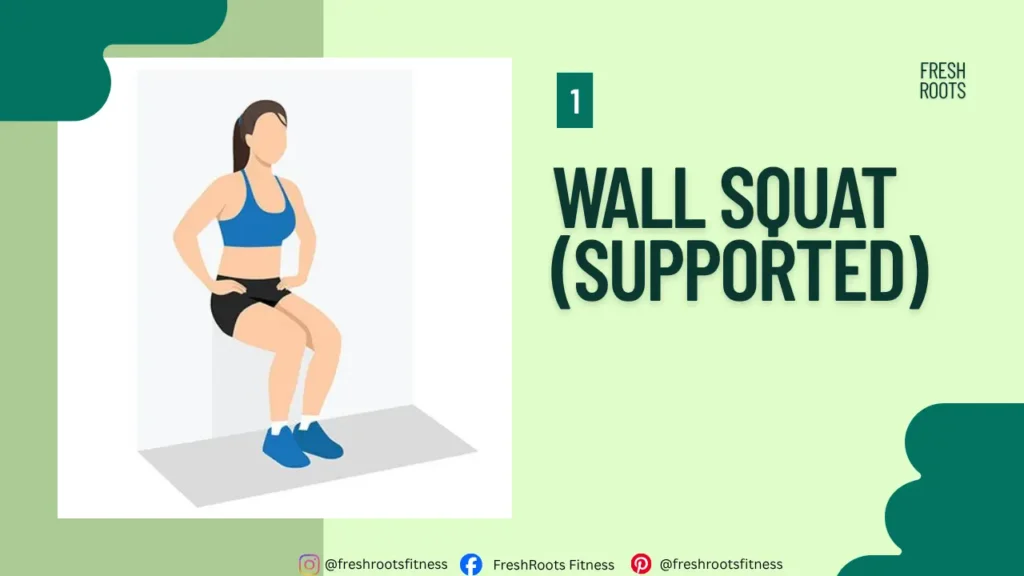
1. Wall Squat (Supported)
This is the most accessible starting point, especially on days when energy is low or cramps are intense. The wall provides full support, which means your body can focus on opening the pelvis rather than maintaining balance.
How to do it:
- Stand with your back flat against a wall, feet shoulder-width apart and about 30cm away from the wall.
- Slowly slide down until your thighs are roughly parallel to the floor or as far as is comfortable.
- Hold for 20-30 seconds, breathing slowly and deeply.
- Slide back up and rest for a moment before repeating.
- Do 3-4 rounds.
Why it helps:
The supported position allows the pelvic floor to release tension without demanding strength from fatigued muscles. The deep breathing in this position actively encourages relaxation in the lower abdomen, directly counteracting the bracing response that amplifies cramps.
Many women who try this for the first time during a painful period are surprised by how quickly the wall squat provides noticeable relief. It takes less than two minutes and requires almost no physical effort.
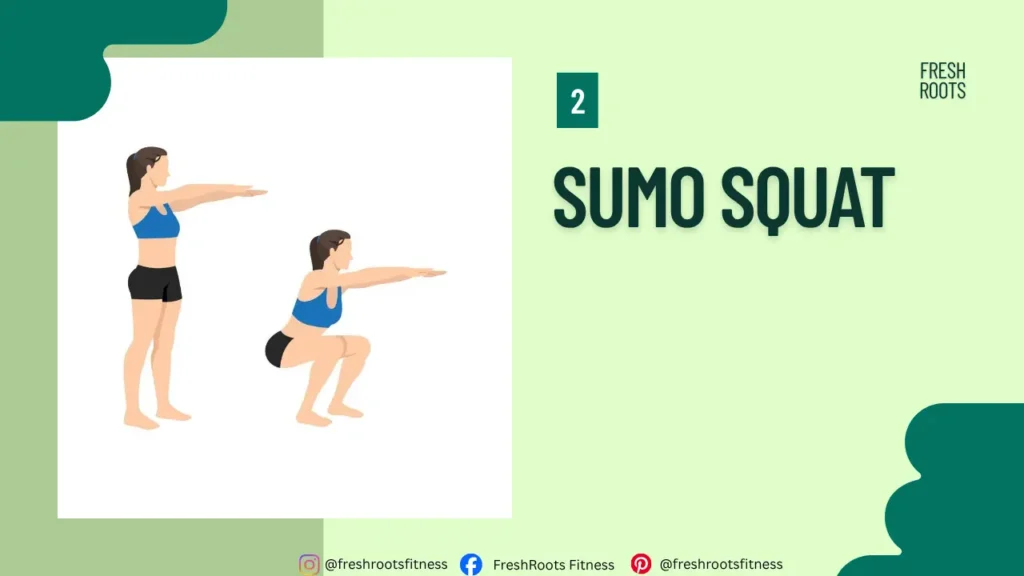
2. Sumo Squat
The sumo squat’s wide stance makes it specifically effective for opening the hips and inner thighs areas that hold significant tension during menstruation and contribute to pelvic discomfort when tight.
How to do it:
- Stand with feet wider than shoulder-width apart, toes turned out at roughly 45 degrees.
- Slowly lower into a squat, keeping your back straight and chest lifted.
- At the bottom of the movement, consciously relax the pelvic floor, imagine letting go of any tension you’re holding there.
- Engage your core gently as you rise back up.
- Do 10-12 repetitions at a slow, controlled pace.
Why it helps:
The wide stance stretches the adductors (inner thigh muscles) and hip rotators, which are directly connected to the pelvic floor through the body’s fascial system. Releasing tension in these muscles has an immediate knock-on effect on pelvic floor tension. Women with PCOS or hormonal cramping in particular often find sumo squats helpful because of this hip-opening effect.
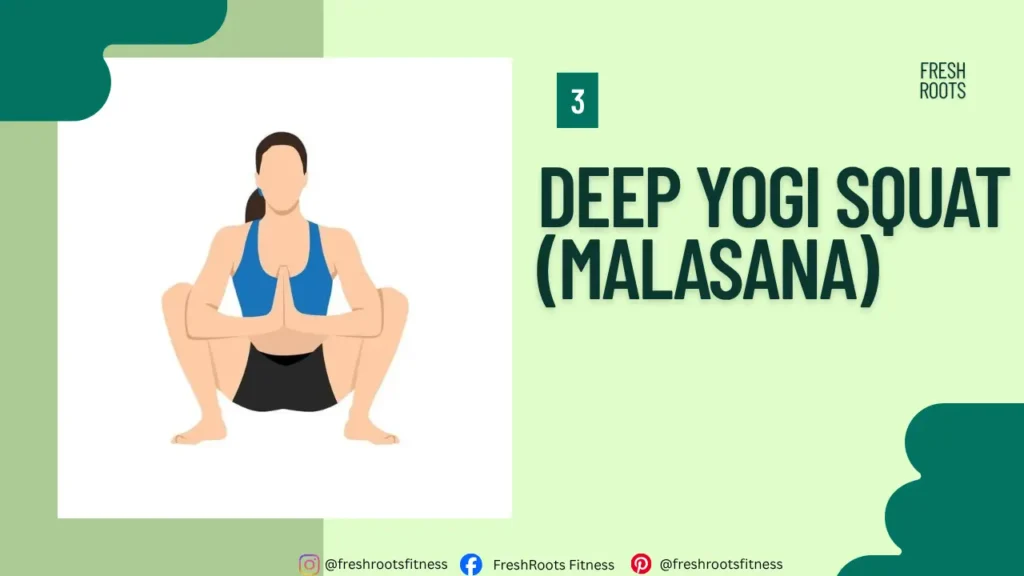
3. Deep Yogi Squat (Malasana)
This is one of the most powerful positions for pelvic floor release available, used in yoga, physiotherapy and traditional birth preparation for precisely this reason. It places the pelvic floor in its most open, lengthened position, which is the opposite of what the body does under pain and stress.
How to do it:
- Stand with feet slightly wider than hip-width apart, toes turned out.
- Lower your hips down into a deep squat, as close to the floor as comfortable.
- Keep heels on the floor if possible. If your heels lift, place a folded blanket or rolled towel underneath them.
- Bring your palms together at your chest and use your elbows to gently press your inner knees outward, deepening the hip opening.
- Hold for 30-60 seconds, breathing deeply and slowly.
Why it helps:
Malasana stretches the pelvic floor to its maximum functional length, releasing accumulated tension in a way that no other common exercise quite achieves. It also supports digestion, which is relevant given that many women experience digestive discomfort alongside their period due to the same prostaglandins that cause cramping also affecting the bowel.
The surprising part of this position is used in midwifery and prenatal care specifically for its ability to encourage healthy uterine positioning and circulation. That same mechanism is what makes it so effective for period pain.
4. Pelvic Tilts (Lying Down)
If cramps are intense and standing feels like too much, this is your go-to. Pelvic tilts are performed lying down, require almost no energy and directly target the lower back tension and abdominal cramping that make the first days of a period so uncomfortable.
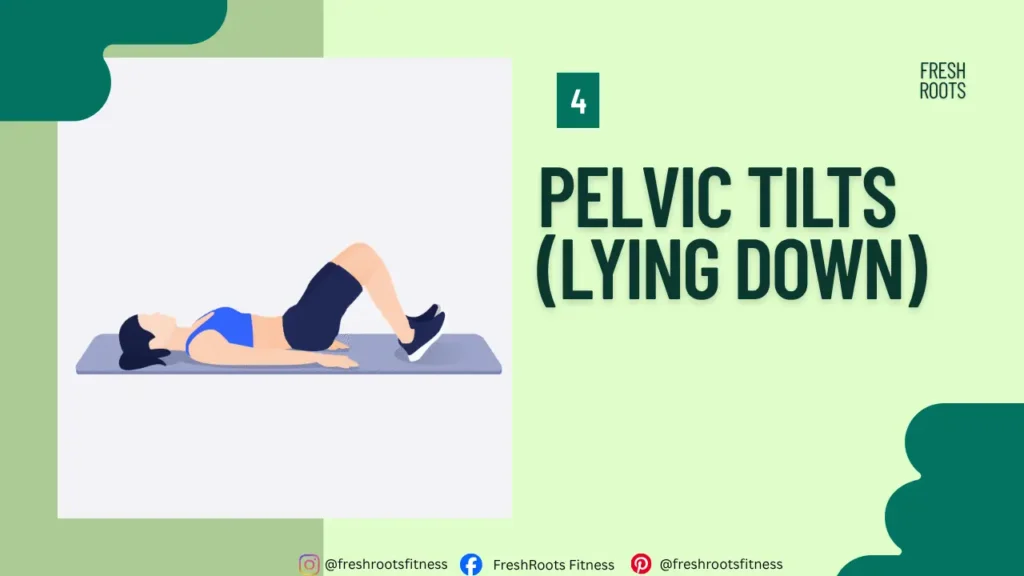
How to do it:
- Lie on your back with knees bent and feet flat on the floor, hip-width apart.
- Gently flatten your lower back against the floor by engaging your lower abdominals, this is the posterior tilt.
- Then release and allow a small arch to return to your lower back, this is the anterior tilt.
- Move slowly and deliberately between these two positions.
- Repeat 15-20 times.
Why it helps:
This gentle rocking motion mobilises the lumbar spine and sacrum, releases compression in the lower back and encourages blood flow in and around the pelvis. Many physiotherapists recommend pelvic tilts specifically for dysmenorrhoea (painful periods) because they address both the muscular and circulatory components of the pain without any physical strain.
If you do nothing else on a very painful day, do ten minutes of gentle pelvic tilts. The relief, while gradual, is real.
5. Supported Child’s Pose
Child’s Pose is where you end the sequence and it’s often the position where the benefit of everything you’ve done before becomes most tangible. The combination of hip flexion, gentle compression on the abdomen and total muscular release creates a profoundly calming effect on both the body and the nervous system.
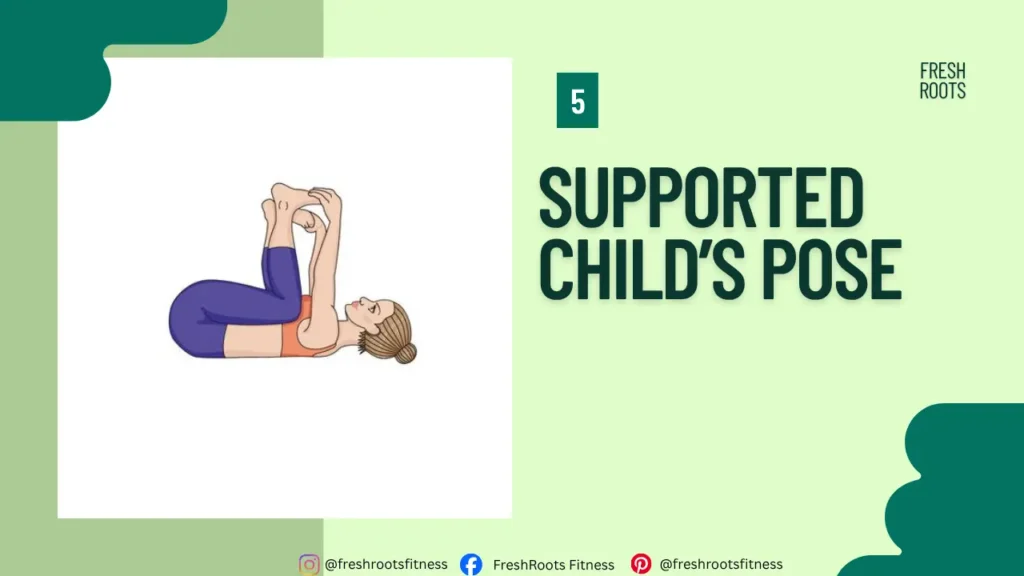
How to do it:
- Kneel on the floor and bring your big toes together, widening your knees to roughly mat-width apart.
- Place a pillow or folded blanket between your thighs and torso for support if needed.
- Lower your chest toward the floor (or onto the pillow), stretching your arms forward or resting them alongside your body.
- Let your forehead rest on the mat or a folded towel.
- Close your eyes and breathe deeply, slow inhale for four counts, slow exhale for four counts.
- Stay for 1-2 minutes.
Why it helps:
Beyond the physical benefits, which include soothing abdominal discomfort, releasing hip flexors and elongating the lower back, Child’s Pose activates the parasympathetic nervous system. This is the “rest and digest” branch of the nervous system and activating it directly counteracts the stress response that amplifies pain perception. Less physiological stress means less pain experience, even with the same underlying physical cause.
And honestly, ending a short movement session with two minutes lying quietly in Child’s Pose, breathing slowly, is one of the genuinely restorative things you can do for yourself during a difficult period of the day.
When and How Often to Do These Exercises
Timing: Begin as soon as you feel cramps arriving, you don’t need to wait until pain is severe. Starting early, at the first signs of discomfort, is more effective than trying to manage pain that’s already peaked.
Duration: Aim for 5-15 minutes daily during your period. Even a single round of each exercise, done slowly, falls within that window.
Frequency: Daily during your period is ideal. Between cycles, doing this sequence 2-3 times per week as part of a regular pelvic care routine helps maintain pelvic floor flexibility and reduce symptom severity in subsequent cycles.
This is something many women only realise after a few months of consistency that doing the exercises between periods, not just during them, is what produces the most significant improvement over time. The pelvic floor benefits from regular maintenance, not just crisis management.
According to physio-pedia- Pelvic Floor Exercises
Safety Tips
Squat exercises during periods are safe for most women, but a few sensible precautions:
- Listen to your body throughout discomfort that feels sharp or worsening is a signal to stop.
- Use a wall, pillow or rolled blanket for any exercise where balance feels uncertain, particularly if dizziness is a symptom for you during your period.
- Skip deep squats if you have significant knee pain substitute wall squats or pelvic tilts instead.
- Hydrating before and after movement during menstruation increases the body’s fluid needs slightly.
- Rest between rounds, there is no benefit to rushing. Slow, intentional movement is what produces relief.
Women with endometriosis, fibroids or other diagnosed reproductive conditions should check with their doctor or physiotherapist before starting any new exercise routine during menstruation.
Conclusion
The default advice for period pain rest, heat, painkillers, wait it out is not wrong, exactly. But it’s incomplete. Because what the research now supports and what many women have discovered for themselves is that gentle, targeted movement can do something that rest and painkillers alone cannot.
Squat exercises during periods work with your body’s own circulation and musculature to address the physical causes of cramping at the source. They are low-effort enough to do on your worst days, effective enough to notice the difference within a single session, and consistent enough in their results to become a genuine part of how you manage your cycle.
Five exercises. Ten minutes. A mat and some floor space.
Start with the wall squat and the child’s pose, the most accessible two and see how your body responds. Most people are genuinely surprised by how much better they feel afterwards. Not cured, not transformed overnight, but meaningfully better. And meaningfully better, repeated consistently across cycles, adds up to something real.
Your body knows how to find relief. Sometimes it just needs the right kind of movement to get there.
FAQs
-
Will these exercises help with period pain related to PCOS?
Yes, these exercises work to reduce pelvic inflammation and improve circulation, both of which are relevant for women with PCOS who experience hormonal cramping. They are a gentle, supportive complement to other PCOS management strategies.
-
Can I do these exercises if I feel very tired during my period?
Absolutely. The supported options, wall squats, pelvic tilts and Child’s Pose, require minimal energy and are specifically designed to be restorative rather than demanding. These are the right choices for your heaviest, most fatiguing days.
-
How long should I do these exercises?
Aim for 5-15 minutes of daily practice during your period. Short, consistent sessions are more beneficial than occasional longer ones.
-
Is it fine to do deep squats when menstruating?
Yes, as long as they feel comfortable. Deep squats like Malasana are particularly effective for pelvic floor release and uterine circulation. If you have knee concerns, skip them and use wall squats instead.
-
Are modified squats beneficial while on my period?
Yes, gentle modified squats like wall squats and sumo squats can meaningfully alleviate cramps by improving pelvic circulation and releasing pelvic floor tension. They are safe for most women during menstruation.

- How to Reduce Cholesterol Naturally With Simple Food Habits - July 4, 2026
- Early Signs of High Blood Sugar Most People Miss Daily - June 25, 2026
- How to Boost Immunity Naturally: Simple Daily Habits - June 23, 2026