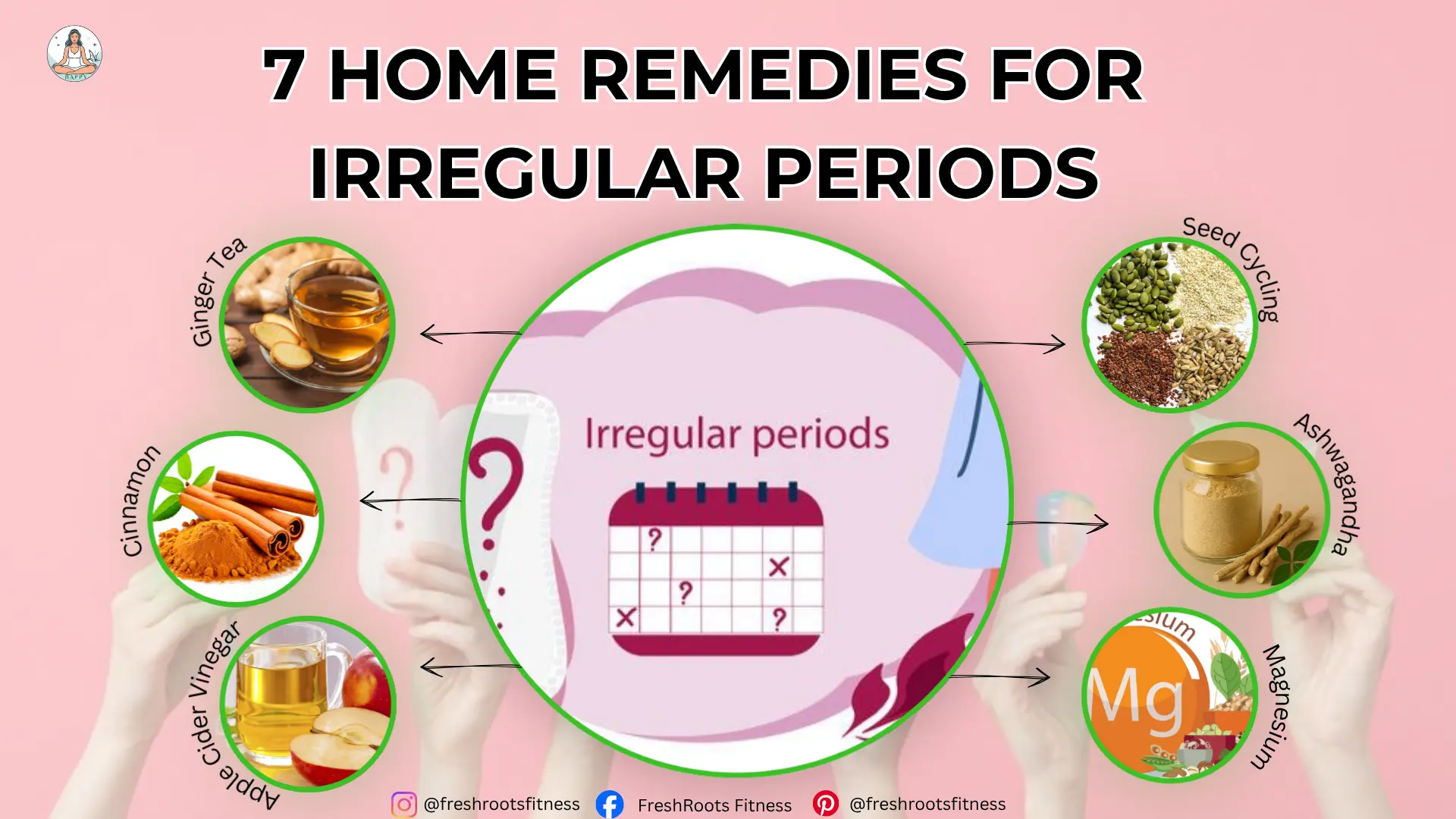
If your period shows up whenever it feels like it, sometimes early, sometimes weeks late, sometimes barely at all, you already know how frustrating and unsettling that can be. An irregular cycle isn’t just an inconvenience. It affects how you plan your life, how you feel in your body and for many women, it raises deeper questions about what’s going on hormonally.
The good news is that for many common causes of irregular periods, natural, lifestyle-based approaches can make a genuine difference. Irregular periods home remedies have been used across cultures for centuries and today, many of them are backed by a growing body of research on hormonal health, nutrition and the gut-hormone connection.
This article covers seven natural remedies that are both practical and evidence-informed. These aren’t overnight fixes; hormonal balance is built over weeks and months, not days. But with consistency, many women report meaningful improvements in cycle regularity, flow and how they feel throughout the month.
Let’s walk through them properly.
What Irregular Periods Actually Mean and Why They Happen
Before diving into remedies, it helps to understand what “irregular” actually means in a medical sense. A normal menstrual cycle runs anywhere from 21 to 35 days. If your cycle falls consistently outside that range, arrives unpredictably or if you skip periods entirely for months at a time, that’s considered irregular.
Occasional irregularity, a cycle that’s a week off here and there is completely normal and usually nothing to worry about. Persistent, recurring irregularity is your body’s way of signaling that something in your hormonal environment needs attention.
Stress and Cortisol Overload
This is one of the most common and most overlooked causes. When you’re under chronic stress, your body produces elevated cortisol and cortisol directly competes with your reproductive hormones for resources. The body, in its biological wisdom, prioritizes survival over reproduction. The result is a disrupted or suppressed cycle.
Polycystic Ovary Syndrome (PCOS)
PCOS is one of the most common hormonal conditions affecting women of reproductive age. It involves elevated androgen levels, often combined with insulin resistance and typically causes infrequent, prolonged or absent periods. Many women don’t know they have it until they start investigating why their cycle is irregular.
Thyroid Imbalances
Your thyroid gland regulates metabolism, but its hormones also directly influence your reproductive system. Both an underactive thyroid (hypothyroidism) and an overactive thyroid (hyperthyroidism) can cause significant changes to cycle frequency, flow and regularity.
Significant Weight Changes
Extreme weight loss, very low body fat and rapid weight gain all affect estrogen production and can throw your cycle off entirely. Female athletes and those recovering from restrictive eating patterns often experience cycle disruption for this reason.
Perimenopause
For women in their late 30s and 40s, changing hormone levels in the lead-up to menopause naturally cause cycles to become more irregular. This transition can last several years and brings a range of cycle changes, including shorter or longer gaps between periods.
Poor Nutrition and Nutrient Deficiencies
Certain nutrients, particularly iron, magnesium, zinc, vitamin D and B vitamins, play direct roles in hormone production and cycle regulation. A diet consistently low in these can quietly disrupt your hormonal balance over time.
7 Home Remedies For Irregular Periods That Actually Work
1. Ginger Tea
Ginger is one of the most well-researched plants in traditional medicine and its reputation as a remedy for menstrual irregularities is well-earned. Studies indicate that ginger helps regulate prostaglandins, hormone-like compounds that play a key role in triggering menstruation and controlling uterine contractions.
Many women report that regular ginger consumption helps bring on a delayed period and reduces cramping when it does arrive. It also has anti-inflammatory properties that address some of the underlying inflammation linked to cycle disruption.
How to use it: Simmer a one-inch piece of fresh ginger in two cups of water for ten minutes. Strain, add honey and drink warm. One to two cups daily, ideally starting in the week before your expected period, is the most common approach used for cycle support.
2. Cinnamon
Cinnamon might seem like a simple spice, but its impact on insulin sensitivity makes it a meaningful tool for anyone whose irregular periods are linked to PCOS or blood sugar imbalances. Research suggests that cinnamon improves how cells respond to insulin and since insulin resistance is one of the primary drivers of hormonal disruption in PCOS, this matters significantly.
Beyond insulin, cinnamon has been shown in some studies to help regulate menstrual cycles in women with PCOS specifically. It also has warming, anti-spasmodic properties that many women find helpful for managing cramps and flow.
How to use it: Add half a teaspoon of Ceylon cinnamon (true cinnamon, not cassia) to warm water, milk or your morning oatmeal. Drinking cinnamon water daily for four to six weeks is the most consistently reported approach for cycle support.
3. Apple Cider Vinegar
Apple cider vinegar (ACV) has earned a prominent spot in irregular period home remedies, particularly for women dealing with PCOS-related cycle disruption. Research suggests that ACV may help improve insulin sensitivity and reduce circulating androgen levels, both of which are central issues in PCOS-driven irregular cycles.
Some users notice that incorporating ACV into their daily routine over several weeks produces gradual improvements in cycle regularity, reduced excess hair growth and better blood sugar stability.
How to use it: Dilute one to two teaspoons of raw, unfiltered apple cider vinegar in a large glass of water. Drink it before meals, not on an empty stomach. Never drink ACV undiluted, as its acidity can damage tooth enamel and irritate the esophagus. Start with one teaspoon and build up gradually.
4. Seed Cycling
Seed cycling is a nutritional practice that involves eating specific seeds during different phases of your menstrual cycle to support the production of estrogen in the first half and progesterone in the second half. While large clinical trials are limited, many practitioners and women report meaningful cycle improvements with consistent use and the nutritional basis behind it is genuinely sound.
The seeds used contain lignans, zinc, selenium and fatty acids that support hormone metabolism and production.
How to do it:
- Days 1-14 (follicular phase): Eat one tablespoon each of ground flaxseeds and raw pumpkin seeds daily. Flaxseeds support healthy estrogen metabolism; pumpkin seeds are rich in zinc, which supports progesterone production in the second phase.
- Days 15-28 (luteal phase): Eat one tablespoon each of sesame seeds and sunflower seeds daily. Sesame seeds contain lignans that moderate estrogen; sunflower seeds are rich in vitamin E and selenium, which support progesterone.
Add them to smoothies, yogurt, oatmeal or salads. Grind flaxseeds before eating; whole flaxseeds pass through without being absorbed.
5. Ashwagandha
If stress is at the root of your irregular cycles, which it is for many women, ashwagandha may be one of the most targeted irregular periods home remedies you can try. Ashwagandha is an adaptogenic herb that experts believe helps regulate cortisol, the stress hormone that directly suppresses reproductive function when chronically elevated.
Studies indicate that ashwagandha supplementation reduces cortisol levels, improves thyroid function in subclinical hypothyroidism and supports overall hormonal balance. For women whose cycles disappear or become erratic during particularly stressful life periods, this herb addresses the problem at the hormonal source rather than just the symptom.
How to use it: Half a teaspoon of ashwagandha powder can be added to warm milk, golden milk or a smoothie. It’s also widely available in capsule form. Consistent daily use for six to eight weeks is typically when women notice changes in stress response and cycle regularity.
6. Spearmint Tea
Spearmint tea is one of the more targeted irregular periods home remedies for women dealing specifically with elevated androgens, a key feature of PCOS that contributes to cycle disruption, excess facial hair and acne.
Research suggests that spearmint has anti-androgenic properties, meaning it may help reduce circulating testosterone levels in women with PCOS. Some women notice improvement in cycle regularity, skin and other androgen-driven symptoms with consistent daily use.
How to use it: Steep one heaped teaspoon of dried spearmint leaves in hot water for five to seven minutes. Drink two cups per day, one in the morning and one in the afternoon or evening. This is a gentle remedy that builds in effect over several weeks of consistent use.
7. Magnesium
Magnesium is involved in over 300 enzymatic processes in the body, including several that directly regulate hormone production, stress response and blood sugar balance. Many experts believe that low magnesium is far more common than most women realize and its connection to PMS, painful periods and cycle irregularity is well documented.
Research suggests that magnesium supplementation helps reduce PMS symptoms, supports progesterone production, lowers cortisol and may improve insulin sensitivity, all of which contribute to a more regular cycle. Foods rich in magnesium include dark leafy greens, dark chocolate, pumpkin seeds, almonds, black beans and avocado.
How to use it: Increasing magnesium-rich foods in your diet is a good starting point. If supplementation is needed, magnesium glycinate or magnesium citrate are among the best-absorbed forms. Many women take 200 to 400mg in the evening, as magnesium also supports sleep quality, a bonus given how much sleep affects hormonal health.
Lifestyle Habits That Support a Regular Cycle
The seven remedies above work best when they’re supported by daily habits that keep your hormonal environment stable. These aren’t additions on top of an already chaotic lifestyle, they’re the foundation that makes everything else more effective.
- Prioritize sleep – Your body produces the majority of its reproductive hormones during deep sleep. Consistently poor sleep directly disrupts the hormonal signals that regulate your cycle. Seven to nine hours in a dark, cool room is the target.
- Eat enough, especially enough fat – Estrogen is made from cholesterol. Diets that are very low in fat or very low in calories overall deprive your body of the raw materials it needs to produce reproductive hormones. Healthy fats from avocado, olive oil, nuts, seeds and fatty fish are especially important.
- Manage stress deliberately – Since cortisol is one of the biggest cycle disruptors, stress management isn’t optional for hormonal health. Regular movement, time in nature, journaling, breathwork or even just consistent downtime can meaningfully reduce your baseline cortisol.
- Limit intense exercise if your cycle has disappeared – Excessive high-intensity training can suppress menstruation, particularly when combined with low-calorie intake. If your period has stopped, scaling back exercise intensity while increasing calorie intake often helps restore it.
- Reduce ultra-processed foods and refined sugar – Both drive insulin resistance and systemic inflammation, two of the most common hormonal disruptors. Swapping processed snacks for whole foods makes a real difference to hormonal balance over time.
- Limit alcohol and caffeine – Both affect liver function, which plays a crucial role in metabolizing and clearing excess hormones from the body. High intake of either can slow this clearance and contribute to a hormonal imbalance.
When to See a Doctor About Irregular Periods
Natural remedies and lifestyle changes work well for many women, but they have real limits. There are situations where irregular periods require professional evaluation rather than home treatment.
See your doctor if:
- Your period has been absent for three or more consecutive months and you are not pregnant
- Your cycle is consistently shorter than 21 days or longer than 35 days
- Your periods are extremely heavy, lasting more than seven days or accompanied by large clots
- You experience severe pelvic pain during or between periods
- You’ve been trying to conceive and irregular cycles are affecting your ability to track ovulation
- Your irregularity is accompanied by symptoms like unexplained weight gain, hair loss, excessive hair growth or persistent fatigue
Conditions like PCOS, thyroid disorders, premature ovarian insufficiency and endometriosis all require proper diagnosis and often medical management alongside any natural approach you choose to take. Getting the diagnosis right is the foundation of the right treatment.
How Long Before These Remedies Show Results?
This is important to understand clearly. Hormonal health doesn’t shift in a week. Your cycle is regulated by a complex interplay of hormones that respond to changes gradually, not immediately.
Most women begin to notice early changes, such as better mood in the week before their period, reduced cramping or slightly more predictable timing, within four to six weeks of consistent practice. Meaningful cycle regularity improvements typically appear around the two to three month mark. For conditions like PCOS, where the underlying hormonal imbalance is more significant, three to six months of consistent effort is a more realistic timeline.
Related: How to Get Regular Periods Naturally – HealthLine
The women who see the best results are those who combine two or three of these remedies with solid lifestyle foundations, sleep, nutrition, stress management and give it the time it needs to work.
Conclusion
Irregular periods are not something to dismiss or simply push through. Your menstrual cycle is often described as a fifth vital sign, a reflection of your overall hormonal and systemic health. When it’s consistently off, your body is asking for support.
The irregular periods home remedies in this guide, ginger, cinnamon, apple cider vinegar, seed cycling, ashwagandha, spearmint and magnesium, each target different aspects of hormonal imbalance. Used consistently and supported by real lifestyle change, they offer a meaningful, natural path toward a more regular, more comfortable cycle.
Start with one or two that feel most relevant to your situation. Build the habits. Give it time. And if your symptoms are severe or persistent, please involve a doctor in your care. Your hormonal health is worth the attention.
FAQs
-
What are the most effective irregular period home remedies to try first?
It depends on your situation. For stress-related irregularity, ashwagandha is most targeted. For PCOS or blood sugar issues, cinnamon and apple cider vinegar can be effective. For general cycle support, ginger tea and seed cycling are gentle, well-rounded starting points.
-
How long does it take for natural remedies to regulate my menstrual cycle?
Most women notice early improvements, less PMS, slightly more predictable timing, within four to six weeks. Meaningful cycle regularity typically takes two to three months. Women with PCOS may need three to six months of consistent effort.
-
Can stress really cause irregular periods?
Yes, it’s one of the most common causes. Chronic stress elevates cortisol, which directly suppresses the hormones that regulate ovulation. Managing stress through sleep, movement and calming practices is one of the most impactful things you can do for your cycle.
-
Is seed cycling scientifically proven to work?
Large-scale clinical research is limited, but the nutritional logic is sound. The seeds provide lignans, zinc, selenium and fatty acids that support hormone production during each phase of the menstrual cycle. Many women report positive results and the practice carries no meaningful risks.
-
Can these home remedies help if I have PCOS?
Several are particularly relevant, cinnamon for insulin sensitivity, spearmint for androgen reduction and magnesium for cortisol and blood sugar support. That said, PCOS benefits from professional diagnosis alongside any natural approach.
-
When should I stop home remedies and see a doctor about my irregular periods?
See a doctor if your period has been absent for three or more months, if you have severe pain or very heavy bleeding or if natural remedies haven’t helped after three months of consistent use.

- How to Reduce Cholesterol Naturally With Simple Food Habits - July 4, 2026
- Early Signs of High Blood Sugar Most People Miss Daily - June 25, 2026
- How to Boost Immunity Naturally: Simple Daily Habits - June 23, 2026