When it comes to women’s health, certain nutrients play a much bigger role than we often realize. From maintaining energy levels to supporting hormonal balance and pregnancy, nutrition is the foundation of overall well-being. One of the most important nutrients for women is folate, also known as Vitamin B9. Understanding folate benefits for women can help you take better care of your body, especially during important life stages like pregnancy.
Folate is essential for cell growth, DNA formation and red blood cell production. Many women report feeling more energetic and balanced when their folate intake is adequate. During pregnancy, its importance increases even more. Let’s explore how folate works and why it is so important for women’s health.
What Is Folate and Why Is It Important?
Folate is a water-soluble B vitamin that plays a key role in cell division and growth.
It helps your body:
- Produce healthy red blood cells
- Support DNA formation
- Maintain proper brain function
- Support fetal development during pregnancy
Experts believe that folate is especially important for rapidly growing cells, which is why it becomes crucial during pregnancy and early development. Since your body does not store large amounts of it, regular intake is necessary to experience consistent folate benefits for women.
Folate Benefits for Women’s Overall Health
Folate supports several important functions in a woman’s body.
It helps maintain energy levels by supporting red blood cell production. When your body has enough healthy red blood cells, oxygen is delivered efficiently to tissues, which helps reduce fatigue. Many women report improved energy and reduced tiredness when their folate levels are balanced.
Folate also plays a role in supporting brain function and emotional well-being. Experts believe that it contributes to the production of neurotransmitters, which help regulate mood. This makes folate benefits for women important not just physically but mentally as well.
Folate Benefits for Pregnancy
Folate becomes even more important during pregnancy. It supports the early development of the baby, especially the brain and spinal cord. Research suggests that adequate folate intake may help reduce the risk of certain birth-related complications. This is why folate is often recommended before and during pregnancy.
Many healthcare professionals suggest that women start taking folate even before conception to ensure proper levels.
Some commonly noted benefits include:
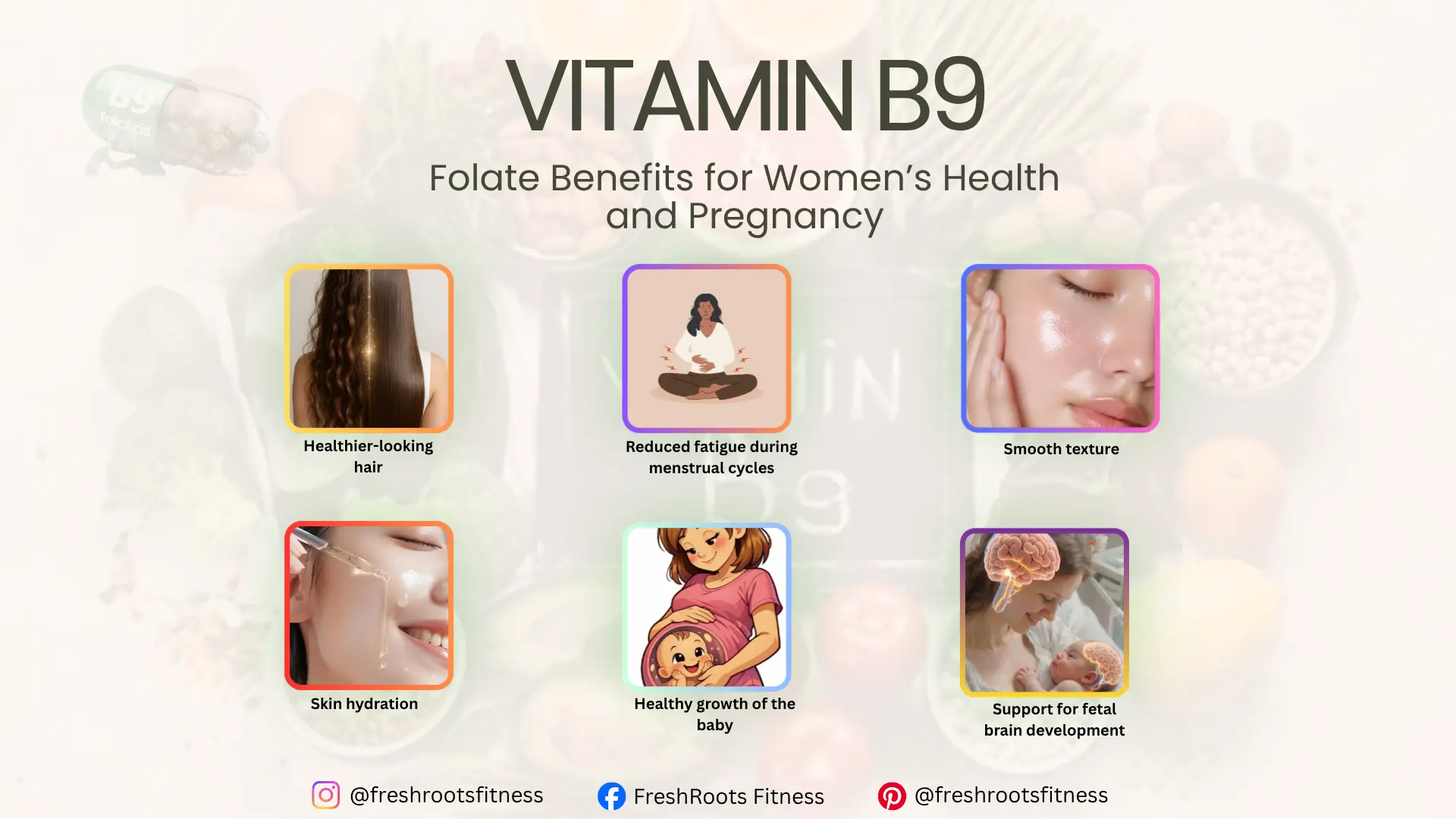
- Support for fetal brain development
- Healthy growth of the baby
- Reduced risk of certain developmental issues
Experts believe that early intake is crucial because the baby’s development begins in the very first weeks.
Folate Benefits for Hormonal Balance
Hormonal fluctuations are a natural part of a woman’s life. Folate may support hormonal balance by contributing to proper cellular function and overall health.
Many women notice:
- Better mood stability
- Reduced fatigue during menstrual cycles
- Improved overall well-being
While it is not a direct hormone regulator, proper nutrition supports the body’s natural balance.
You Should Read These Articles
Vitamin K Deficiency
Vitamin B1 Deficiency
Vitamin B2 Benefits and Deficiency
Vitamin B3 Benefits
Vitamin B5 Benefits
Vitamin B6 Benefits
Vitamin B7 Benefits
Folate Benefits for Skin and Hair Health
Folate also contributes to skin and hair health. It supports cell regeneration, which is important for maintaining healthy skin and hair.
Many users report:
- Improved skin texture
- Healthier-looking hair
- Better overall appearance
Experts believe that proper nutrient intake reflects on your external health over time.
Natural Sources of Folate
Getting folate from natural foods is one of the best ways to support your health.
You can include:
- Green leafy vegetables (spinach, kale)
- Lentils and beans
- Citrus fruits
- Avocados
- Beets
Experts suggest that fresh and minimally processed foods provide better nutrient absorption. Including these regularly helps maintain steady levels and maximize folate benefits for women.
Folate vs Folic Acid: What’s the Difference?
This is something many people get confused about. Folate is the natural form found in foods, while folic acid is the synthetic form used in supplements and fortified foods.
Both serve similar functions, but experts believe that the body better absorbs natural folate in most cases. However, folic acid supplements are commonly recommended during pregnancy.
Signs You May Be Low in Folate
Your body may show subtle signs if levels are low.
You may notice:
- Fatigue or weakness
- Pale skin
- Mood changes
- Difficulty concentrating
Research suggests that folate deficiency can lead to anemia, which affects energy levels. Recognizing these signs early can help you take action.
Can You Take Folate Supplements?
Yes, supplements are commonly used, especially for women planning a pregnancy.
They are recommended when:
- Dietary intake is insufficient
- There is increased nutritional demand
- A deficiency is diagnosed
Many women report improved energy and overall health with proper supplementation. However, it’s important to follow proper dosage guidelines and avoid unnecessary intake.
Lifestyle Tips to Maximize Folate Benefits
Your lifestyle plays a major role in how well your body uses nutrients.
To improve results:
- Eat a balanced and fresh diet
- Avoid excessive processed food
- Stay hydrated
- Manage stress levels
- Maintain a routine
Experts believe that combining healthy habits with proper nutrition enhances overall effectiveness.
How Long Does It Take to See Results?
- Some benefits, like improved energy, may be noticed within a few weeks.
- During pregnancy, the benefits are ongoing and support long-term development.
- Studies indicate that consistency is key to maintaining healthy levels.
By The Nutrition Source- Vitamin B9
Common Mistakes to Avoid
Ignoring diet and relying only on supplements is a common mistake. Another is starting folate intake too late during pregnancy.
Overconsumption should also be avoided. Keeping your approach balanced works best.
Conclusion
Women’s health requires consistent care and proper nutrition. Understanding folate benefits for women can help you support your body at every stage of life, from daily wellness to pregnancy.
Simple changes like improving your diet and maintaining a healthy routine can make a meaningful difference over time. Start early, stay consistent and give your body the support it truly needs.
FAQs
-
What are the main folate benefits for women?
It supports energy, red blood cell production and overall health.
-
Why is folate important during pregnancy?
It helps in fetal brain and spinal cord development.
-
Which foods are rich in folate?
Leafy greens, lentils, citrus fruits and avocados are good sources.
-
Can folate improve energy levels?
Yes, it supports red blood cell production, which helps reduce fatigue.
-
Is it safe to take folate daily?
Yes, in recommended amounts, especially for women planning pregnancy.

- How to Reduce Cholesterol Naturally With Simple Food Habits - July 4, 2026
- Early Signs of High Blood Sugar Most People Miss Daily - June 25, 2026
- How to Boost Immunity Naturally: Simple Daily Habits - June 23, 2026