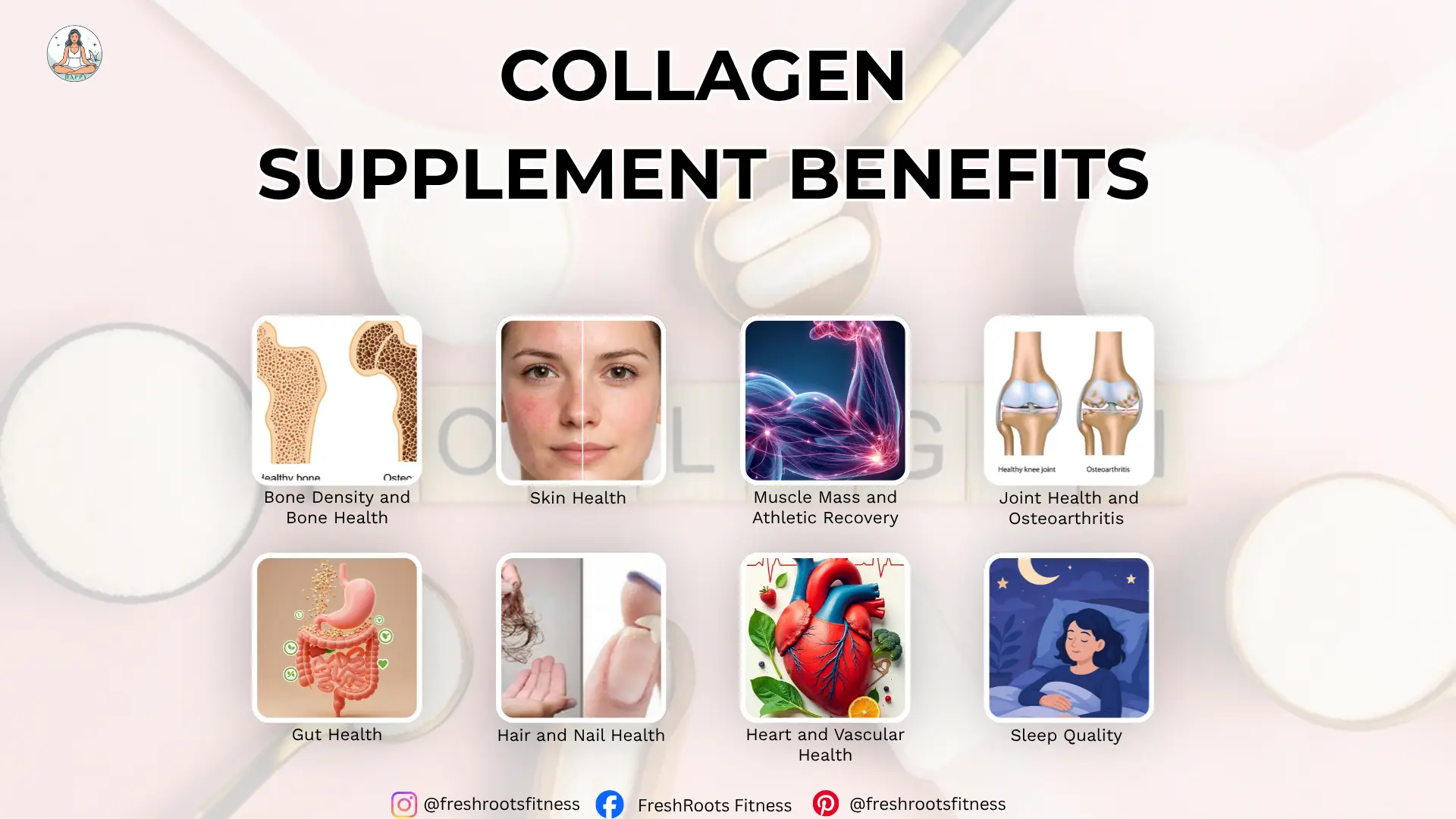
Walk into any pharmacy or scroll through any wellness feed and collagen is everywhere in powders, capsules, gummies, drinks and beauty creams. Brands promise younger-looking skin, stronger joints, thicker hair and a faster metabolism. It’s one of the fastest-growing segments in the supplement industry and the enthusiasm is loud.
But what does collagen actually do? Which of these claims are backed by real research and which are marketing noise? And if you’re considering adding a collagen supplement to your routine, what should you actually expect?
Understanding the benefits of collagen supplements requires separating genuine science from hype. The honest picture is both more specific and more interesting than most product pages will tell you. Some of the claimed benefits have solid research support. Others are less clear. And a few details about how collagen works in the body change the conversation significantly.
This guide gives you the full picture, what collagen is, what happens when you supplement it, which benefits are best supported by evidence, who is most likely to see results and how to choose a product that’s actually worth your money.
What Is Collagen and Why Does It Matter?
Collagen is the most abundant protein in the human body, making up approximately 30% of total protein content. It is the primary structural protein in skin, bones, cartilage, tendons, ligaments, blood vessels and the gut lining. Think of it as the scaffolding that gives these tissues their structure, elasticity and tensile strength.
Researchers identify at least 28 types of collagen, but the majority in the human body falls into three main types:
- Type I collagen – Found in skin, bone, tendons and connective tissue. It is the most abundant type and is primarily responsible for skin firmness, elasticity and the structural integrity of bone and tendons.
- Type II collagen – Found primarily in cartilage. It is the focus of research on joint health and osteoarthritis.
- Type III collagen – Found in skin, blood vessels and internal organs, often alongside Type I.
The body produces collagen naturally by combining amino acids, primarily glycine, proline and hydroxyproline with the help of vitamin C, zinc and copper as essential cofactors. The challenge is that collagen production declines with age, beginning as early as the mid-twenties, dropping by approximately 1% per year and accelerating during menopause in women. UV radiation, smoking, excess sugar, chronic stress and poor sleep all accelerate collagen degradation further.
By the time most people are in their forties or fifties, they have lost a significant percentage of their youthful collagen volume and the effects are visible: thinner skin, reduced joint cushioning, longer wound healing times and increased injury risk in tendons and ligaments.
How Collagen Supplements Work
Here’s where the collagen conversation gets genuinely interesting and where many people are initially skeptical for a logical but ultimately incomplete reason.
The concern goes like this collagen is a protein. When you consume a protein, your digestive system breaks it down into individual amino acids before absorption. Since collagen is digested into amino acids like any other protein, how would your body know to use those amino acids specifically for collagen synthesis? Why wouldn’t it just use them for anything else the body needs protein for?
This is a fair question and for years, it was the primary argument against collagen supplementation making a meaningful difference beyond general protein intake.
The answer lies in what collagen supplements actually are. Most quality collagen supplements are hydrolyzed collagen also called collagen peptides. Hydrolysis breaks collagen down into smaller fragments called peptide chains of two to five amino acids, rather than individual amino acids. Research suggests these specific peptide fragments, particularly proline-hydroxyproline and hydroxyproline-glycine dipeptides, survive digestion intact and are absorbed into the bloodstream as peptides and accumulate in specific tissues, including skin, cartilage and bone.
Studies indicate these collagen-derived peptides act as signaling molecules in target tissues, stimulating fibroblasts (in skin) and chondrocytes (in cartilage) to increase their own collagen production. This is the mechanism that makes collagen supplementation more targeted than simply eating a high-protein diet, the specific peptide fragments appear to signal the body to rebuild collagen in the tissues where it’s been depleted.
This mechanism is supported by multiple peer-reviewed studies showing that hydrolyzed collagen supplementation produces measurable outcomes in skin, joints and bone beyond what would be expected from the amino acid content alone.
Collagen Supplement Benefits
1. Skin Health
Skin is where the collagen supplement evidence is strongest, most consistent and most practically meaningful. Multiple randomized controlled trials, the gold standard of clinical evidence, have examined the effect of collagen peptide supplementation on skin.
The findings consistently show:
- Improved skin elasticity – Studies indicate that daily collagen peptide supplementation of 2.5-10 grams for eight to twelve weeks produces measurable improvements in skin elasticity compared to placebo. The effect is most pronounced in older women whose skin elasticity has declined significantly.
- Reduced skin wrinkles – Multiple studies demonstrate reductions in the depth and visibility of facial wrinkles, particularly around the eyes and forehead with consistent collagen supplementation over eight to twelve weeks.
- Improved skin hydration – Collagen peptides appear to stimulate hyaluronic acid production in the skin, improving moisture retention and skin smoothness. Several studies report significant improvements in skin hydration with supplementation.
- Increased dermal collagen density – Some studies using skin biopsy analysis have directly confirmed increased collagen content in the dermis following supplementation not just surface-level changes, but actual structural rebuilding.
Research suggests the mechanism involves collagen peptides stimulating fibroblasts, the skin cells responsible for producing collagen and hyaluronic acid to increase their output. The peptides appear to signal that collagen has been degraded and repair is needed.
The effects are real but require consistency and take time. Most studies showing significant results involve supplementation for at least eight weeks daily. Stopping supplementation gradually reverses the gains over time. Collagen benefits are maintenance-dependent rather than permanent.
2. Joint Health and Osteoarthritis
Joint health is the second area where collagen supplement benefits have meaningful research support, particularly for people with existing joint pain or early osteoarthritis.
Cartilage, the cushioning tissue at the ends of bones, is primarily composed of Type II collagen. As cartilage breaks down with age or use, joint pain, stiffness and reduced mobility result. Collagen peptides derived from Type II collagen sources (typically chicken sternum) appear to accumulate in cartilage tissue and stimulate chondrocytes, cartilage-producing cells to increase collagen synthesis.
Studies indicate that:
- Athletes and active individuals who supplemented with collagen reported reduced joint pain during physical activity compared to placebo groups.
- People with osteoarthritis experienced reduced joint pain and improved joint function with consistent collagen supplementation over three to six months.
- Some research suggests that collagen supplementation may slow cartilage degradation, particularly when combined with vitamin C.
A well-cited study from Penn State University found that athletes who supplemented with hydrolyzed collagen daily experienced significantly less joint pain at rest and during activity compared to those taking a placebo, with improvements continuing over the 24-week study period.
The evidence is strongest for activity-related joint pain and mild to moderate osteoarthritis. For severe joint disease, collagen supplementation is a supportive measure rather than a treatment.
3. Bone Density and Bone Health
Bone is approximately 30-35% collagen by dry weight, providing the flexible framework that the mineral matrix (primarily calcium and phosphate) crystallizes onto. Without adequate collagen structure, bones become brittle rather than strong, because collagen gives bone its flexibility and resistance to fracture.
Research suggests that collagen peptide supplementation supports bone health in several ways:
- Studies in postmenopausal women a group at particularly high risk of bone loss, found that daily collagen supplementation combined with calcium and vitamin D produced significantly better outcomes in bone mineral density compared to calcium and vitamin D alone.
- Some research suggests collagen supplementation reduces markers of bone degradation while maintaining or increasing markers of bone formation.
- Collagen provides the structural matrix on which calcium deposits, so maintaining collagen integrity is foundational to effective calcium utilization in bone.
This benefit is particularly relevant for women in perimenopause and menopause, as both bone loss and skin collagen decline accelerate significantly during this period.
4. Muscle Mass and Athletic Recovery
Type I collagen is present in connective tissue throughout muscle in tendons, ligaments and the connective tissue that surrounds muscle fibers (the endomysium and perimysium). While collagen is not the amino acid profile typically associated with muscle protein synthesis (it lacks sufficient leucine for that purpose), it plays an important structural role in the connective tissue that supports muscle function and in tendon health.
Research suggests that collagen supplementation combined with resistance exercise increases the synthesis of structural proteins in tendons and ligaments, the connective tissues most commonly injured during athletic training. One study found that collagen supplementation before exercise increased collagen synthesis markers in tendons more than exercise alone.
Some research suggests collagen supplementation supports muscle mass maintenance in older adults, particularly relevant for sarcopenia (age-related muscle loss), where the connective tissue component of muscle also degrades.
Many users report that collagen, as part of a post-workout recovery strategy, particularly alongside adequate protein and vitamin C, supports faster recovery from training and reduces injury frequency in tendons and ligaments.
5. Gut Health
The gut lining like all connective tissue, contains collagen and its integrity is central to healthy digestive function. Collagen, particularly in the form of gelatin (cooked collagen), has traditionally been used to support gut health in the form of bone broth.
The scientific evidence here is less robust than for skin and joints fewer large randomized controlled trials exist specifically for gut applications, but the mechanistic evidence is reasonable:
- Collagen contains glycine and glutamine amino acids that are important fuels for intestinal cells and have been studied for their role in maintaining gut lining integrity.
- Some research suggests collagen supplementation may support the repair of the gut lining in conditions associated with increased intestinal permeability.
- Glycine has anti-inflammatory properties that may reduce gut inflammation.
Research suggests this is a genuine mechanism worth attention, but the direct clinical evidence in humans is still developing. People with digestive issues who add collagen supplementation often report improvements in bloating and gut comfort, though this is difficult to attribute definitively to the collagen versus other dietary changes made simultaneously.
6. Hair and Nail Health
Hair and nails are composed of keratin, a different protein from collagen. However, collagen is a component of the dermis surrounding hair follicles and the amino acids in collagen, particularly proline, are building blocks for keratin.
Studies suggest:
- Collagen peptide supplementation is associated with reduced hair thinning and improved hair strength in some research.
- Nail brittleness and breakage are reduced with consistent collagen supplementation. In several studies, one 24-week study found a 42% reduction in nail breakage frequency with daily collagen supplementation.
- The dermal layer of the scalp, which houses hair follicles, benefits from improved collagen density, potentially supporting healthier follicle environments.
The evidence for nail benefits is reasonably consistent. Hair benefits have fewer large clinical trials behind them, but have mechanistic support and are frequently reported by users.
7. Heart and Vascular Health
Blood vessels, particularly the aorta and large arteries, have walls composed significantly of Type I and Type III collagen. These collagen structures give arterial walls their flexibility and resistance to rupture. As collagen in arterial walls degrades with age, arteries stiffen, contributing to increased blood pressure and cardiovascular risk.
Research suggests that collagen peptide supplementation may:
- Reduce arterial stiffness markers in middle-aged adults after 6 months of supplementation.
- Support the structural integrity of arterial walls by stimulating smooth muscle cell collagen production.
- Reduce LDL cholesterol in some studies, possibly through effects on the liver’s collagen matrix.
The cardiovascular evidence is less developed than skin and joint research, but points toward potential benefits for arterial health with consistent, long-term supplementation.
8. Sleep Quality
Glycine is one of the three primary amino acids in collagen, making up approximately 33% of its amino acid content. Glycine is an inhibitory neurotransmitter with well-documented sleep-promoting effects.
- Improves sleep quality and reduces the time needed to fall asleep.
- Reduces daytime fatigue following poor sleep.
- Supports slow-wave (deep) sleep architecture.
Because collagen supplements provide approximately 3 grams of glycine per 10-gram serving, there is a legitimate pathway through which collagen supplementation may improve sleep quality, particularly for people who struggle with sleep onset or sleep quality.
Many users report improved sleep as a secondary benefit of collagen supplementation that they didn’t initially expect.
What Collagen Supplements Won’t Do
In fairness, some claims made about collagen supplements are less well-supported than others:
Dramatic overnight skin transformation – Collagen benefits on skin are real but gradual. Most studies show meaningful results after eight to twelve weeks of consistent daily supplementation. Expecting visible changes in days is unrealistic.
Replacing a poor diet – Collagen supplements work best as part of an overall healthy diet and lifestyle. They don’t compensate for excessive sun exposure, smoking, high sugar intake or chronic sleep deprivation, all of which degrade collagen faster than a supplement can rebuild it.
Weight loss – Some brands market collagen for metabolism and weight management. The evidence for direct weight loss effects is weak. Collagen’s satiety effects (it is reasonably filling as a protein) may support weight management goals indirectly, but it is not a weight loss supplement.
Replacing medical treatment for severe joint disease – Collagen supplementation is supportive for mild to moderate joint pain and early osteoarthritis. It is not a substitute for medical management of advanced joint disease, autoimmune arthritis, or injury.
How to Choose a Quality Collagen Supplement
Not all collagen supplements are equal. Here’s what actually matters when choosing one:
Type of collagen:
- Hydrolyzed collagen peptides – The most researched and bioavailable form. Look for this specifically.
- Type I and III – Most relevant for skin, hair, nails, bones and gut. Sourced from bovine (cow) or marine (fish) sources.
- Type II – Most relevant for joint health. Sourced from chicken cartilage.
- Marine collagen – Derived from fish skin and scales. A smaller peptide size may improve absorption and is preferred by some research. Also, the best option for pescatarians.
Source matters:
Bovine collagen (from grass-fed cattle) and marine collagen (from wild-caught fish) are generally considered the most reliable sources
Look for products with third-party testing or certification for purity, particularly important given the lack of supplement regulation in many markets
Dosage:
- Most research uses 2.5-15 grams per day.
- For skin benefits, 2.5-5 grams daily shows consistent results in studies.
- For joint benefits, 5-10 grams daily is the range used in most positive trials.
- Higher doses are not necessarily better, the research suggests diminishing returns above 15 grams daily.
What it should contain:
- Minimal additional ingredients, a quality collagen powder should have one or two ingredients.
- Avoid added sugar, artificial flavors and unnecessary fillers.
- Some products add vitamin C, which is a genuinely synergistic vitamin C is essential for collagen synthesis in the body.
What it shouldn’t contain:
- Proprietary blends that hide individual ingredient amounts.
- Excessive additives, especially in gummies. (which tend to have higher sugar content and lower collagen content per serving)
Who Benefits Most From Collagen Supplementation
- Women over 35 – Collagen decline is significant by this point and accelerates further toward menopause skin and bone benefits are most pronounced in this group.
- Postmenopausal women – Both skin collagen and bone density decline rapidly after menopause. Supplementation has been most extensively studied in this population.
- Active individuals and athletes – Joint and tendon support is particularly relevant for those with high physical training loads
- People with joint pain or early osteoarthritis – The strongest functional benefit outside of aesthetics.
- People recovering from injury – Collagen’s role in connective tissue repair makes it valuable during recovery from tendon, ligament and cartilage injuries.
- Vegetarians who eat fish – Marine collagen is the best option. Strict vegetarians currently have no equivalent plant-based collagen supplement.
Maximizing Collagen Supplement Benefits
The way you take collagen and what you pair it with significantly influences results:
Take with vitamin C. Vitamin C is a required cofactor for collagen synthesis in the body, it is essential for the hydroxylation of proline and lysine, which gives collagen its structural stability. Without adequate vitamin C, the body cannot properly assemble the collagen peptides supplied by supplementation. Mix your collagen powder into orange juice, add it to a vitamin C-rich smoothie, or take a vitamin C supplement alongside it.
Take before exercise for joint benefits. Research suggests that taking collagen peptides approximately 30-60 minutes before physical activity, alongside vitamin C, optimally increases collagen synthesis in the tendons and ligaments being exercised. The exercise-stimulated blood flow delivers the peptides to the tissues actively being loaded.
Be consistent. The research shows meaningful benefits when using daily supplementation for eight to twelve weeks minimum. Occasional or inconsistent use is unlikely to produce meaningful results.
Avoid habits that degrade collagen. Excess dietary sugar, through a process called glycation, degrades collagen structure. UV radiation without protection breaks down dermal collagen. Smoking significantly accelerates the collagen degradation systemically. Supplementing collagen while maintaining these habits partially counteracts the benefit.
Eat a collagen-supportive diet alongside supplementation:
- Vitamin C-rich foods – Citrus, bell peppers, kiwi, amla, guava.
- Zinc-rich foods – Pumpkin seeds, legumes, red meat. Zinc is essential for collagen-producing enzyme function.
- Copper-rich foods – Nuts, seeds, dark chocolate. Copper is required for the cross-linking that gives collagen its structural strength.
- Proline-rich foods – Egg whites, wheat germ and dairy provide additional building blocks.
- Antioxidant-rich foods – berries, green tea, leafy greens protect existing collagen from oxidative degradation.
Lifestyle Habits That Protect Collagen Naturally
Supplementation works alongside healthy habits not instead of them:
- Wear daily SPF – UV radiation is one of the most significant drivers of skin collagen degradation. Daily sun protection is more impactful for long-term skin collagen preservation than any supplement.
- Don’t smoke – Smoking reduces collagen production and accelerates degradation systemically, no supplement compensates for this.
- Reduce sugar – Advanced glycation end-products (AGEs) from high sugar intake cross-link and stiffen collagen fibers, reducing their function in skin, joints and blood vessels.
- Sleep adequately – Growth hormone, released during deep sleep, stimulates collagen synthesis. Poor sleep is associated with accelerated skin collagen loss.
- Manage stress – Cortisol from chronic stress directly inhibits collagen production by fibroblasts and chondrocytes.
- Exercise regularly – Mechanical loading of tendons and joints stimulates collagen synthesis sedentary behavior reduces it.
By The HealthLine- Health Benefits of Collagen
When to See a Doctor
Collagen supplements are generally safe with minimal side effects for most people. But certain situations warrant medical guidance:
- If you are pregnant or breastfeeding, consult your doctor before adding collagen supplementation.
- If you have kidney disease, the high protein and amino acid load of collagen supplements should be discussed with your doctor.
- If you have a seafood allergy and are considering marine collagen, allergic reactions are possible.
- If you are taking medications that affect blood clotting, glycine may have mild anticoagulant properties at high doses.
- If joint pain is severe, worsening or accompanied by swelling, warmth and systemic symptoms, these warrant medical evaluation rather than supplementation.
Conclusion
The honest verdict on collagen supplement benefits is this: the research is real, the mechanism is understood and the outcomes, particularly for skin, joints and bone are measurable and meaningful. This isn’t a wellness fad built purely on marketing. It is a supplement category with genuine scientific support behind its core claims.
The caveats are equally important. Collagen benefits are gradual, require consistency over weeks to months and work best as part of a healthy lifestyle rather than a substitute for one. The quality of the supplement matters. The form matters. The pairing with vitamin C matters.
If you are above thirty-five, active, dealing with joint discomfort, noticing changes in skin elasticity, or going through hormonal transitions, collagen supplementation has a meaningful evidence base behind it that makes it worth serious consideration.
Start with a quality hydrolyzed collagen peptide powder, take it daily alongside vitamin C, be consistent for at least eight weeks and pay attention to how your skin, joints and recovery feel. The results, for most people who approach it this way, tend to speak clearly enough.
FAQs
-
What type of collagen supplement is best?
Hydrolyzed collagen peptides are the most bioavailable and best-researched form. Type I and III for skin, hair and nails. Type II for joint health specifically. Marine collagen is preferred for smaller peptide size and pescatarians.
-
Are collagen supplements safe to take daily?
Yes, collagen supplements are generally safe for long-term daily use at recommended doses (5-15 grams). People with kidney disease, seafood allergies (marine collagen) or pregnancy should consult a doctor before starting.
-
Should I take collagen with vitamin C?
Yes, vitamin C is essential for collagen synthesis in the body. Taking collagen peptides alongside vitamin C from food or supplements improves how effectively the body uses the supplemented peptides for tissue rebuilding.
-
Can vegetarians take collagen supplements?
Strict vegetarians cannot take animal-derived collagen. Pescatarians can use marine collagen. Plant “collagen boosters” provide precursor nutrients (vitamin C, zinc, glycine) that support the body’s own collagen production rather than supplying collagen peptides directly.
-
How long does it take for collagen supplements to work?
Most studies show measurable skin improvements after eight to twelve weeks of daily supplementation. Joint pain improvements typically take three to six months. Consistency matters more than dose.
-
What are the main collagen supplement benefits?
The best-supported benefits include improved skin elasticity and hydration, reduced joint pain, stronger nails, better bone density and faster connective tissue recovery. Skin and joint benefits have the most clinical research behind them.

- How to Reduce Cholesterol Naturally With Simple Food Habits - July 4, 2026
- Early Signs of High Blood Sugar Most People Miss Daily - June 25, 2026
- How to Boost Immunity Naturally: Simple Daily Habits - June 23, 2026