You get into bed after a long day, pull the covers up and then it starts. A slow heat is building in your feet. Then a tingling. Then a burning sensation that seems to intensify the moment you try to relax. You kick the blanket off. You press your feet against the cool side of the mattress. Nothing lasts. And sleep drifts further away with every passing minute.
If this is a familiar experience, you are far from alone. Burning feet at night is a surprisingly common complaint, one that rarely gets the attention it deserves because it sits in that awkward middle ground between “serious enough to see a doctor about” and “uncomfortable enough to ignore.” Most people just suffer through it, night after night, without realising that there are straightforward remedies that genuinely work.
The important thing to understand upfront is that burning feet at night is not always a sign of something serious. In many cases, it responds well to natural methods and small, practical changes in daily habits. This guide walks through the real causes behind the sensation and seven remedies that have helped people manage it effectively, so you can stop dreading bedtime and start sleeping properly again.
What Actually Causes Burning Feet at Night?
Understanding what is driving the sensation helps you choose the right approach. Burning feet at night can stem from several different sources and the cause often determines which remedies work best for you.
Nerve sensitivity or mild nerve damage is one of the most frequently identified culprits. The peripheral nerves in the feet can become irritated or hypersensitive for a range of reasons, producing that burning, tingling feeling that tends to worsen at night when fewer distractions are competing with it.
Poor blood circulation is another significant contributor. When blood flow to the lower legs and feet is restricted by prolonged sitting, tight clothing or vascular issues, the feet can feel hot and uncomfortable, particularly in the evenings after a full day on your feet.
Nutritional deficiencies, especially in B vitamins, particularly B12, B6 and B1, directly affect nerve health. These vitamins are essential for the maintenance of the myelin sheath, the protective coating around nerve fibres. When levels are low, nerves become more reactive and pain signals become amplified.
Diabetes-related nerve changes called diabetic neuropathy are a medically significant cause of burning feet. If you have diabetes and experience regular burning or tingling in your feet, this warrants a specific conversation with your doctor rather than home management alone.
Prolonged standing, physical fatigue and poorly fitting footwear can all trigger the sensation by creating sustained pressure and heat in the foot throughout the day that manifests as burning discomfort in the evening.
In most cases, the burning sensation a person experiences at night involves more than one of these factors operating together. Addressing several of them simultaneously tends to produce faster and more lasting relief.
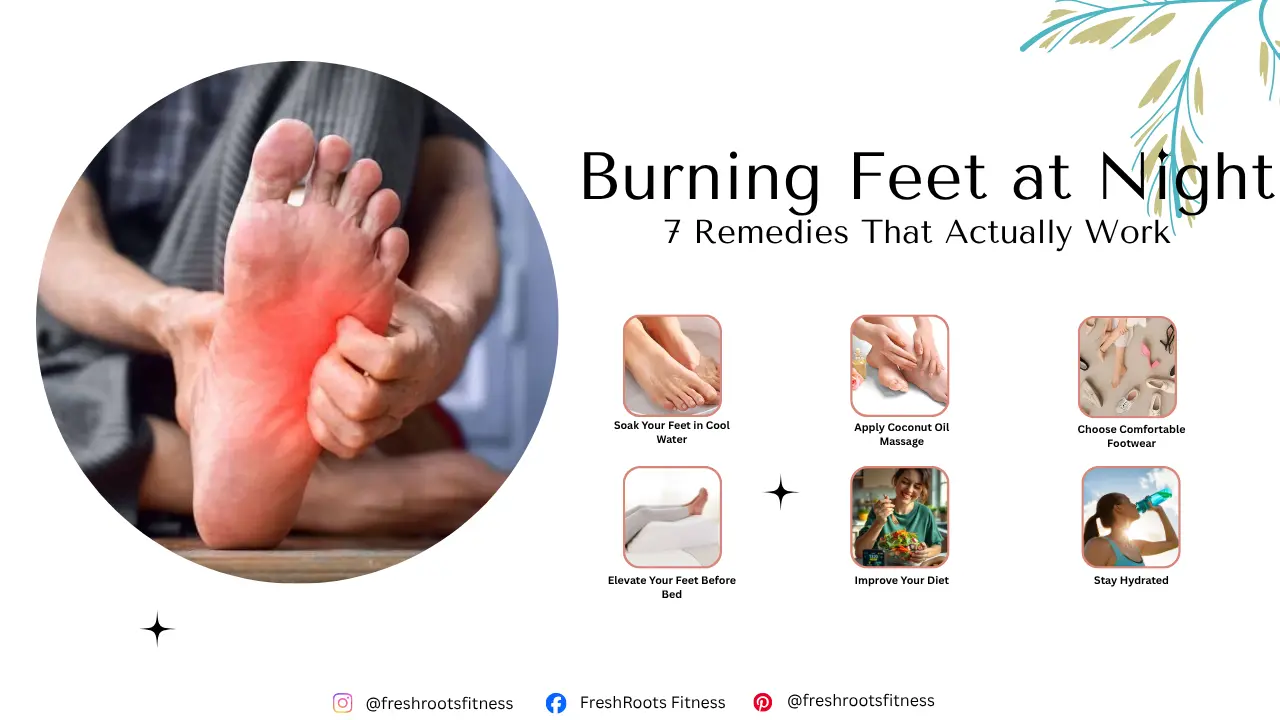
7 Remedies for Burning Feet at Night
1. Cool Water Foot Soak
When the burning is active and you need relief quickly, a cool water soak is the most immediate and effective first response. It works through a direct mechanism, reducing the skin temperature and calming the overactive nerve endings contributing to the burning sensation.
The key distinction is cool water, not ice-cold. Extremely cold water can cause a reflexive vasoconstrictive response that actually worsens circulation over time. Cool, comfortable to the touch, but noticeably refreshing is the target.
How to do it:
Fill a basin with cool water and submerge your feet fully. Soak for ten to fifteen minutes, allowing the temperature to draw the heat away from the skin and underlying tissue. Pat your feet dry gently afterwards and move directly into the next step, moisturising or elevating.
Many people find that doing this for thirty minutes before bed sets the stage for a more comfortable night. The relief is not always permanent, but it is consistent enough to become a reliable part of a pre-sleep routine.
2. Coconut Oil Foot Massage
Massage addresses burning feet through a different pathway than the water soak. It works on circulation and nerve tension rather than surface temperature. Gentle manual pressure on the feet improves blood flow through the peripheral vessels, helps reduce inflammatory build-up in the tissue and promotes the kind of full-body relaxation that makes sleep easier to reach.
Coconut oil is the preferred medium for this because it absorbs well into skin, has its own mild anti-inflammatory properties and creates enough slip to allow sustained pressure without friction.
How to do it:
Warm a small amount of coconut oil between your palms, then work it into the soles and arches of your feet using firm circular movements. Spend extra time on the balls of the feet and the heel area, where tension tends to concentrate after a full day of activity. Five to ten minutes of consistent massage before bed is enough to produce noticeable results with regular practice.
What most people overlook about foot massage is that the benefits compound over time. A single session helps. Ten consecutive nights of massage before bed changes the baseline level of tension and circulation in the feet in a way that reduces the frequency and intensity of the burning sensation overall.
3. Elevating Your Feet Before Sleep
Poor venous return, the flow of blood back from the legs toward the heart, is a contributing factor to nighttime burning that rarely gets enough attention. After spending hours upright, blood can pool in the lower extremities. The resulting pressure and reduced circulation create that uncomfortable hot, heavy feeling that persists into the night.
Elevating the feet above the level of the heart reverses this pooling and encourages blood to drain away from the lower legs and back into circulation.
How to do it:
Lie on your back and position a firm pillow or folded blanket under your calves and ankles, raising your feet to roughly the height of your chest. Hold this position for fifteen to twenty minutes before you intend to sleep. Combining this with the cool water soak or massage creates a highly effective pre-sleep sequence.
This is one of those burning feet at night remedies that costs nothing and requires no preparation, just the intention to do it consistently each evening.
4. Staying Consistently Hydrated
Dehydration has a direct effect on nerve function. Nerves depend on a stable fluid environment to transmit signals accurately. When the body is inadequately hydrated, nerve sensitivity increases and pain signals, including the burning sensation in the feet, are perceived more intensely than they would be in a well-hydrated state.
The connection between hydration and burning feet is one that many people never make because the link is not obvious. But it is consistent that people who increase their daily water intake as part of managing burning feet frequently report that the severity of the nighttime sensation decreases alongside other improvements.
Practical steps:
Aim for at least two litres of water across the day, distributed throughout waking hours rather than consumed in large amounts at once. Reducing caffeine intake, particularly in the afternoon and evening, helps because caffeine has a mild diuretic effect that works against hydration. Including water-rich foods such as cucumber, watermelon and leafy greens also contributes to overall fluid balance in a way that plain water alone may not fully achieve.
5. Epsom Salt Foot Soak
Epsom salt, magnesium sulphate, dissolves in warm water and is absorbed through the skin in small amounts during soaking. Magnesium plays a role in muscle relaxation, nerve function and the regulation of inflammatory processes. For people whose burning feet involve muscle tension or a magnesium-deficient state, a warm Epsom salt soak addresses both the surface discomfort and the underlying physiological factors simultaneously.
The warm water used in this method also dilates blood vessels in the feet, improving circulation and helping to clear metabolic waste products that can accumulate in foot tissue after prolonged activity.
How to do it:
Add one to two tablespoons of Epsom salt to a basin of comfortably warm water. Soak both feet for fifteen to twenty minutes. Rinse lightly and dry thoroughly, paying attention to the areas between the toes where retained moisture can cause skin issues over time.
Use this soak three to four evenings per week rather than every night. Daily use can dry out the skin, which introduces a different source of discomfort.
6. Choosing Footwear That Supports Rather Than Strains
The footwear you wear throughout the day has a direct and significant impact on what your feet feel like at night. Tight shoes restrict circulation and create sustained pressure on nerves throughout the day. Poor arch support causes compensatory tension in the muscles of the foot and lower leg. Synthetic materials trap heat and moisture, creating conditions that irritate the skin and peripheral nerves.
The surprising part is how delayed this effect can be. You may feel fine while wearing the shoes and only notice the burning sensation several hours later, which makes it easy to miss the connection between daytime footwear and nighttime discomfort.
What to look for in supportive footwear: Choose shoes made from breathable materials that allow air circulation around the foot. Look for adequate arch support, particularly if you spend most of the day standing or walking on hard surfaces. The toe box should be wide enough that toes are not compressed together, as compression directly irritates the nerves that run between the metatarsals.
Switching to appropriately supportive footwear does not produce overnight results, but over two to three weeks, the reduction in daily nerve irritation and circulatory strain tends to produce a meaningful improvement in nighttime burning.
7. Improving Your Diet to Support Nerve Health
Of all the burning feet at night remedies on this list, dietary changes take the longest to produce visible results, but they address the problem at its deepest level. Nutritional deficiencies, particularly in B vitamins, are a direct cause of peripheral neuropathy symptoms, including burning, tingling and sensitivity in the extremities.
Vitamin B12 is the most critical. It is essential for maintaining the myelin sheath, the protective coating around nerve fibres and a deficiency leads directly to nerve degradation and heightened pain sensitivity. B12 deficiency is particularly common among vegetarians, vegans and older adults, but it is more widespread than most people realise, regardless of diet.
B6 and B1 also support nerve function and are commonly low in people who eat heavily processed diets. Magnesium deficiency, which affects nerve signal regulation and iron deficiency, which reduces oxygen delivery to peripheral tissues, are additional nutritional contributors to nighttime burning.
Foods to prioritise:
- For B12: eggs, dairy products, fish, lean meat and fortified plant milks
- For B6 and B1: whole grains, legumes, nuts and seeds
- For magnesium: dark leafy greens, pumpkin seeds, almonds and dark chocolate
- For iron: lentils, spinach, tofu, lean red meat and chickpeas
Pair iron-rich foods with a source of vitamin C, such as a squeeze of lemon on lentils or spinach, to improve absorption significantly. If dietary change alone is insufficient, a targeted B-complex supplement taken consistently for six to eight weeks often produces noticeable improvement in nerve-related symptoms.
Additional Habits That Strengthen These Remedies
The remedies above work best when supported by a few consistent daily habits:
Avoid standing on hard surfaces for prolonged periods without breaks. If your work involves extended standing, take seated breaks every hour to restore circulation to the lower legs.
Incorporate gentle stretching before bed. Calf stretches, ankle rotations and toe flexes release accumulated tension in the muscles and connective tissue of the foot, reducing the nerve irritation that often drives the burning sensation at night.
Keep your bedroom cool. A warm sleeping environment intensifies the perceived burning. A cooler room temperature between 18 and 20 degrees Celsius creates conditions where the feet are less likely to feel overheated during sleep.
Wear loose, breathable socks if your feet are cold but burning. This sounds contradictory, but feet that feel simultaneously cold and burning are a common experience in people with nerve sensitivity respond well to light, natural-fibre socks that maintain warmth without restricting circulation.
When to See a Doctor
These remedies are effective for mild to moderate burning feet caused by lifestyle factors, nutritional gaps or general nerve sensitivity. However, certain symptoms signal that medical evaluation is necessary rather than optional.
See a doctor if you experience:
- Burning that is severe, constant or worsening despite home treatment.
- Numbness or a complete loss of sensation alongside the burning.
- Sharp, stabbing pain rather than a diffuse burning sensation.
- Any symptoms that you know or suspect are connected to diabetes.
- Visible changes in the skin colour or temperature of your feet.
- Difficulty walking or maintaining balance.
Persistent, medically unmanaged nerve conditions, including diabetic neuropathy, peripheral arterial disease and certain vitamin deficiency neuropathies, can progress and cause lasting damage when left untreated. If the burning is a regular nightly occurrence that does not respond to the approaches in this guide within two to three weeks, a conversation with your doctor will provide clarity and appropriate treatment direction.
Conclusion
Burning feet at night does not have to become something you simply accept as part of your sleep experience. In the majority of cases, the sensation responds well to the kind of consistent, practical care that this guide describes and the changes required are neither expensive nor complicated.
Start with the cool water soak tonight. Add the coconut oil massage to your pre-sleep routine this week. Review your footwear, look at your hydration and gradually bring the dietary improvements into your daily eating. These are small actions, but they address the real contributing factors behind burning feet at night rather than just distracting from the symptom momentarily.
According to HealthLine- Ways to Cool Down Your Hot Feet at Night
Most people who commit to these habits for two to three weeks report a genuine and lasting improvement in how their feet feel by the time they get into bed. Sleep that feels restful rather than interrupted. Feet that feel calm rather than restless.
That kind of sleep is worth a ten-minute foot soak and a small bottle of coconut oil. Give it a week and see what changes.
FAQs
-
Can dehydration cause burning feet?
Yes. Dehydration affects the fluid environment around peripheral nerves, increasing their sensitivity and amplifying pain signals. Maintaining consistent daily water intake is a simple but genuinely effective part of managing the condition.
-
How can I get relief from the burning sensation quickly?
Soaking feet in cool water for ten to fifteen minutes provides the fastest relief. Following this with foot elevation further reduces the circulatory pressure that contributes to the sensation.
-
Are burning feet at night a serious condition?
Occasional burning that responds to home care is usually harmless. However, burning that is persistent, severe, associated with numbness or linked to a known condition like diabetes should be evaluated by a doctor rather than managed at home alone.
-
What causes burning feet at night?
The most common causes include peripheral nerve sensitivity, poor circulation, deficiencies in B vitamins, prolonged standing and footwear that restricts blood flow during the day. In some cases, underlying conditions such as diabetes or thyroid dysfunction are involved.
-
What is the best home remedy for burning feet?
A cool water foot soak provides the fastest immediate relief. For longer-term improvement, combining regular coconut oil massage, foot elevation and dietary support for nerve health tends to produce the most consistent results.

- How to Reduce Cholesterol Naturally With Simple Food Habits - July 4, 2026
- Early Signs of High Blood Sugar Most People Miss Daily - June 25, 2026
- How to Boost Immunity Naturally: Simple Daily Habits - June 23, 2026