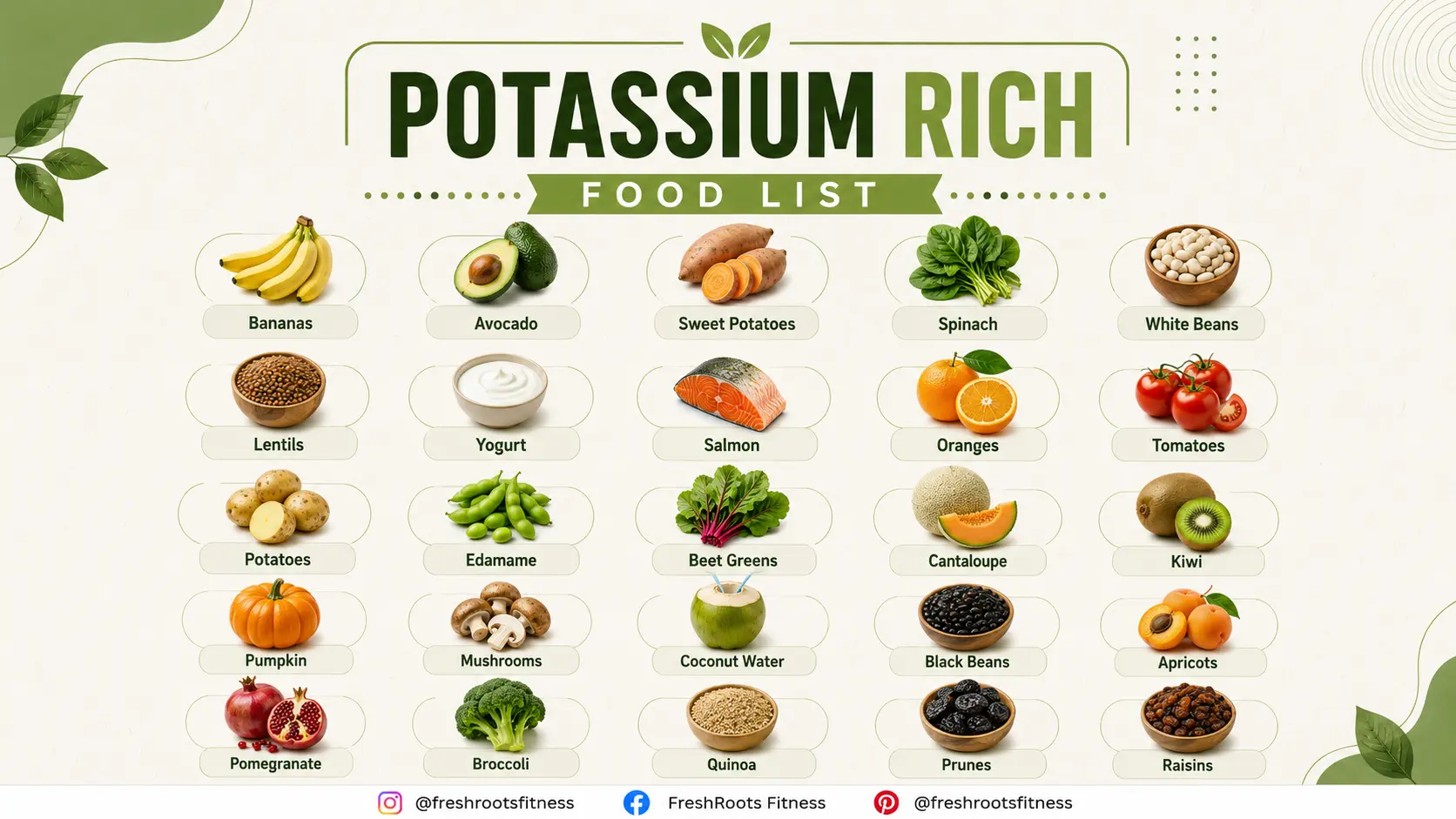
Ask someone to name a food high in potassium and they’ll almost always say bananas. It’s one of those nutrition facts that lodges itself in the brain early and never really gets updated. Bananas are good for potassium that much is true. But here’s the part most people don’t know bananas aren’t even in the top ten potassium sources.
Potassium is one of the most critical minerals your body needs to function properly. It regulates fluid balance, supports healthy nerve transmission, controls muscle contractions, including the most important muscle of all, your heart and helps maintain healthy blood pressure. Every single day, your body relies on a steady potassium supply to keep these systems running smoothly.
And yet, research suggests that a large proportion of adults consistently fall short of their daily potassium needs. The recommended intake for adults is around 2,600 to 3,400 mg per day, depending on age and sex and the average person gets considerably less than that. The consequences of chronic low potassium range from muscle weakness and fatigue to elevated blood pressure and increased cardiovascular risk.
The solution is simpler than most people expect and it starts with a proper potassium-rich foods list that goes well beyond what most people already know.
In this guide, we’ll cover exactly which foods deliver the most potassium, how much you need, what happens when you don’t get enough and how to build more of these foods into your everyday eating without overcomplicating things.
Why Potassium Matters So Much for Your Health
Before we get into the foods, let’s take a moment to understand why potassium deserves your full attention.
Potassium is an electrolyte, a mineral that carries an electrical charge and plays a central role in the body’s fluid and electrochemical balance. It works in a constant partnership with sodium. While sodium draws water into cells and raises blood pressure when consumed in excess, potassium helps flush sodium out through urine and relaxes blood vessel walls, actively lowering blood pressure.
This sodium-potassium balance is one of the most important mechanisms in cardiovascular health. Studies indicate that higher dietary potassium intake is associated with significantly lower blood pressure and reduced risk of stroke, regardless of sodium intake. This makes getting enough potassium one of the most practical dietary strategies for heart health.
Beyond the heart, potassium is essential for:
- Muscle function: Every muscle contraction, from a bicep curl to a heartbeat, depends on potassium moving in and out of muscle cells through ion channels.
- Nerve signaling: Nerve impulses that travel through the body rely on rapid shifts in potassium concentration across cell membranes.
- Kidney health: Potassium helps the kidneys filter blood efficiently and reduces the risk of kidney stones by lowering calcium excretion in urine.
- Bone density: Research suggests that potassium-rich diets help neutralize acid load in the body, which in turn reduces calcium loss from bones.
- Blood sugar regulation: Potassium supports healthy insulin secretion and glucose metabolism.
With all of this in mind, building a genuinely diverse potassium-rich foods list into your daily diet is one of the most impactful nutritional moves you can make.
The Real Potassium-Rich Foods List You Need to Know
Let’s get specific. Here are the best dietary sources of potassium, organized by category with actual potassium content to help you see just how much each food contributes to your daily needs.
Vegetables: The Highest Potassium Category
Vegetables dominate the top of any serious potassium-rich foods list and cooked or prepared versions tend to deliver significantly more per serving because water evaporates and nutrients concentrate.
Beet Greens (cooked) 1,300 mg per cup
These are the leafy tops of beetroot and they’re one of the richest potassium sources in existence. Slightly earthy and tender when cooked, they work beautifully sautéed with garlic and olive oil.
Swiss Chard (cooked) 960 mg per cup
Another leafy powerhouse. Swiss chard is also rich in magnesium and vitamin K, making it a nutrient-dense addition to soups, stir-fries or grain bowls.
Spinach (cooked) 840 mg per cup
Raw spinach is good, but cooking it concentrates the potassium content significantly. A single cup of cooked spinach delivers about 24% of the daily recommended intake.
Acorn Squash (cooked) 900 mg per cup
Winter squashes are an often-overlooked potassium source. Acorn, butternut and hubbard squash all deliver impressive amounts per serving alongside fiber and beta-carotene.
Potatoes (baked, with skin) 900 mg per medium potato
Here’s one that surprises people. A baked potato with the skin on is one of the most potassium-dense foods available. The skin is where most of the mineral content lives, peeling it away removes a significant portion of the benefit.
Sweet Potatoes (baked) 540 mg per medium potato
Slightly lower than regular potatoes but still excellent and they come with additional beta-carotene, vitamin C and fiber.
Tomatoes and Tomato Products 400-900 mg per serving
Fresh tomatoes provide a moderate amount, but concentrated tomato products, such as paste, puree and sauce, are far higher because the water has been reduced. Tomato paste delivers around 900 mg per half cup.
Legumes Consistently Underrated Potassium Sources
Beans and lentils are among the most reliable everyday potassium sources and they’re also rich in protein, fiber and other minerals, making them exceptional nutritional value per calorie.
White Beans (cooked) 1,000 mg per cup
White beans, including cannellini and navy beans, top the legume category for potassium. They’re mild, versatile and easy to add to soups, stews and pasta dishes.
Lentils (cooked) 730 mg per cup
Lentils are one of the easiest and most affordable ways to increase potassium intake. They cook quickly, absorb flavors well and work in everything from salads to dal to grain bowls.
Kidney Beans (cooked) 710 mg per cup
A staple in chili, curries and rice dishes, kidney beans are a simple way to add meaningful potassium to a meal.
Edamame 670 mg per cup
Young soybeans are a convenient, protein-rich snack with excellent potassium content. They work as a side dish, salad topping or standalone snack.
Chickpeas (cooked) 480 mg per cup
The base of hummus and a widely loved salad addition, chickpeas also contribute meaningfully to daily potassium intake.
Fruits Beyond the Banana
Yes, bananas are a real source of potassium. A medium banana delivers around 422 mg, a genuinely useful amount, but far from the highest on this list. Here are the fruits that outperform it.
Avocado 975 mg per whole avocado
Avocado is one of the most potassium-dense fruits available and it also provides healthy fats, magnesium and B vitamins. Half an avocado daily is a simple, delicious potassium habit.
Guava 688 mg per cup
Guava is a tropical fruit with impressive nutritional density. It’s rich in potassium, vitamin C and fiber and far less well-known as a potassium source than it deserves to be.
Dried Apricots 1,510 mg per cup
Drying fruit concentrates potassium dramatically. A small handful of dried apricots delivers a substantial boost. Other dried fruits, such as prunes, raisins and dried figs, also rank high.
Kiwi 562 mg per two fruits
Kiwi provides more potassium per equivalent serving than a banana, along with notable amounts of vitamin C and digestive enzymes.
Pomegranate 666 mg per whole fruit
Beyond its antioxidant reputation, pomegranate is a solid source of potassium that works well in salads, smoothies, and juice.
Oranges and Orange Juice 470 mg per cup of juice
Citrus fruits contribute meaningfully to potassium intake, particularly when consumed as fresh juice. Whole oranges also provide fiber alongside the mineral content.
Fish and Seafood
Several types of fish are excellent potassium sources and they bring additional benefits through omega-3 fatty acids and high-quality protein.
Clams (cooked) 534 mg per 3 oz
Clams are among the highest potassium seafood options and are also exceptionally rich in vitamin B12 and iron.
Halibut (cooked) 490 mg per 3 oz
A mild, versatile white fish that’s easy to prepare and delivers a meaningful potassium contribution.
Salmon (cooked) 414 mg per 3 oz
A well-known health food, salmon’s potassium content is often overlooked compared to its omega-3 reputation, but it contributes to both.
Tuna (canned in water) 200 mg per 3 oz
A convenient and affordable everyday option that adds to your daily intake without requiring much preparation.
Dairy and Plant-Based Alternatives
Yogurt (plain, low-fat) 579 mg per cup
Plain yogurt is one of the best dairy sources of potassium and also delivers protein and gut-friendly probiotics. Greek yogurt provides slightly less per cup due to the straining process.
Milk 366 mg per cup
A reliable everyday contributor to potassium intake, particularly significant for people who drink milk regularly.
Fortified Plant Milks 300-450 mg per cup
Many soy, oat and almond milks are fortified with potassium. Checking the label for potassium content when choosing plant-based alternatives is worth the habit.
Nuts and Seeds
Sunflower Seeds 241 mg per ounce
A convenient and portable snack with good potassium content alongside vitamin E and magnesium.
Almonds 200 mg per ounce
Another portable, everyday snack option that contributes to potassium intake as part of a varied diet.
Pistachios 285 mg per ounce
Among the highest potassium nuts per serving and also one of the better sources of protein among tree nuts.
How Much Potassium Do You Actually Need?
The recommended daily intake for potassium is:
- Adult women: 2,600 mg per day
- Adult men: 3,400 mg per day
- Pregnant women: 2,900 mg per day
- Breastfeeding women: 2,800 mg per day
These figures come from the National Academies of Medicine and represent adequate intake levels. Most adults in the US consume considerably less than these targets primarily because processed food, which forms the backbone of many modern diets, is low in potassium and high in sodium.
The good news is that reaching your potassium target doesn’t require calorie-counting or meal planning apps. A diet built around vegetables, legumes, fruit and lean protein naturally hits adequate potassium levels when eaten in a reasonable variety and quantity.
Signs You Might Not Be Getting Enough Potassium
Low potassium, clinically called hypokalemia, exists on a spectrum. Mild, chronic insufficiency is far more common than the severe version and produces subtler symptoms that are easy to dismiss.
Common signs include:
- Persistent muscle weakness or cramping, particularly in the legs.
- Fatigue and low energy even after adequate sleep.
- Constipation and bloating, the digestive muscles need potassium to contract properly.
- Heart palpitations or irregular heartbeat, the heart’s electrical system is acutely sensitive to potassium levels.
- High blood pressure is particularly problematic when sodium intake is also high.
- Increased thirst and frequent urination, the kidneys regulate potassium balance and fluid excretion together.
- Tingling or numbness caused by disrupted nerve signal transmission.
Many of these symptoms overlap with magnesium and iron deficiency, which is why a proper dietary assessment and blood work are valuable when multiple symptoms appear together.
How to Add More Potassium to Your Daily Diet
You don’t need to redesign your entire eating pattern to improve your potassium intake. A few consistent swaps and additions make an enormous difference over time.
Start the day with potassium in mind. A smoothie with half an avocado, a banana and some spinach is a potassium-dense breakfast that also delivers fiber and healthy fats. Plain yogurt topped with kiwi and a handful of sunflower seeds is another simple high-potassium morning option.
Build meals around legumes. Swapping white rice for lentils, adding white beans to soups or serving chickpea curry over quinoa rather than refined grains naturally increases potassium intake with minimal effort.
Eat your potatoes with the skin. Whether baked, roasted or boiled, keeping the skin on your potatoes is one of the easiest ways to preserve and maximize their potassium content.
Use tomato-based sauces generously. Pasta with a rich tomato sauce, shakshuka and chili all deliver meaningful potassium from concentrated tomato products.
Snack smarter. Replacing chips and crackers with dried apricots, pistachios or edamame shifts your snacking from potassium-depleting processed food to potassium-delivering whole food.
Cook leafy greens regularly. Sautéed beet greens, wilted spinach or Swiss chard as a side dish adds hundreds of milligrams of potassium to a meal in minutes.
Who Needs to Be Careful With Potassium?
While most healthy adults benefit from increasing dietary potassium, there are specific groups who need to be cautious.
People with chronic kidney disease whose kidneys can no longer efficiently regulate potassium levels may need to limit intake, as potassium can accumulate to dangerous levels in the blood. This is a condition where dietary potassium decisions should always be made in consultation with a healthcare provider.
People taking potassium-sparing diuretics, ACE inhibitors or certain blood pressure medications may also be at risk of elevated potassium levels and should discuss dietary changes with their doctor.
For everyone else, particularly healthy adults whose diet skews toward processed food, increasing potassium through whole foods is not only safe but actively beneficial.
Potassium and the Sodium Balance: A Critical Connection
No discussion of potassium is complete without addressing sodium. These two minerals operate as direct counterweights in the body. High sodium intake narrows blood vessels and raises blood pressure. Adequate potassium intake counteracts this by relaxing vessels and increasing sodium excretion.
The ideal ratio, according to research, is to consume more potassium than sodium daily. In practice, the average modern diet flips this upside down, with far more sodium than potassium, which contributes significantly to the widespread prevalence of high blood pressure.
Improving your potassium intake doesn’t just benefit you in isolation, it actively compensates for the elevated sodium that’s almost unavoidable in a diet that includes any processed or restaurant food.
Lifestyle Habits That Support Healthy Potassium Levels
Beyond just eating the right foods, a few habits help maintain good potassium status over time:
- Stay consistently hydrated: Potassium is water-soluble and adequate hydration supports efficient kidney regulation of potassium balance.
- Limit excess alcohol: Heavy alcohol consumption increases urinary potassium excretion.
- Manage stress: Chronic stress elevates cortisol, which influences the kidneys to excrete more potassium.
- Avoid excessive laxative use: Overuse of laxatives causes potassium loss through the digestive tract.
- Cook vegetables lightly: Boiling vegetables heavily leaches potassium into the water steaming, roasting or sautéing preserves significantly more content.
- Get regular blood panels if you’re on medications or have cardiovascular concerns. Periodic testing of potassium levels keeps you informed.
Conclusion
Bananas earned their reputation for good reason. But the real potassium-rich foods list goes so much deeper and so much higher. White beans, beet greens, avocado, dried apricots, baked potatoes, Swiss chard and lentils are the foods that truly move the needle on your daily potassium intake.
Getting enough potassium isn’t complicated. It doesn’t require supplements, tracking apps or major dietary overhauls. It requires building more whole plant foods, legumes and vegetables into the meals you’re already eating and doing it consistently enough that your body gets what it needs every day.
By WebMD- Potassium-Rich Foods
Your heart, your blood pressure, your muscles, your nerves, they’re all waiting for this mineral to show up in the amounts they actually need. Give them that. Start by picking two or three foods from this list and finding regular places for them in your week.
The banana can stay. But now you know what to add alongside it.
FAQs
-
Can you get enough potassium without supplements?
Yes. A diet rich in vegetables, legumes, fruits and lean protein easily meets daily potassium needs without supplements for most healthy adults. Whole food sources are always preferable.
-
Does cooking affect potassium content in food?
Yes. Boiling vegetables leaches potassium into cooking water. Steaming, roasting and sautéing preserve significantly more. Eating potatoes with their skin also retains potassium that would otherwise be removed.
-
Is it possible to have too much potassium from food?
For healthy adults with functioning kidneys, excess potassium from food is rare, kidneys efficiently excrete surplus. People with kidney disease or on certain medications should monitor intake carefully with medical guidance.
-
What are the highest potassium-rich foods besides bananas?
Beet greens, white beans, avocado, baked potatoes with skin, Swiss chard, lentils and dried apricots all contain significantly more potassium per serving than a banana.
-
How much potassium does an adult need per day?
Adult women need around 2,600 mg daily and adult men need 3,400 mg. Most adults fall short of these targets due to high intake of processed, low-potassium foods.
-
What are the signs of low potassium in adults?
Common signs include muscle cramps, persistent fatigue, constipation, heart palpitations, high blood pressure and increased thirst. Multiple symptoms appearing together warrant a blood test to confirm levels.

- How to Reduce Cholesterol Naturally With Simple Food Habits - July 4, 2026
- Early Signs of High Blood Sugar Most People Miss Daily - June 25, 2026
- How to Boost Immunity Naturally: Simple Daily Habits - June 23, 2026