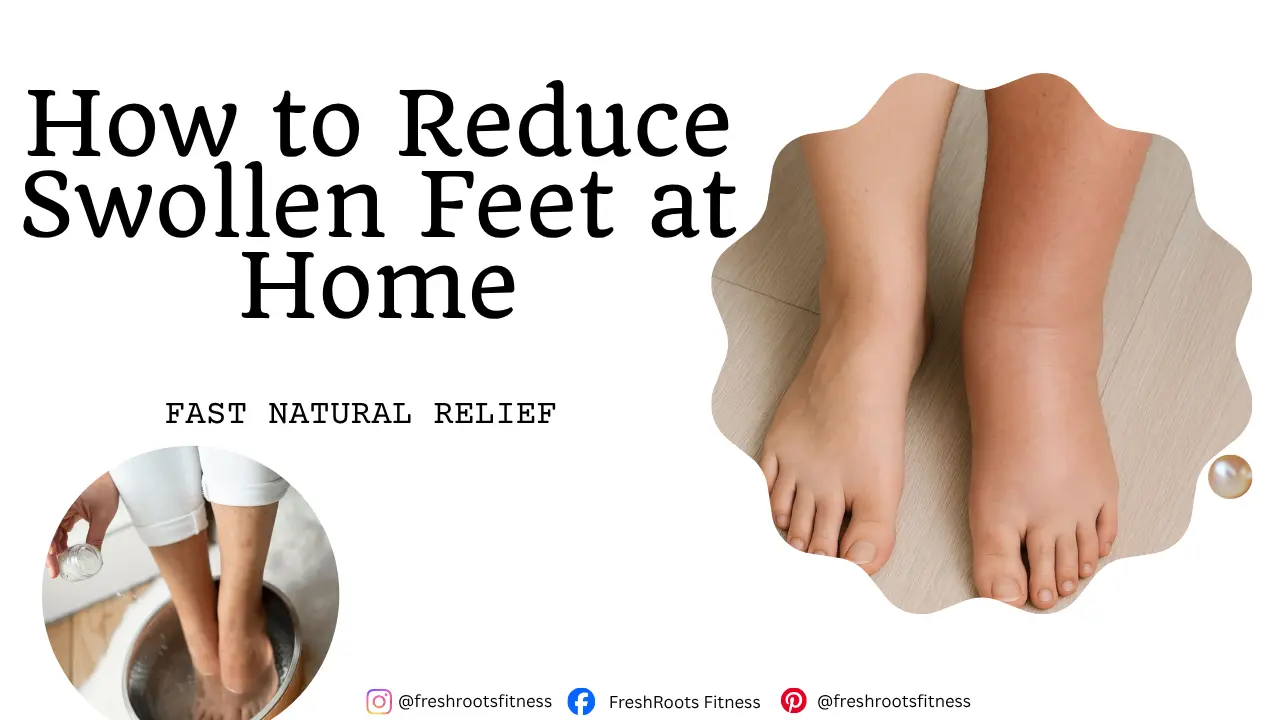
You sit down at the end of a long day, slip off your shoes and notice your feet look puffy. Your ankles are thick. Your socks have left deep impressions on your skin. The feeling is somewhere between heaviness and mild discomfort and it’s become a regular part of your evenings.
Swollen feet and ankles are one of the most common physical complaints adults deal with and yet most people either ignore the problem or assume it’s just something that happens with age or a busy lifestyle. The truth is more nuanced than that and more actionable.
If you’ve been wondering how to reduce swollen feet at home, you’re in the right place. There are highly effective, evidence-supported natural remedies that can bring meaningful relief quickly. But understanding why your feet are swelling in the first place is just as important as the remedies themselves because the cause determines both the best approach and whether home treatment is appropriate at all.
Swelling in the feet and ankles, medically called peripheral edema, happens when excess fluid accumulates in the tissues of the lower extremities. Gravity naturally pulls fluid downward throughout the day and when the body’s fluid management systems, the lymphatic system, the venous circulation and the kidneys can’t keep pace, that fluid pools in the feet, ankles and lower legs.
What Causes Swollen Feet and Ankles?
There are many reasons feet swell, ranging from entirely benign and lifestyle-driven to medically significant. Identifying your most likely cause shapes everything that follows.
Prolonged Standing or Sitting
This is the most common everyday cause of swollen feet in otherwise healthy adults. When you stand or sit for extended periods during a long shift, a day of travel or hours at a desk, the calf muscle pump that normally drives venous blood back up toward the heart becomes inactive. Blood and fluid pool in the lower legs and feet, causing visible swelling by the end of the day.
This type of edema is completely normal physiologically and typically resolves overnight when your legs are horizontal. It responds extremely well to the home remedies covered in this guide.
Dietary Sodium Excess
High sodium intake causes the body to retain water to maintain electrolyte balance. That retained water distributes throughout the body, but the feet and ankles, sitting at the body’s lowest point, accumulate the most visible pooling. Many people notice their feet are noticeably more swollen the morning after a high-salt meal or a day of eating processed food.
Pregnancy
Swollen feet and ankles are one of the most universal experiences of pregnancy, particularly in the third trimester. The growing uterus puts pressure on the pelvic veins, restricting venous return from the legs. Increased blood volume and hormonal changes that promote fluid retention compound the effect. While mild pregnancy swelling is normal, sudden or severe swelling, particularly in the hands and face, warrants immediate medical evaluation for preeclampsia.
Venous Insufficiency
Venous insufficiency occurs when the valves inside the leg veins that prevent blood from flowing backward become weakened or damaged. Blood pools in the lower legs rather than returning efficiently to the heart, causing chronic swelling, heaviness, aching and over time, varicose veins and skin changes.
This is one of the most common underlying causes of chronic, persistent foot and ankle swelling in adults, particularly those who spend a lot of time on their feet or who have a family history of varicose veins.
Medications
Many commonly prescribed medications cause fluid retention and peripheral edema as a side effect. These include:
- Calcium channel blockers such as amlodipine are a particularly well-known cause.
- Corticosteroids: prednisolone, dexamethasone.
- NSAIDs: Ibuprofen and naproxen, with prolonged use.
- Certain diabetes medications, particularly thiazolidinediones.
- Some antidepressants, particularly MAOIs and certain tricyclics.
- Hormone therapies, estrogen-containing contraceptives and HRT.
If swelling started or worsened after beginning a new medication, this connection is worth raising with the prescribing doctor.
Heart, Kidney or Liver Conditions
Bilateral foot and ankle swelling affecting both feet equally can be a sign of systemic conditions affecting the heart, kidneys or liver. Heart failure reduces the heart’s ability to pump efficiently, causing fluid backup in the body’s peripheral tissues. Kidney disease impairs the body’s ability to excrete excess fluid and sodium. Liver disease reduces albumin production, the protein that keeps fluid in the bloodstream, allowing it to leak into surrounding tissue.
These causes are more serious and produce swelling that is typically persistent, progressively worsening and accompanied by other symptoms. They require medical evaluation rather than home management alone.
Blood Clots
One-sided swelling, particularly when it affects one foot or leg significantly more than the other and especially when accompanied by warmth, redness or pain in the calf, can indicate a deep vein thrombosis (DVT). This is a medical emergency. A clot that breaks loose and travels to the lungs becomes a pulmonary embolism, which can be life-threatening.
Sudden, one-sided swelling with any accompanying symptoms should prompt immediate medical evaluation rather than home treatment.
Injury and Inflammation
Sprains, fractures, tendon injuries and inflammatory conditions like gout or arthritis cause localized swelling through tissue damage and inflammation. This type of swelling is typically localized, painful and associated with a specific event or pattern.
Lymphedema
Lymphedema is swelling caused by a compromised or damaged lymphatic system, often a consequence of cancer treatment, particularly after lymph node removal. The lymphatic system cannot drain fluid effectively and swelling builds progressively over time. This type of edema is typically firmer and doesn’t pit as readily as venous edema. It requires specialized management.
How to Reduce Swollen Feet at Home
For lifestyle-related and mild-to-moderate swelling, the following methods are backed by evidence and practical experience. Many people find significant relief within hours of applying several of these together.
Elevate Your Legs Above Heart Level
This is the single fastest and most effective technique for reducing swollen feet at home. When the legs are elevated above the level of the heart, gravity assists venous and lymphatic drainage, pulling accumulated fluid back toward the core where it can be processed and excreted.
The key is getting the legs high enough. Simply propping feet on a coffee table doesn’t provide the same drainage benefit as elevating them genuinely above heart level. Lying on your back with pillows stacked under your legs or using an adjustable recliner achieves better results.
Aim for 20 to 30 minutes of leg elevation, two to three times per day, particularly after long periods of standing or sitting and in the evening before bed. Many people notice a visible reduction in swelling within the first session.
Cold and Warm Water Therapy
Contrast hydrotherapy, alternating between cold and warm water immersion, is a time-tested technique for reducing foot and ankle swelling. Warm water causes blood vessels to dilate, improving circulation. Cold water causes them to constrict, which helps reduce inflammation and move pooled fluid. The alternating effect acts like a pumping mechanism for the vascular system.
To apply fill two basins, one with comfortably warm water and one with cool-to-cold water. Soak your feet in warm water for three to four minutes, then transfer to cold water for one minute. Repeat three to four cycles, always finishing with cold.
Even plain cool water soaks without alternating can provide immediate relief from swelling-related discomfort and help reduce puffiness through the mild vasoconstrictive effect.
Foot and Ankle Exercises
One of the most overlooked answers to how to reduce swollen feet at home is movement. The calf muscles act as a pump for the venous system. When they contract, they squeeze blood upward through the veins. When you’re sedentary, this pump sits idle and fluid pools.
Simple exercises activate this mechanism and produce immediate improvement in circulation and fluid drainage:
- Ankle circles sit or lie down and slowly rotate each ankle through its full range of motion, ten circles clockwise and ten counterclockwise per foot
- Calf raises stand at a counter or wall for balance, rise onto the balls of both feet, hold for two seconds, lower slowly; repeat fifteen to twenty times
- Foot pumps lying down, flex the feet and then point them away repeatedly, simulating the walking motion without bearing weight
- Marching in place, even a few minutes of light marching, activates the calf pump and dramatically improves venous return
Doing these exercises every hour during prolonged sitting or standing, even just for sixty seconds, consistently reduces end-of-day swelling for most people.
Magnesium Epsom Salt Soak
An Epsom salt foot soak is one of the most popular traditional remedies for swollen feet and there’s genuine rationale behind it. Epsom salt is magnesium sulfate. Magnesium is involved in fluid regulation and reduces inflammation. While the evidence for transdermal magnesium absorption is still developing, the warm water component of the soak certainly helps by improving local circulation.
More practically, the warm water immersion itself reduces discomfort significantly and the ritual of sitting quietly with feet soaking away from screens and activity reduces the cortisol-driven fluid retention that chronic stress promotes.
Dissolve half a cup of Epsom salt in a basin of comfortably warm water. Soak for fifteen to twenty minutes. Pat dry afterward rather than rubbing and follow with gentle elevation.
Stay Well Hydrated
This one seems counterintuitive: If you’re retaining fluid, shouldn’t you drink less? The opposite is true. When the body is dehydrated, it goes into a fluid conservation mode, holding onto water more aggressively to protect vital functions. This actually worsens fluid retention and swelling.
Drinking adequate water throughout the day, eight to ten glasses for most adults, signals to the kidneys that the body has enough fluid and that retained water can be safely released. Proper hydration also supports kidney function, which is one of the primary mechanisms for eliminating excess fluid.
Cutting back on dehydrating beverages, caffeine and alcohol both promote fluid loss through the kidneys, triggering compensatory retention, which is equally important.
Reduce Dietary Sodium
If diet is contributing to your swelling, reducing sodium intake is one of the most direct dietary interventions. Cutting back on processed food, fast food, canned soups, pickles, soy sauce and other high-sodium condiments reduces the body’s water retention needs and can produce a visible reduction in swelling within one to two days.
\Increasing potassium intake simultaneously through bananas, avocado, spinach and sweet potatoes counterbalances sodium’s water-retaining effect by promoting sodium excretion through the kidneys. Research suggests that the sodium-potassium balance is more relevant to fluid retention than sodium alone.
Compression Stockings
Compression socks and stockings are one of the most evidence-backed physical interventions for reducing foot and ankle swelling, particularly for people with venous insufficiency, those who travel frequently or those who stand or sit for extended periods.
They work by applying graded external pressure to the legs, tightest at the ankle and gradually decreasing up the leg, which mechanically supports the veins in pushing blood upward and prevents pooling.
Graduated compression stockings with 15 to 20 mmHg compression are widely available over the counter and appropriate for everyday lifestyle-related swelling. Higher compression levels, 20 to 30 mmHg and above, are available for more significant venous insufficiency and should ideally be fitted with guidance from a healthcare provider.
They should be put on before getting out of bed in the morning, before gravity has pulled fluid back down, for maximum benefit.
Gentle Foot Massage
Lymphatic drainage massage applied gently in upward strokes from the foot toward the knee helps move accumulated lymph fluid back into circulation. Unlike deep tissue massage, lymphatic drainage uses very light pressure and slow, rhythmic strokes.
Studies indicate that manual lymphatic drainage reduces edema volume and provides relief in both venous and lymphatic swelling. Self-massage at home, though less precise than professional treatment, provides a meaningful benefit when applied consistently.
Technique: Starting at the toes, use gentle upward strokes with the palms and fingers, always moving toward the heart. Spend two to three minutes per foot and lower leg. Follow with a period of leg elevation to consolidate the drainage effect.
Anti-Inflammatory Foods and Herbs
Diet plays a real role in managing swelling driven by inflammation. Foods rich in omega-3 fatty acids, such as salmon, walnuts and flaxseed, reduce inflammatory prostaglandins that promote vascular leakage and tissue swelling. Berries, leafy greens and other antioxidant-rich foods reduce oxidative stress that damages vascular integrity.
Certain herbs have traditional and emerging evidence for reducing edema:
- Dandelion acts as a natural diuretic, promoting fluid excretion through the kidneys without the potassium loss associated with pharmaceutical diuretics
- Ginger reduces inflammation and improves circulation, effective as tea or added to cooking
- Parsley has mild diuretic properties; effective as tea or a fresh herb
- Horse chestnut extract contains aescin, a compound shown in research to improve venous tone and reduce edema; one of the more clinically studied herbal approaches for venous insufficiency
These are supportive measures, not replacements for medical treatment where a significant underlying cause exists.
These Articles You Must Read
Burning Feet at Night
How to Stop Leg Cramps at Night Instantly
Baking Soda Foot Soak for Cracked Heels
Home Remedies for Knee Pain in Women Over 40
Lifestyle Habits That Prevent Swollen Feet From Returning
Addressing swelling once it appears is useful, but preventing it from becoming a daily pattern is better.
- Walking regularly, even 20 to 30 minutes of walking per day, activates the calf muscle pump consistently and dramatically reduces chronic swelling in most people
- Break up prolonged sitting or standing, set a timer to stand and walk briefly every 45 to 60 minutes during long work periods
- Sleep with legs slightly elevated, placing a folded blanket or pillow under the lower legs during sleep, keeps gravity working for you overnight
- Avoid tight clothing around the ankles and calves, as restrictive bands impede venous return and worsen pooling below the constriction
- Maintain a healthy weight; excess weight increases pressure on leg veins and the lymphatic system, promoting chronic swelling
- Wear supportive footwear with adequate arch support and a low heel to reduce the venous pressure in standing feet
- Stay active during travel on long flights or car journeys, walk the aisle, do foot pumps in your seat and stay hydrated throughout
When Swollen Feet Need Medical Attention
Knowing how to reduce swollen feet at home is valuable, but knowing when home treatment is not enough is equally important.
Seek medical attention if you notice:
- Swelling that is sudden, severe or appears rapidly without an obvious cause.
- Swelling in only one foot or leg, particularly with warmth, redness or calf tenderness.
- Swelling accompanied by shortness of breath, chest pain or palpitations.
- Pitting edema that is deep and slow to resolve, particularly if it’s getting progressively worse over days or weeks.
- Swollen feet alongside other symptoms like facial or hand swelling, headache or vision changes.
- Skin that is red, hot and painful, which could indicate cellulitis (a bacterial skin infection) requiring antibiotics.
- Swelling that doesn’t improve after several days of consistent home treatment.
- Any known heart, kidney or liver condition, alongside new or worsening swelling.
These presentations require proper diagnosis and medical management and in some cases, immediate emergency evaluation.
How Long Does It Take for Swollen Feet to Reduce?
For lifestyle-related swelling, improvement is often rapid with the right approach.
- Leg elevation: Visible reduction often within 20 to 30 minutes of proper elevation.
- Contrast water therapy: Relief during and immediately after the soak.
- Dietary sodium reduction: Noticeable improvement within 24 to 48 hours.
- Exercise and movement: Cumulative improvement over days of consistent activity.
- Compression stockings: Significant reduction in swelling within hours of first wearing, with progressive improvement over days.
- Chronic venous insufficiency swelling: Consistent management over weeks produces meaningful improvement, but ongoing maintenance is required.
The more causes are addressed, such as movement, elevation, hydration, dietary changes and compression, the faster and more complete the improvement.
Conclusion
Swollen feet don’t have to be the inevitable end to every long day. For most people asking how to reduce swollen feet at home, the answer is a combination of simple, consistent habits, elevating the legs, moving more, reducing sodium, staying hydrated, wearing compression and treating the feet to occasional soaks and massage.
These aren’t complicated or expensive interventions. They’re practical, accessible and effective when applied regularly. And unlike waiting for swelling to “just go away,” addressing it proactively protects the long-term health of your veins, lymphatic system and skin.
By HealthLine- 10 Home Remedies for Swollen Feet
Start tonight. Elevate your legs for 20 minutes, do some ankle circles and drink a glass of water. That’s genuinely enough to begin.
And if the swelling is persistent, worsening, one-sided or accompanied by any of the warning signs covered above, please don’t manage it at home alone. A doctor visit is the most important first step in those cases.
Your feet carry you through everything. Take care of them the way they deserve.
FAQs
-
What is the fastest way to reduce swollen feet at home?
Elevating legs above heart level for 20-30 minutes provides the fastest visible relief. Combining elevation with cold water soaking and gentle ankle exercises produces even quicker results for most people.
-
Do compression socks actually help with swollen feet?
Yes. Graduated compression stockings are one of the most evidence-backed interventions for foot and ankle swelling, particularly from venous insufficiency. They mechanically support veins and prevent fluid from pooling in the lower legs.
-
Why do my feet swell more in hot weather?
Heat causes blood vessels to dilate, which increases fluid leakage into surrounding tissues. Combined with reduced physical activity and increased fluid loss through sweat, hot weather significantly worsens foot and ankle swelling.
-
Can drinking more water reduce foot swelling?
Yes. Adequate hydration signals the kidneys to release retained fluid rather than conserve it. Dehydration worsens swelling because the body holds onto water more aggressively when fluid intake is low.

- How to Reduce Cholesterol Naturally With Simple Food Habits - July 4, 2026
- Early Signs of High Blood Sugar Most People Miss Daily - June 25, 2026
- How to Boost Immunity Naturally: Simple Daily Habits - June 23, 2026